



SHUEISHA Inc. All rights reserved.

The Venice Biennale, held every two years in the Italian city of Venice, has a history spanning more than 120 years. This year’s event brought together prominent figures in contemporary art from more than 40 countries.
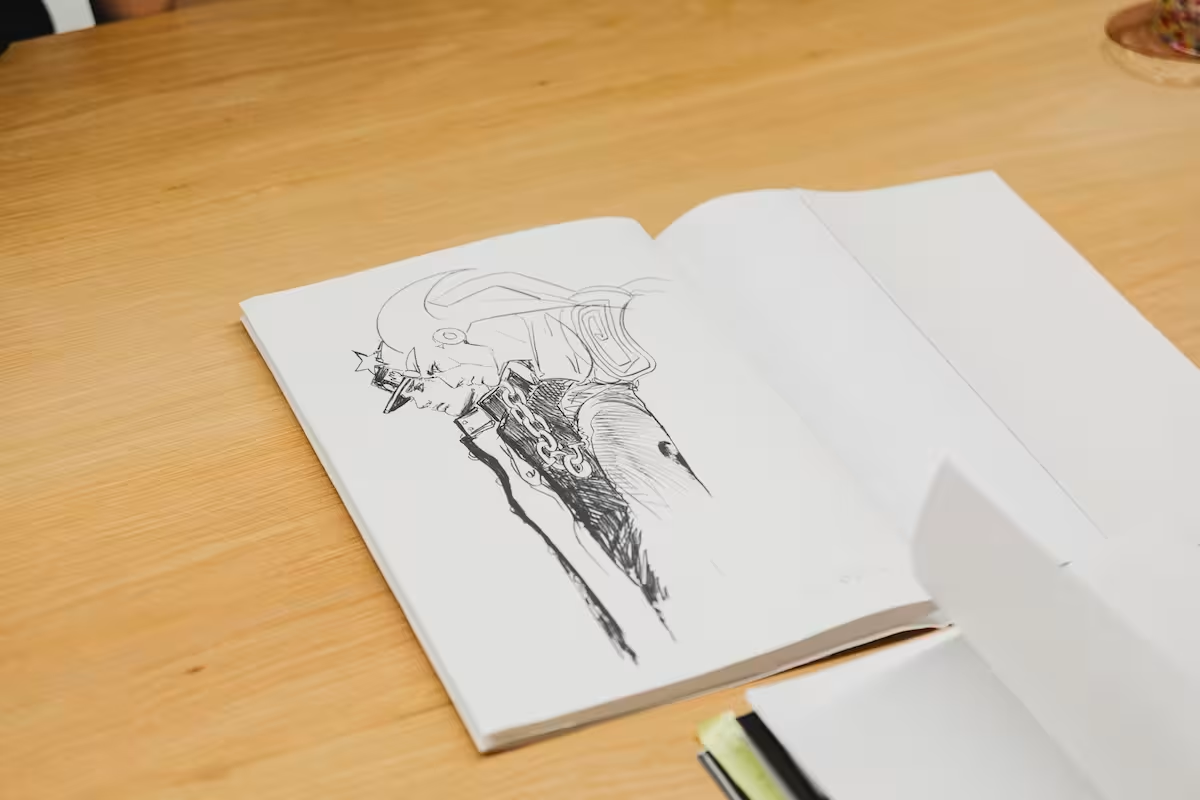
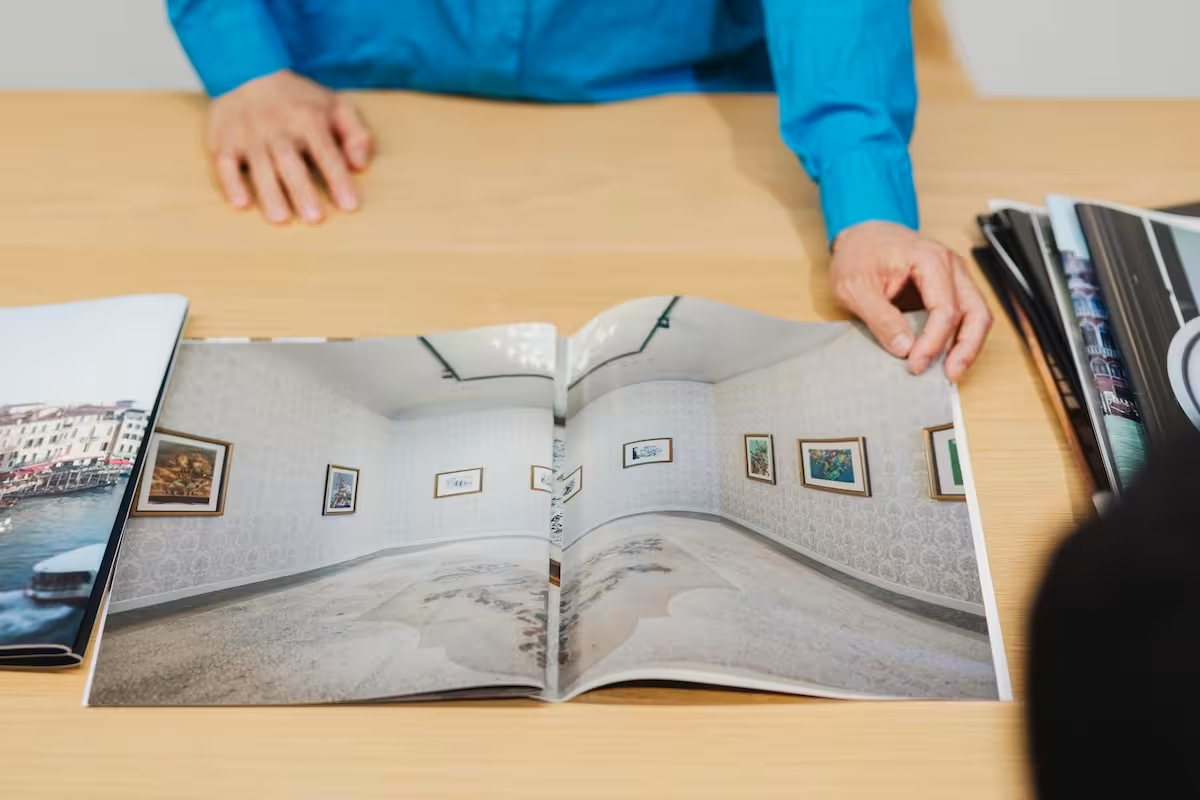
Personal Structures is one of the satellite events of the Biennale, a biennial contemporary art exhibition organised by the European Cultural Centre Italy. At this exhibition, B-OWND, a new platform for traditional Japanese crafts provided by Tanseisha—a company specializing in spatial design and creation, has teamed up with Shueisha Manga-Art Heritage (SMAH) for a collaborative presentation. B-OWND is showcasing six Japanese artists with roots in traditional crafts, along with an art collective that reinterprets the Japanese tea ceremony. SMAH is displaying works of manga art from Hirohiko Araki’s JoJo’s Bizarre Adventure. Held at the historic Palazzo Bembo in the city that also serves as the setting for Part 2 and Part 5 of the series, the exhibition has proven immensely popular.
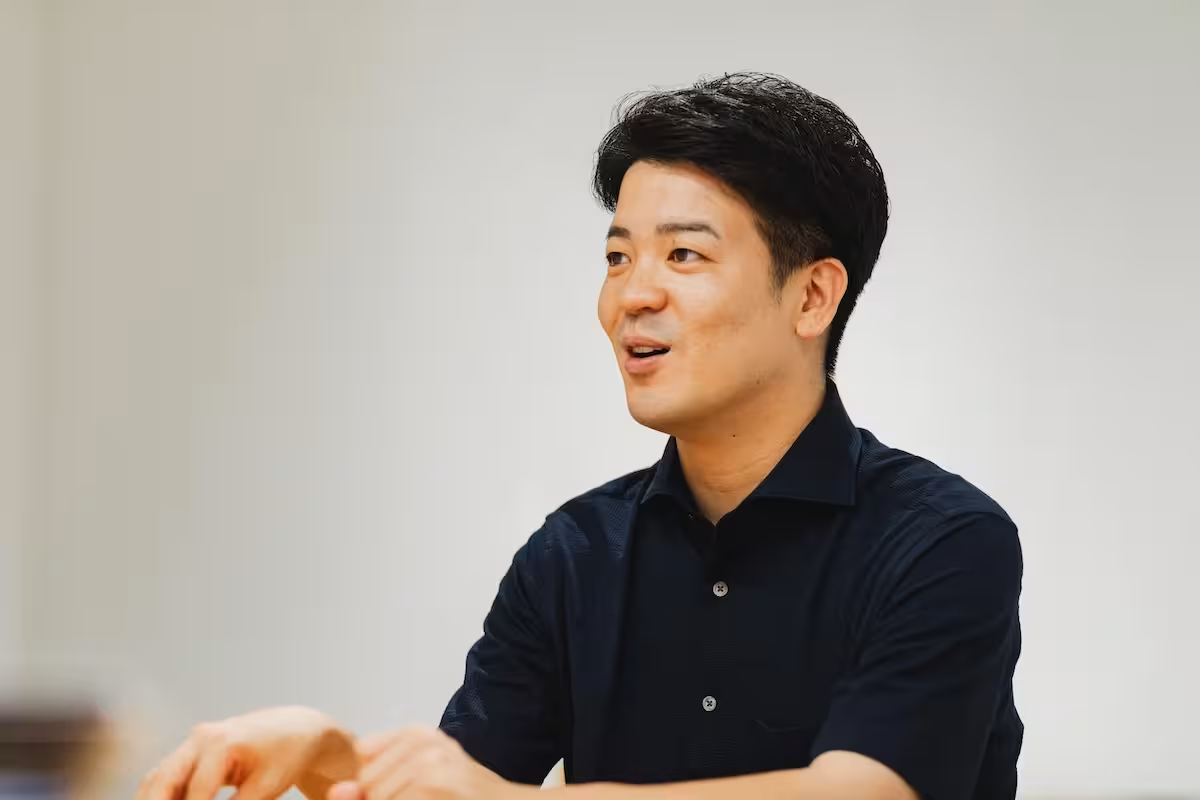
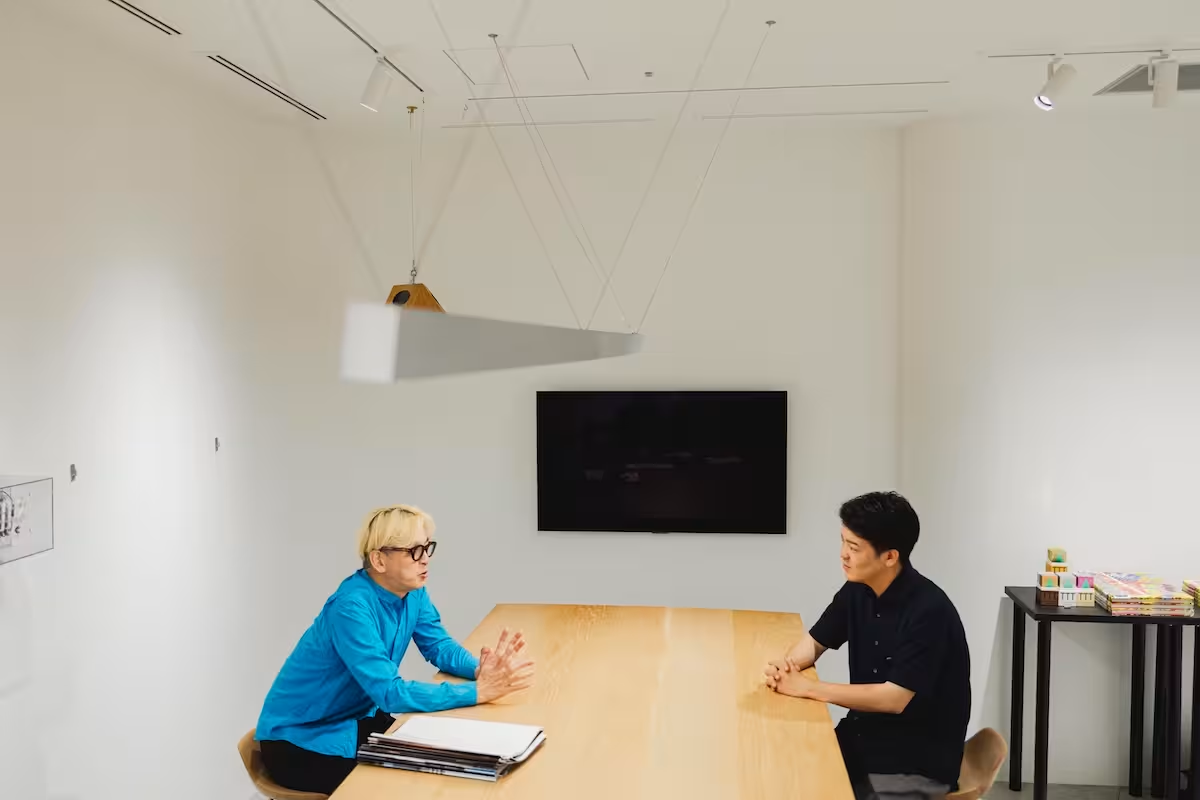
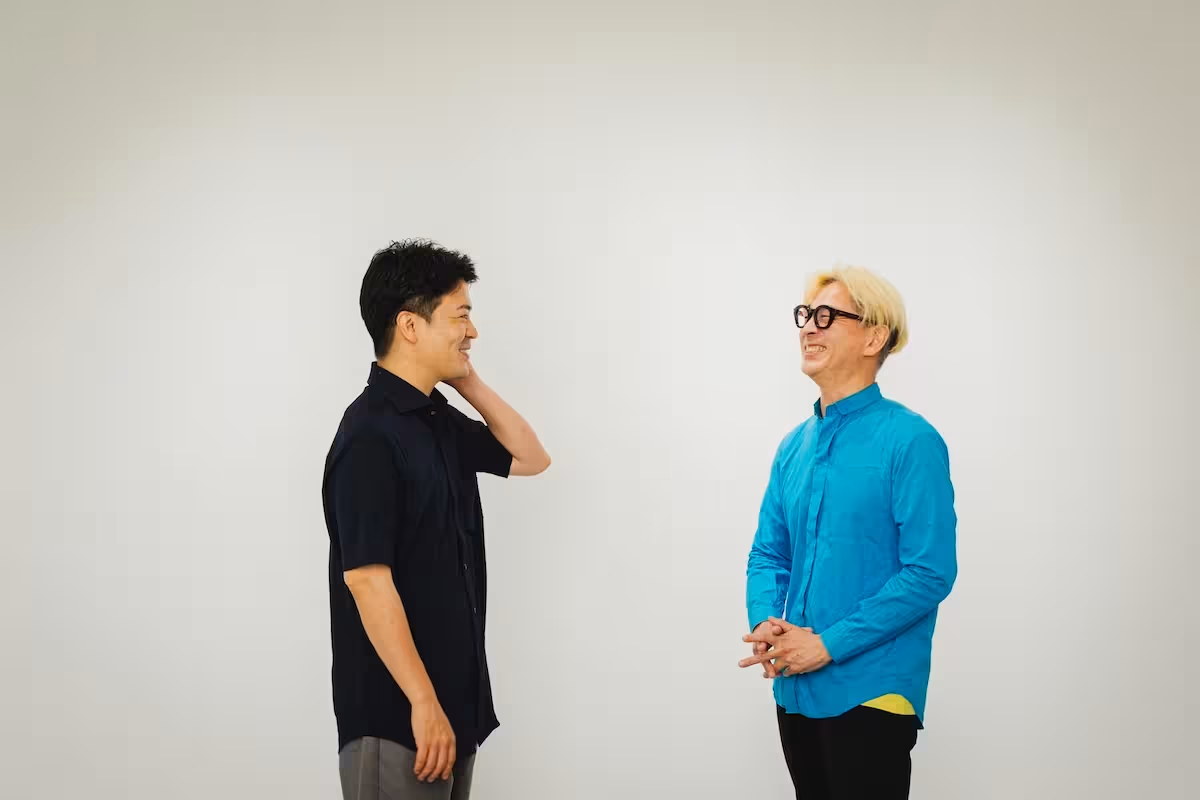
In the previous installment, we sat down for a three-way discussion with Sara Danieli, a director at the ECC Italy, ; Ken Ishigami of B-OWND, responsible for planning and managing the exhibition; and Masashi Kinpachi Okamoto of SMAH, which participated in the exhibition through a manga art collaboration. In this installment, we take a deeper look at the exhibition through a conversation between Ken Ishigami and Masashi Okamoto, while also offering a look at a new collection of Hirohiko Araki’s manga art set to be released soon. Our conversation was held at the lounge space in Shueisha Manga-Art Heritage Tokyo Gallery.
TALK 1
TALK 2
Ken Ishigami(on the left)
Ken Ishigami is a producer at B-OWND. He explores new ways of presenting traditional crafts by planning exhibitions in Japan and abroad and collaborating with artists. Launched in 2019 as a new business of Tanseisha, B-OWND works with Startbahn’s art blockchain service, which also partners with SMAH, to promote traditional Japanese crafts as works of art in Japan and abroad.
https://www.b-ownd.com/
Masashi Kinpachi Okamoto, Shueisha Manga-Art Heritage (SMAH below): Mr. Ishigami, you mentioned earlier that you feel manga art is “remarkably convincing” even when displayed alongside a variety of crafts in the historic setting of Palazzo Bembo. Looking back on B-OWND’s direction for how the works would be presented, it wasn’t initially clear whether the idea of cutting openings into this enormous fabric to display the works would actually be feasible.
Ishigami: Palazzo Bembo is a 700-year-old building. The walls are not perfectly straight like in modern buildings — there are some curved parts. So even if we produced the fabric in a factory, the dimensions wouldn’t be quite right. But we were set on presenting the exhibits this way. After some consideration, we decided to have a local sewist bring a sewing machine to the venue and sew the fabric on site.
SMAH: I recall it took them about a month to sew it, taking measurements along the way.
Ishigami: The setup and operation teams over there were also very professional. Even though we don’t speak the same language, we were able to use nonverbal cues to communicate what needs to be done next and where assistance is needed.
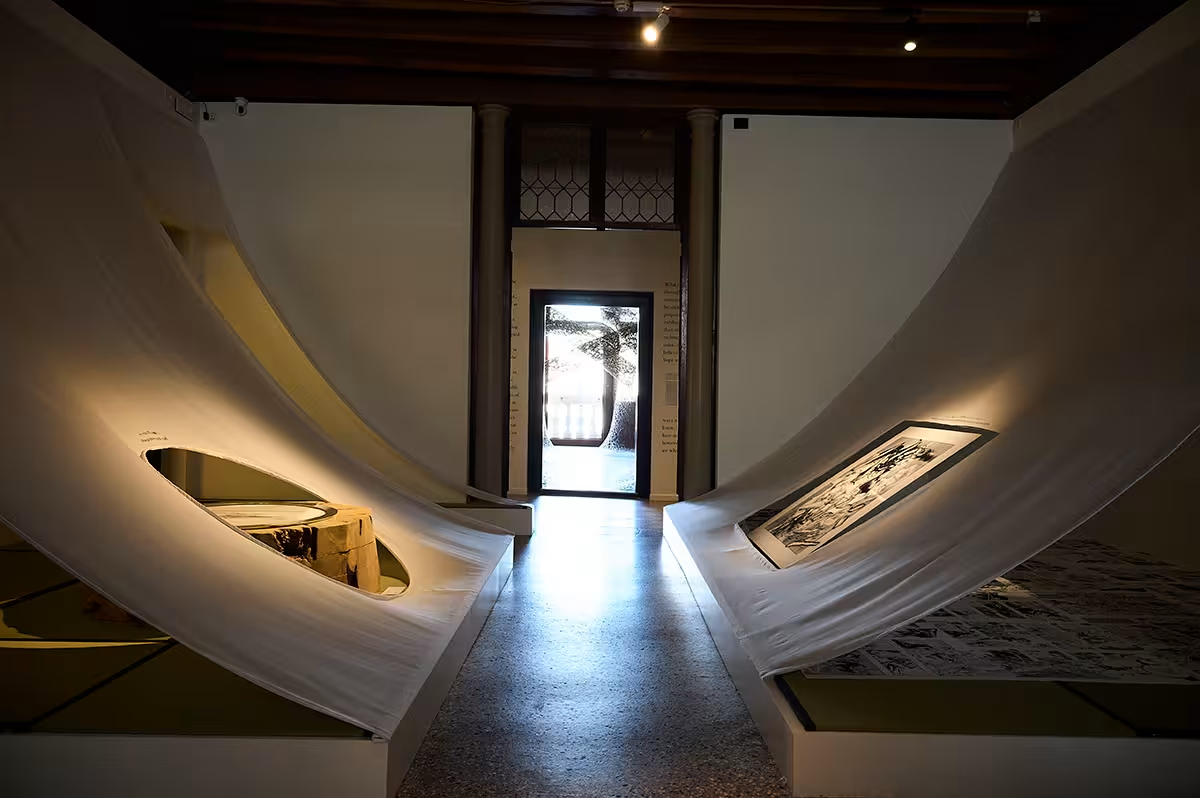
Ishigami: We also present a tea room featuring the same fabric, with tea utensils on display. It evokes a range of associations, but it was one of the features I particularly wanted to include in this room, where manga art and craft share the same space.
SMAH: The fabric is translucent, allowing light to filter through like a shoji (paper sliding door) screen. It also ties in with the exhibition at Higashi Hongan-ji Temple in Kyoto, where we displayed the works on tatami, and I think it worked particularly well as a setting for manga art. In Kyoto, the works are bathed in the light of Kyoto; in Venice, the light of Venice. It feels as if the manga art from JoJo’s Bizarre Adventure has been absorbing memories of each location.
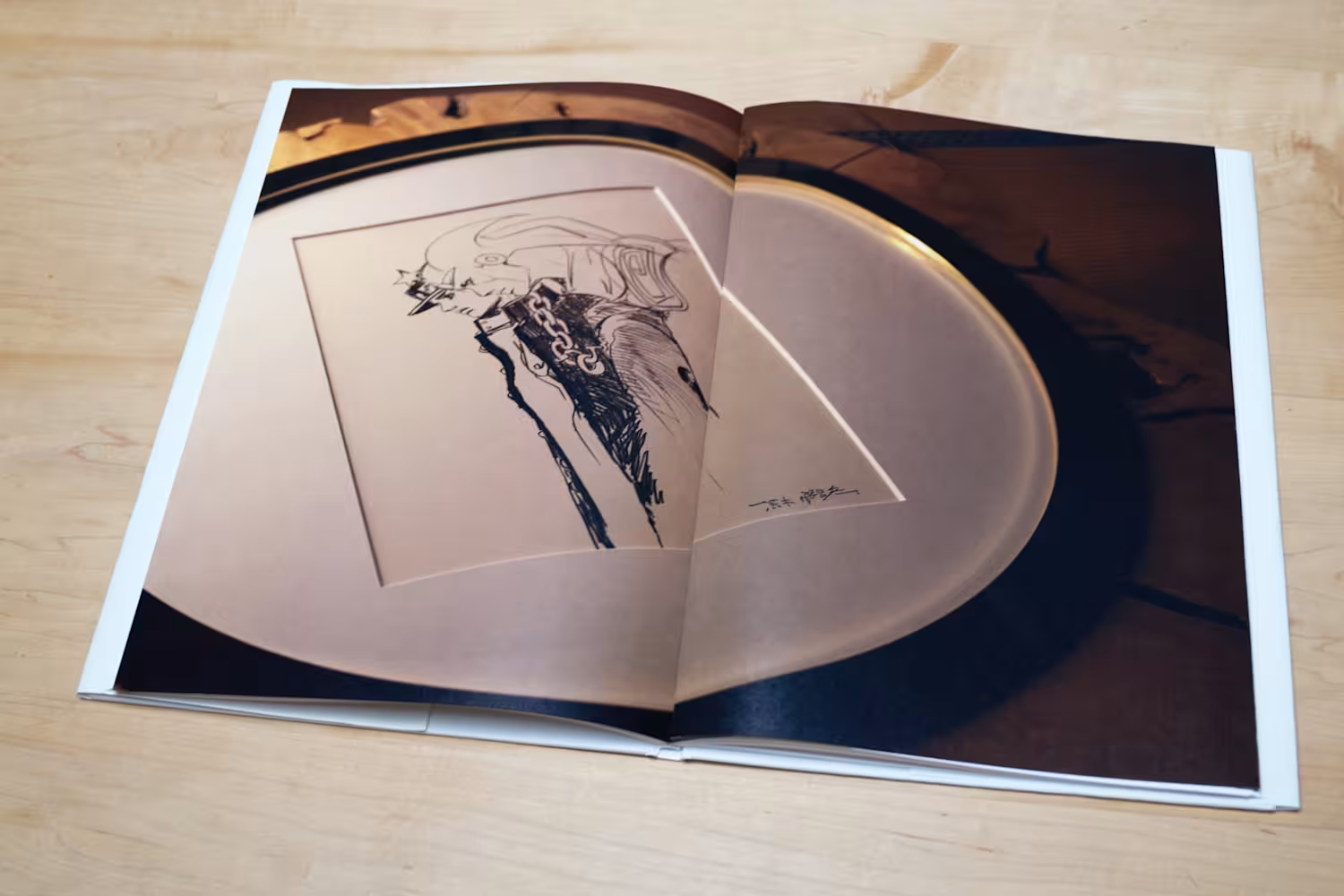
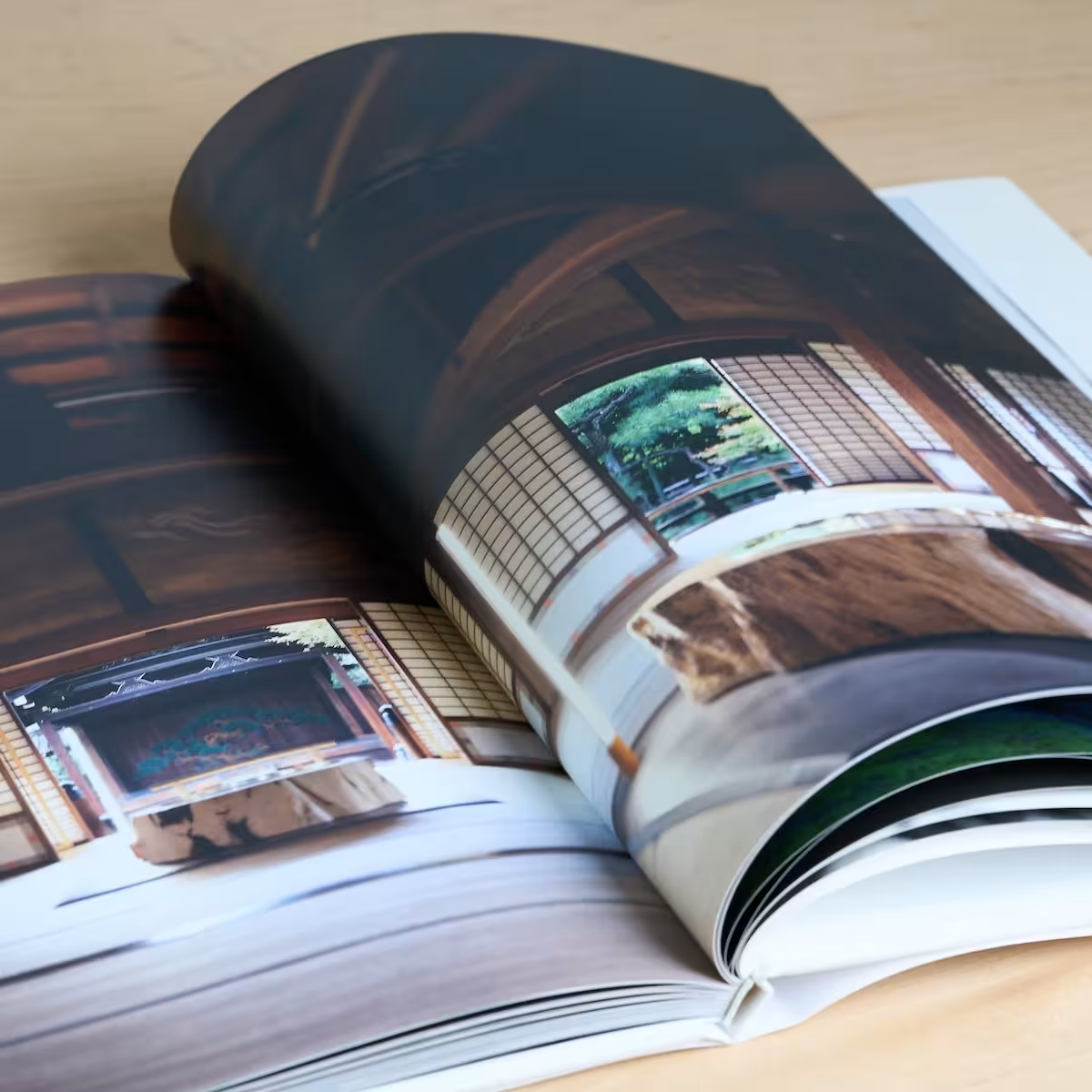
SMAH: In the exhibition at the Shiroshoin of Higashi Hongan-ji Temple, we cut out a log that was more than 100 years old and used it as a frame. When we brought in the log, it weighed between 160 and 170 kilograms, and we couldn't move it upstairs because there was no service elevator (laughs). So we cut it into round slices and carried them up the stairs. SMAH and B-OWND carried out much of the installation separately, but once everything was in place, our spaces seemed to flow together seamlessly.
__A Culture of Art Held in the Hand and Enduring Expressions — What Art and Manga Have in Common
__
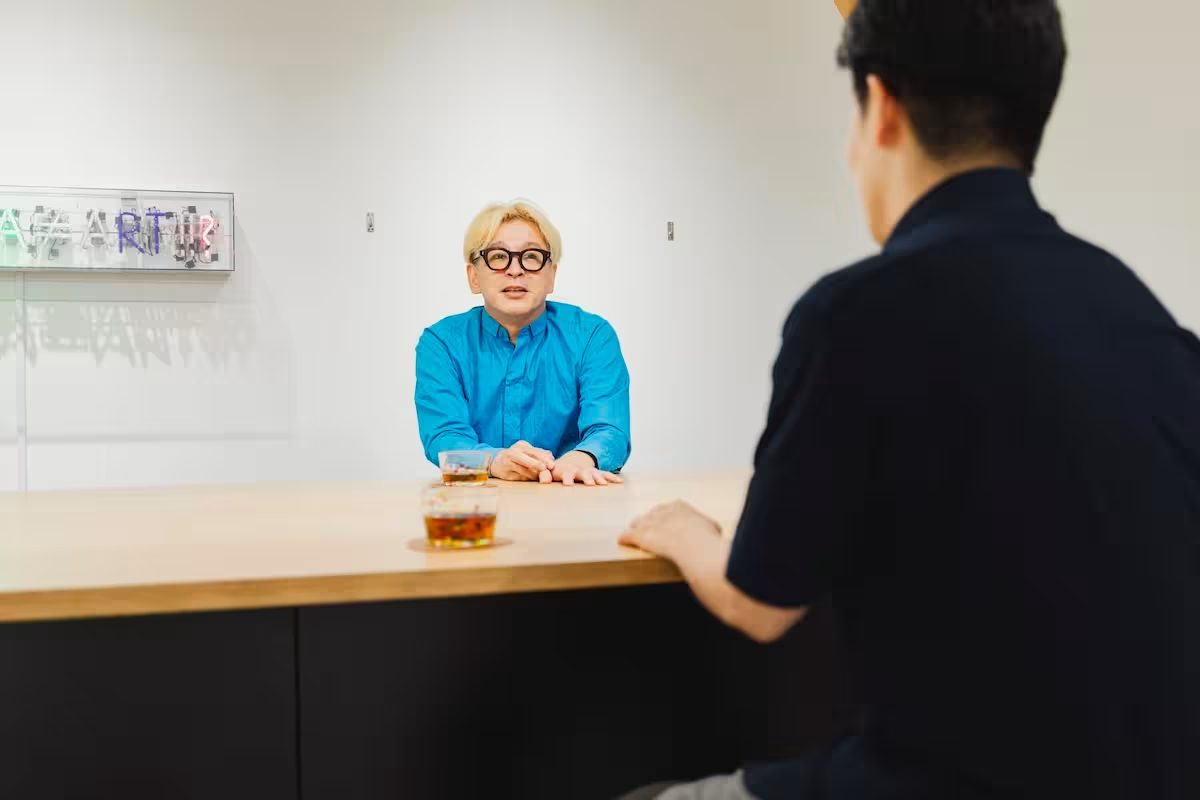
SMAH: When bringing manga art and craft together for the exhibition, what did you feel would make an interesting central focus?
Ishigami: In the global art market, crafts are categorized under the genre of applied arts. Ceramics are used both as objects rooted in everyday life and in highly extraordinary contexts such as the tea ceremony. Unlike fine art made for the purpose of appreciation, such as paintings and sculptures, there is a practical aspect to them.
Meanwhile, manga is very accessible to the general public. You can read manga for just a few hundred yen, and yet, the level of creativity is remarkable. It may be marketed to the masses, but an approach like that of JoJo can also be understood as art, breaking free of boundaries between categories such as fine art, applied art, and low art.
We touched on this topic in our last conversation with Sara Danieli, but it seemed to me that presenting craft and manga side by side could be a very interesting way of introducing Japanese culture to a global audience.
SMAH: Nicole Coolidge Rousmaniere, who curated The Citi exhibition Manga (2019) at the British Museum, also once spoke about how manga and craft are very similar. She explains, “In the past, decorated plates served as a medium for telling stories through images. They became popular and were distributed as ceramics throughout Japan, allowing people to interpret all kinds of stories from the illustrations. They share a similar role as media.” It's a unique perspective.
For example, Western paintings in the fine-art tradition are hung on walls and viewed from a distance. By contrast, manga and ceramics are something you hold in your hands. As you’ve just touched on, they are produced in large quantities and distributed so that many people can read or use them. When reading or using them, you hold them in your hand, so they become tied to your memory of the situation you were in at the time. Manga art can also be seen as a gateway to the viewer’s memory, or as something close to the viewer.
Ishigami: That’s true. Manga, in particular, tends to form a deep link with personal memories. I feel that manga has helped me through many difficult moments in my life when I was under pressure. Characters often start out weak or lacking in something, for example. But then, they go through a process of meeting companions and putting in hard work, leading them to victory. I think there are a lot of people who have found strength in these stories of friendship, hard work, and victory, which are said to be key themes in Shonen Jump. It strips away interpretations and concepts and appeals to our emotions in a dynamic way. That’s a power unique to manga.
SMAH: The fact that manga is about narrative expression may be a major factor. A mix of illustrations and text is used to tell the story, but you can also look at it for the artwork alone. Each manga has its own story, and the illustrations allow us to read into the background of the story and the lives of the characters. I think those stories can also become intertwined with the viewer’s own story.
Ishigami: Manga has always been fundamentally about entertaining the reader. For manga published in magazines, the series has to keep earning readers’ votes in weekly or monthly reader surveys. I believe that this process hones a level of creativity that resonates directly with readers. Perhaps manga offers new possibilities in an art world that can sometimes be skewed to the tastes of connoisseurs.
Striving to Expand the Boundaries of Craft at B-OWND’s New Gallery
SMAH: The exhibition in Venice will continue until November, but in September, B-OWND will open a new gallery in Tokyo.
Ishigami: It will be located on the first floor of TOFROM YAESU, which is about to open in Yaesu, right next to Tokyo Station. It has a glass storefront at street level, making it a rather unusual space for a gallery. For example, there are no permanent spotlights to illuminate the works. I believe that traditional Japanese architecture and the culture of light and shadow, as depicted in Junichiro Tanizaki's In Praise of Shadows, have their origins in craft. That’s why I believe that bright lighting that illuminates everything is fundamentally at odds with it. Amid the shift toward digital and immersive experiences, we’re moving against the trend by focusing instead on how the spaces naturally appear.
Craft is also born from engagement with natural materials. In this gallery, the space itself was created through a craft-like approach. Within the bright space filled with natural light, we created a space enclosed by bamboo-work walls. It’s dimly lit, allowing you to focus on the objects themselves. The team at Tanseisha, which B-OWND is part of, found a carpenter specializing in constructing temples and shrines, who was able to bring to life the tea rooms and bamboo work using traditional techniques.
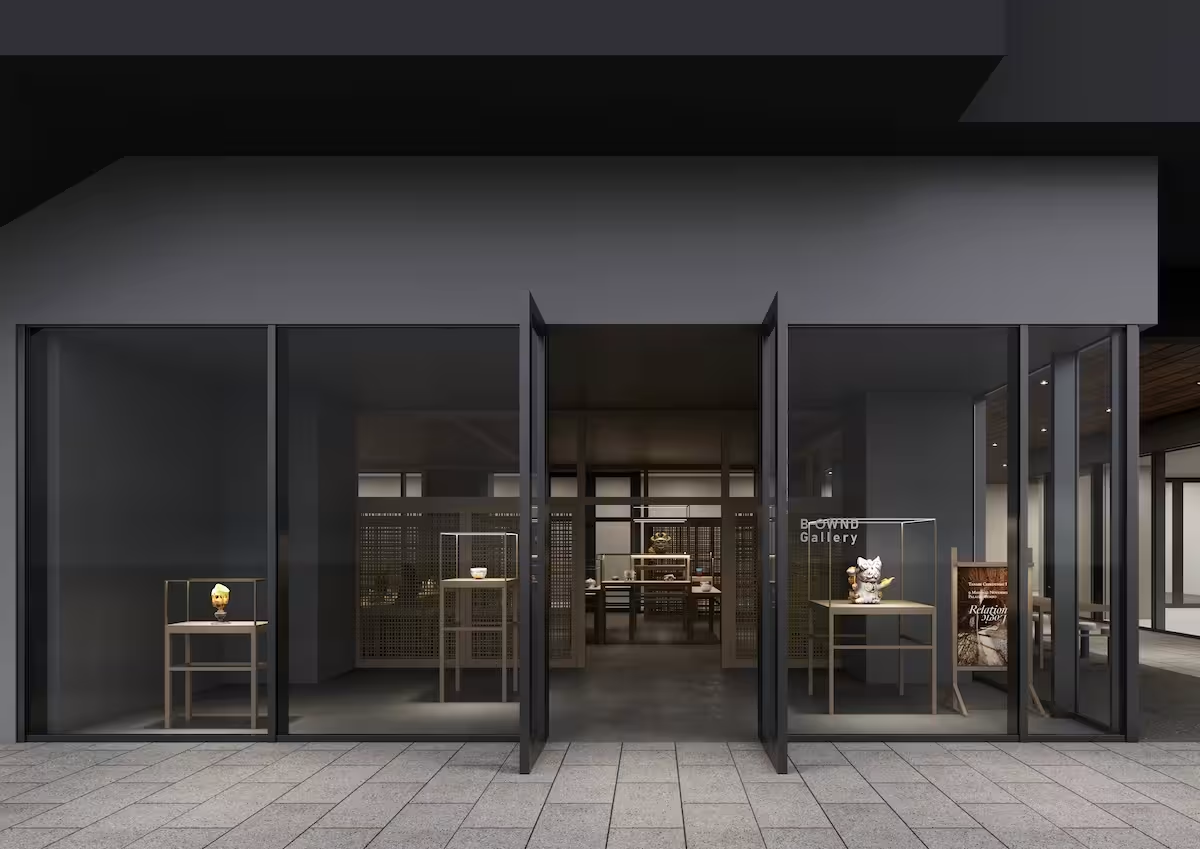
Exterior of B-OWND Gallery (rendering) ©2026 B-OWND
SMAH: Looking at the rendering, I see that there is also a counter table. Are you planning to hold events at the gallery?
Ishigami: The space can be used for talk events, as well as parties and similar gatherings using a projector. We will make use of this gallery to display not only crafts, but also collaborative works with elements from other genres, like the current JoJo project.
We started out with the desire to expand the boundaries of craft. A major difference between manga and craft is that craft is, in a sense, a declining industry. We have reached a point where traditions that go back to the roots of Japanese culture in the Jomon period may disappear due to issues such as a lack of successors., so we have to find ways to broaden the boundaries of craft. I believe that the way we broaden the boundaries of craft is crucial. Collaborative projects featuring manga art are important initiatives that take advantage of manga’s remarkable ability to reach more people.
SMAH: Collaborative projects aren’t about one side taking the lead and the other playing a supporting role. I also see great potential in expanding the field of manga art by working with professionals in various genres. What's particularly fascinating about B-OWND is that the creators are young. In conversations with them, we often find common ground through a shared love of particular manga or music.
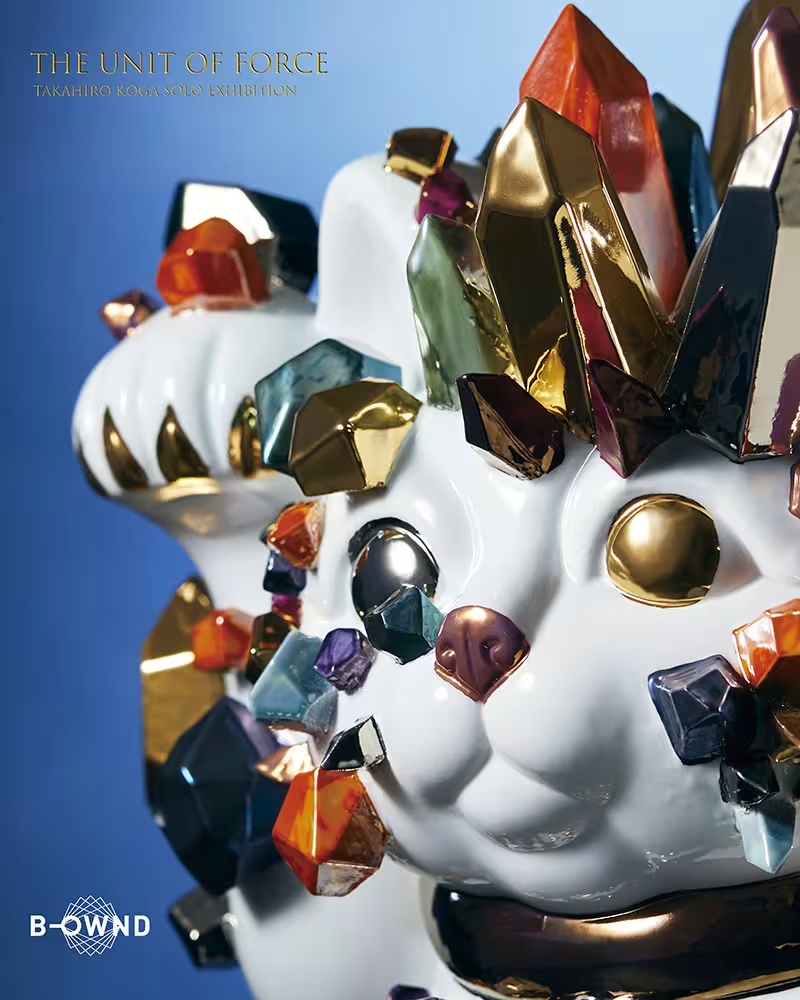
Takahiro Koga solo exhivbition THE UNIT OF FORCE
Ishigami: Because they are young, they have a lot of momentum, and they are very particular about what they do, but many of them also have good communication skills.
SMAH: I hope we can work as fellow creators in a sense, with each of us bringing our own skills and dedication to the process.
Text: Tomoko Yanagisawa Edited by: Kei Osawa Discussion Photos: Haruyuki Shirai

