



SHUEISHA Inc. All rights reserved.

The Venice Biennale, held every two years in the Italian city of Venice, has a history spanning more than 120 years. This year’s event brought together prominent figures in contemporary art from more than 40 countries.
Personal Structures is one of the satellite events of the Biennale, a biennial contemporary art exhibition organised by the European Cultural Centre Italy. At this exhibition, B-OWND, a new platform for traditional Japanese crafts provided by Tanseisha—a company specializing in spatial design and creation, has teamed up with Shueisha Manga-Art Heritage (SMAH) for a collaborative presentation. B-OWND is showcasing six Japanese artists with roots in traditional crafts, along with an art collective that reinterprets the Japanese tea ceremony. SMAH is displaying works of manga art from Hirohiko Araki’s JoJo’s Bizarre Adventure. Held at the historic Palazzo Bembo in the city that also serves as the setting for Part 2 and Part 5 of the series, the exhibition has proven immensely popular.
In this feature, we take a closer look at the exhibition through conversations with the people who helped bring it to life. First, we sat down for a three-way discussion with Sara Danieli, co-director at ECC Italy and Head of the Art Department; Ken Ishigami of B-OWND, responsible for planning and managing the exhibition; and Masashi Kinpachi Okamoto of SMAH, which participated in the exhibition through a manga art collaboration.

Sara and Ken at the opening of Personal Structures exhibition
Sara Danieli
Sara Danieli is a director at the European Cultural Center Italy (ECC Italy). She serves as the Head of Art at the Italian branch of the organization. She is also one of the staff overseeing Personal Structures, an international exhibition of modern art and architecture. Headquartered in the Netherlands, the ECC is a non-profit organization that carries out activities around the world. They have been conducting this project in Venice since 2011.
https://personalstructures.com/
Ken Ishigami
Ken Ishigami is a producer at B-OWND. He explores new ways of presenting traditional crafts by planning exhibitions in Japan and abroad and collaborating with artists. Launched in 2019 as a new business of Tanseisha, B-OWND works with Startbahn’s art blockchain service, which also partners with SMAH, to promote traditional Japanese crafts as works of art in Japan and abroad.
https://www.b-ownd.com/
JoJo's Impact on Venice, the City of Art
Sara: The response to the JoJo's Bizarre Adventure exhibit at this year’s Personal Structures was incredible. We’re getting calls about it almost every day, and videos of the exhibition are being shared all across Italy. It’s been absolutely sensational. Nothing like this has ever happened in our history (laughs).
SMAH: A long line started forming in front of Palazzo Bembo more than an hour before opening on the first day. The enthusiasm of the local people was incredible.
Sara: We also have many visitors from Japan. There were several groups last week when I went to the venue. They would start by viewing Hirohiko Araki’s art prints, and then they would read the descriptions carefully while translating them with their smartphones. They spent a long time in each room. It was an incredible thing to witness.
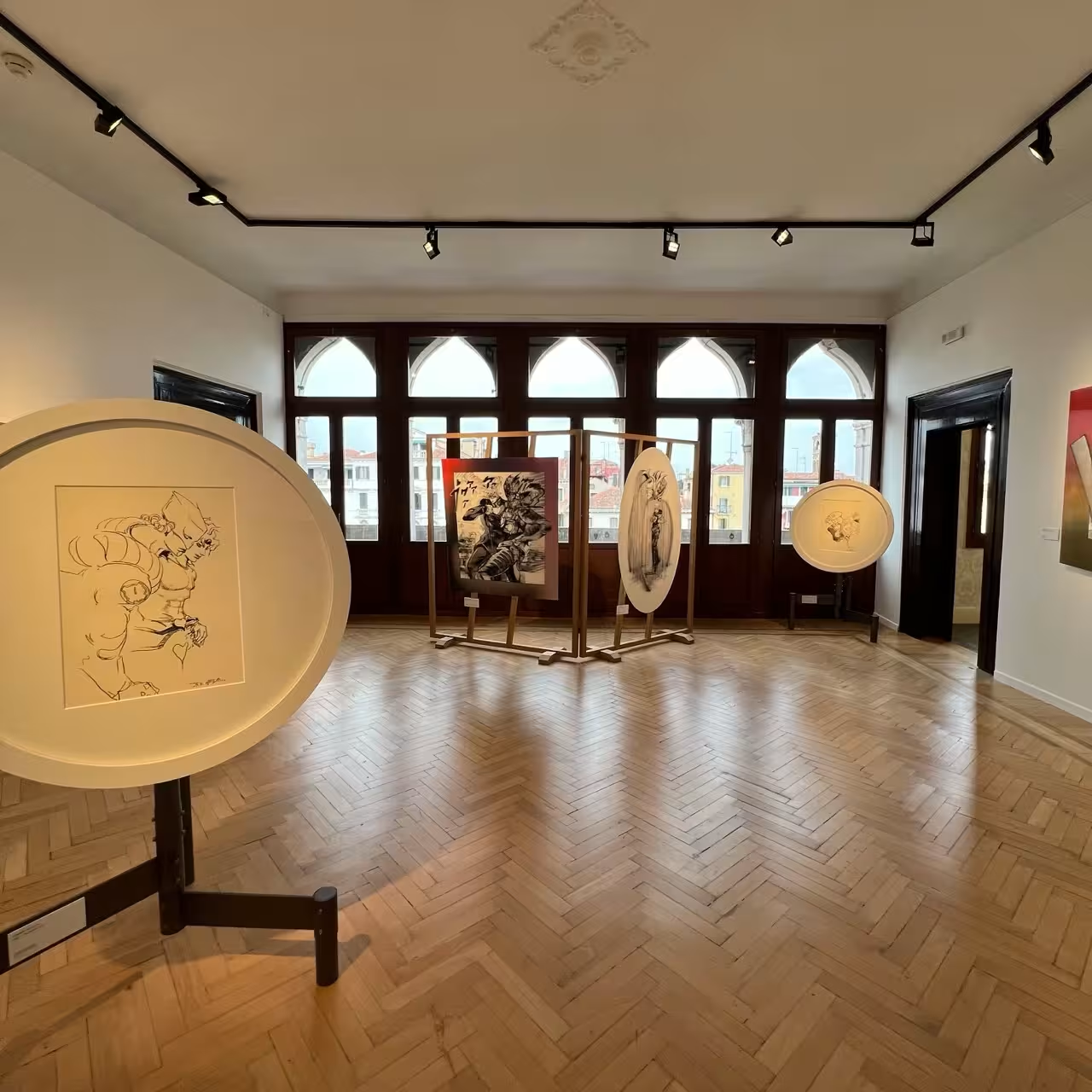
JoJo's exhibition at Palazzo Bembo
Sara: The way the works from JoJo are displayed not only on the walls but also freestanding on the floor is itself an expressive choice, isn’t it? With the works positioned at eye level, the viewer can engage with them on a deeper level. Beyond that, the exhibition makes use of the Bembo family’s rooms as they are, in a space overlooking the Rialto Bridge, which is actually featured in Part 2 of the series. Every detail had layers of meaning.
SMAH: We’re very happy to hear that directly from the curator herself. Mr. Araki also visited the exhibition in person and was very pleased with the presentation in Venice.
Sara: Yes. He was smiling a lot, and it was clear that he was enjoying himself. He enjoyed not only the art, but also the people and food in Italy, and I felt honored to be there to witness it. I believe there is something truly precious about the passion behind JoJo and the themes explored by its characters and adventures.
SMAH: Mr. Ishigami, how did you feel when the exhibition finally opened in Venice? You’d been working on this exhibition for quite some time, since last year.
Ishigami: I love Venice. It’s a very special city with a long history of art. My father, an artist, was also influenced by this place. When I was a university student, I even wrote my thesis on the Renaissance. That’s why I was so excited to be producing an exhibition there, and when it finally came together, I was so overwhelmed that I almost cried (laughs).
What Brought These Crafts and Manga Works to Venice?
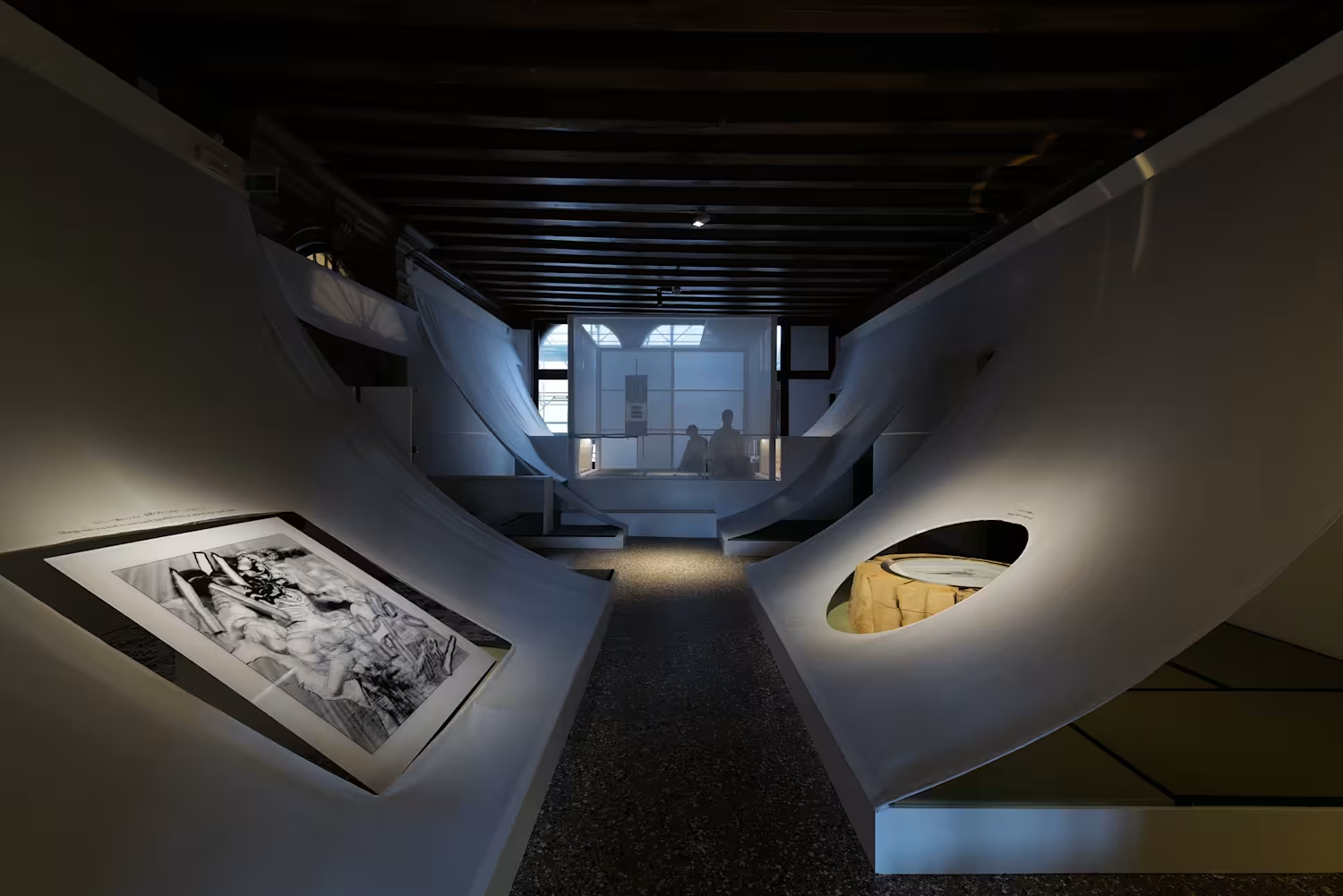
Collaborated exhibition by B-OWND and SMAH
SMAH: First, I would like to talk about the theme of the exhibition. The theme of this edition of Personal Structures is “Confluences.” Within that, B-OWND’s exhibits explored the theme of “Relational Logic.” The content brings together Japanese artists working with crafts and tea culture with the world of manga. Mr. Ishigami, what was the thinking behind how B-OWND structured its exhibits?
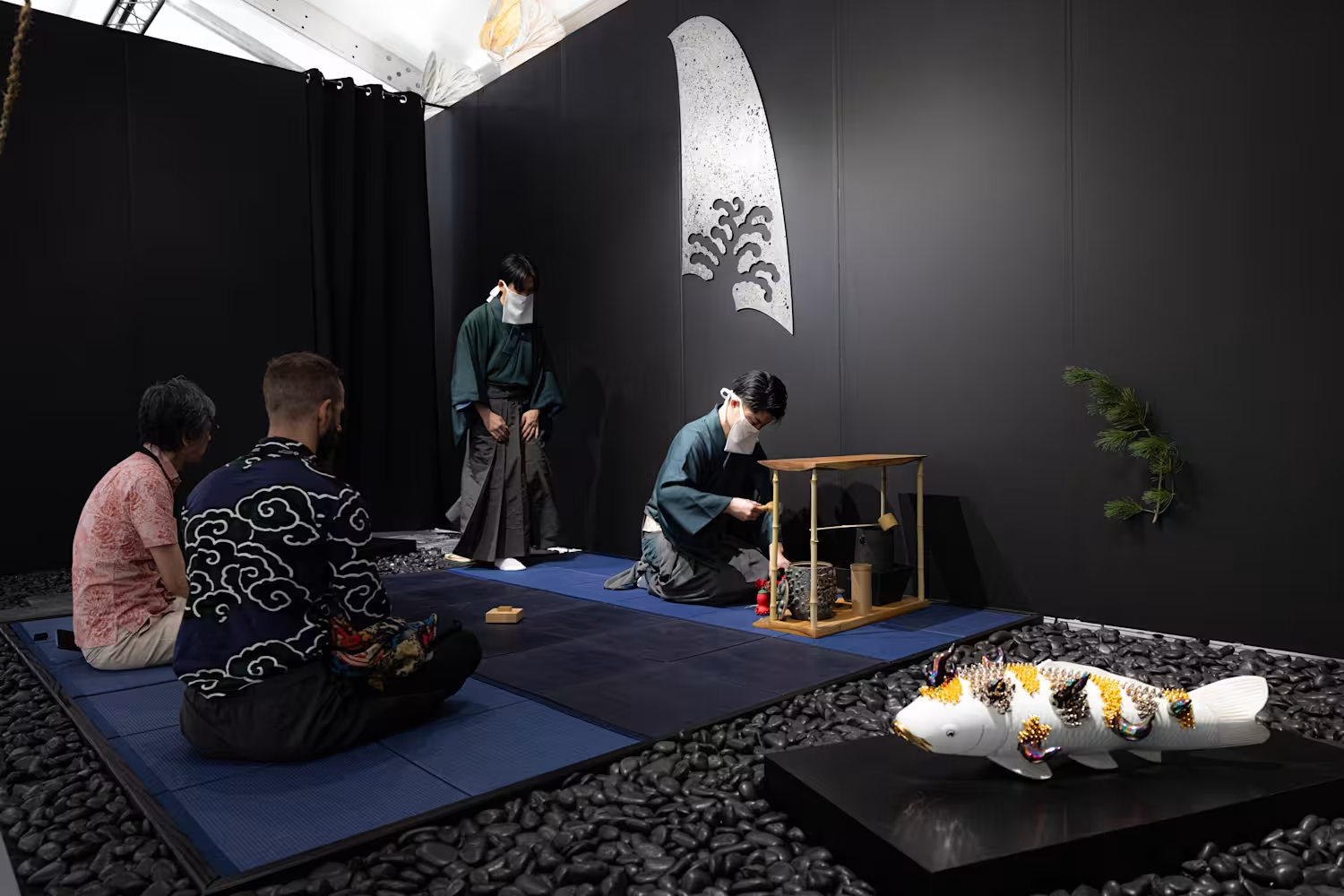
Ishigami: Let’s see. I think the explanation for the first exhibition room is fairly straightforward. We wanted to convey three perspectives of Japanese culture. The first is the tea ceremony, the second is crafts, and the third is manga. At first glance, these art forms seem unrelated, but if you dig deep, they actually overlap in many ways.
For example, the crafts used there as tea utensils appear later in the exhibit as objects for artistic appreciation. Drinking a cup of tea is an everyday activity, but it can also be seen in the context of art or as part of a sacred ritual.
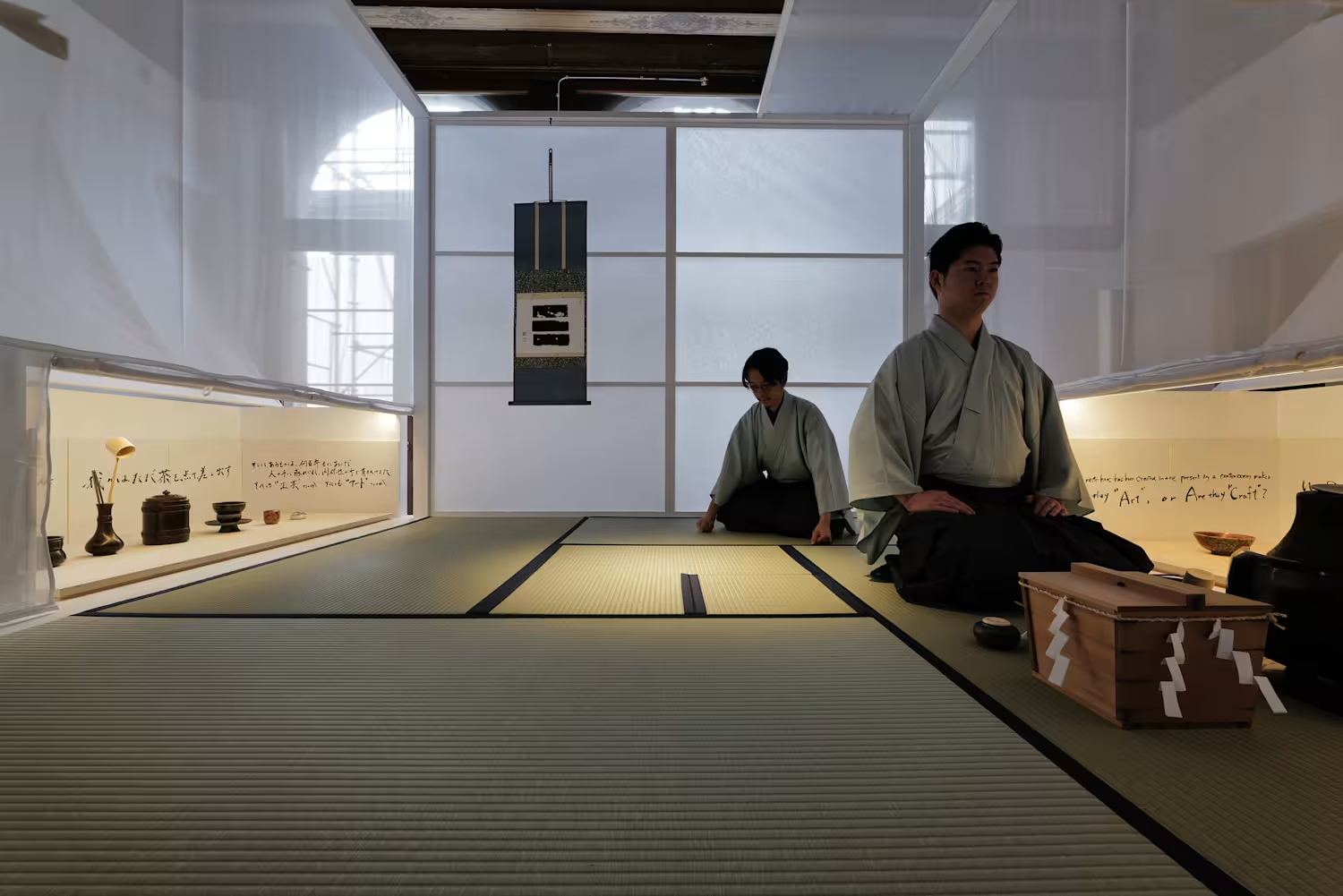
B-OWND、Art Collective TeaRoom
Manga culture is the same in that, while it represents popular culture, it can also be classified as art. In other words, it’s part of everyday life, but at the same time, it’s also something ceremonial and artistic. We wanted to show the boundaries and points of overlap there.
Sara: I don’t think there are many teams capable of putting together an exhibition with this much flexibility and such a unique group of artists. One of our aims is to generate creative dialogue. I thought this project could create a new space for that kind of dialogue.
SMAH: It all started back in December 2024 with SCOPE, an art fair in Miami. It was there that we presented the first collaborative exhibit between B-OWND and SMAH. We displayed sake vessels and other works created through a collaboration between Go Nagai and Takahiro Koga, featuring motifs from Mazinger Z. Sara, I understand that your first encounter with B-OWND’s work was when you saw that exhibit. Could you tell us about that experience?
Sara: Art fairs are a marketplace, but they’re also an opportunity to discover new talent and learn. I’ve been going to the Miami fair every year since 2019, but B-OWND really made an impression on me.
The exhibits were on the right-hand side after coming in from the entrance. With so many galleries making bold statements through lively displays, B-OWND stood out for its noticeably different feel. Even the Miami locals, who were busy making the rounds of the various fairs, found themselves stopping to enjoy the unhurried flow of time in the space.
Ishigami: It was divided into two booths, one for the tea ceremony and another for the exhibits. In Miami, the theme was “the boundaries of arts and crafts.”
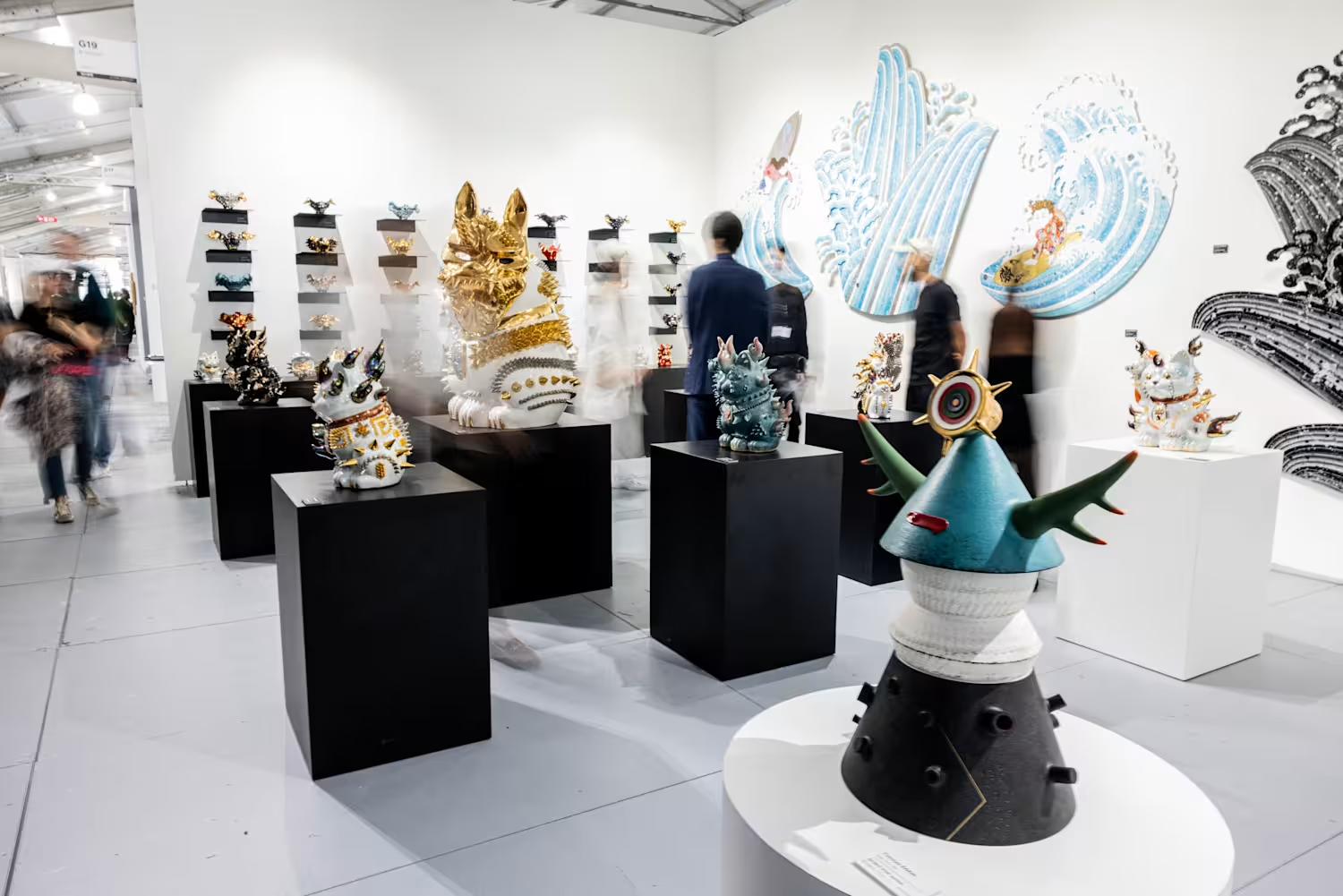
B-OWND exhibition at SCOPE Miami Beach 2024
Sara: It was a place where visitors could engage with the artists through their work and have an experience that could only be found there. I was drawn to this style of exhibition, as well as the warm atmosphere that made everyone feel welcome.
SMAH: I understand that this encounter led to this current project.
Sara: That’s right. We initially kept in touch through email and video calls, but when we finally met in person in Venice, the experience was completely different (laughs). They even treated us to a small tea ceremony using the ceramics they had brought with them. As I recall, it was a hot day in May 2025.
We had a fascinating conversation with Mr. Ishigami that day. Venice doesn’t allow new construction, so the city is filled with buildings dating back to the 15th and 16th centuries. That’s why its culture remains deeply rooted in tradition even today. At the same time, modern forms of creative chemistry are constantly emerging, and Venice has become an important global platform for contemporary art. Mr. Ishigami’s project is also an approach to keep traditional crafts alive in modern times. I realized that this approach was closely aligned with the local character of Venice.
“Like an Altarpiece” — How a Local Director Sees the Power of Manga
Ishigami: We have been involved in projects overseas for the past three years, but this is our first large-scale exhibition in Europe. Not to mention it’s held in Italy, the country I’m most deeply attached to. The exhibition itself was a truly incredible event for me as well.
Sara: I recall you also visited in July 2025 to measure the venue. You came with the members of TeaRoom, the art collective featured in the exhibits. You took measurements of Palazzo Bembo together and discussed tea and exhibition plans. The ideas you presented there were, frankly, very bold. I’d never seen anything like them before. I was struck by the level of professionalism behind the spatial design.
SMAH: That makes sense, given that Tanseisha, the company behind B-OWND, is a long-established name in spatial design. You also seemed to work seamlessly with the local installation crew to bring the space together.
Sara: The venue is a palace built in the 14th century, so there are regulations and approvals from the authorities in charge of protecting cultural properties. You’re not free to do everything as you wish. But even when things didn’t go as planned, we came up with alternative ideas that everyone could agree on and moved forward. Those exchanges felt very comfortable. The collaborative process was constructive and inspiring.
SMAH: Sara, what did you think about the decision to place works from JoJo’s Bizarre Adventure on display in the prestigious room that the Bembo family once used as a study and reading room?
Sara: To tell you the truth, I would have never imagined that the room could be used like that (laughs). I had been looking at the pictures of the exhibition at the temple in Kyoto (Shiroshoin of Higashi Hongan-ji Temple), so that was the concept I had in mind. But later, I completely understood the intent behind how you presented the works.
That room with the Bembo family crest is a very special room, even among other rooms in the palace. Pietro Bembo was a Renaissance poet and scholar who is credited with laying the foundation for the modern written language of Italy. It was deeply meaningful that the exhibition was held in a room with such historical significance in terms of words and language.

JoJo's exhibiton at Palazzo Bembo
SMAH: We wanted to recreate, as faithfully as possible, the way the room looked when it was still used as a living space. Even that wallpaper was an Italian design that we specially ordered and had newly installed.
Sara: I love the combination of the wallpaper and the chandelier made by Flos, an Italian manufacturer. When you think about its connection with that room, manga is also a form of “language” and a means of communication. Centuries ago, the stories of the Bible were conveyed to the illiterate through religious paintings and altarpieces in churches. Manga has a similar kind of power. By combining words with characters, imagery, symbolism, and storytelling, manga creates a distinctive visual language all its own.
SMAH: Sara, you weren’t especially familiar with manga before this, were you?
Sara: No, I wasn’t. Until this project, I never had much of a connection with manga, and at first, I never really imagined that I would end up collaborating with a Japanese publisher. However, as I did my research, I realized how important manga was in this project and in Japanese culture, and within a few months, I began to realize just how significant the challenge we were taking on with this exhibition really was.
From a Land Where Diverse Cultures and People Come Together

Opening reception at Personal Structures exhibition
SMAH: Human connection is also a very important aspect of this project. At the opening ceremony and reception, I was able to speak with people from all over the world in a very candid and friendly way. We feel that a project unlike anything we’ve seen before has begun right here. How do you feel about the encounters you’ve had with the people who came together here?
Sara: At the reception, I had many chance encounters with members of the Japanese team and others. I believe that even more new projects will emerge from this.
There’s something meaningful to me about people meeting in Venice. It’s because you get to see how people from different countries, cultures, and backgrounds perceive and understand this place. This is not a huge city like Tokyo, but rather a place that feels more like a cluster of small villages. That’s also why it’s a place where the kind of cultural diversity that B-OWND has showcased can thrive.
Ishigami: Serving as a bridge between the East and the West, Venice was a place from which new art, ideas, and philosophies spread around the world. Even if you don't know the details of its history, you can experience it firsthand in its culture. I was able to talk openly and deeply about culture, philosophy, and the significance of this place.
Now that the Venice Biennale is underway, various streams of culture are converging here. I could really feel that Japanese culture and Italian culture have come together in one place in the form of crafts, manga, modern art, and the tea ceremony.
Sara: And that’s precisely the concept of this edition of Personal Structures — “Confluences.” Thank you for tying that together so nicely (laughs).
Continued in Part 2
Edited by: Kei Osawa

