



SHUEISHA Inc. All rights reserved.

Shueisha Manga-Art Heritage launched on March 1, 2021. To pass on Japan's rich cultural heritage to future generations, this project brings manga, art and culture together with new technologies such as blockchain registration certification. As Shueisha was preparing for its long-awaited launch of this project, we held a discussion about its ramifications. Taihei Shii, CEO of Startbahn Inc. and a pioneer in the field of art-related blockchain, Akira Shimooka, guitarist for the rock band Analogfish who has deep connections with a variety of cultural fields, and Masashi Okamoto of Shueisha, in charge of Shueisha Manga-Art Heritage, shared their thoughts on the project and on the implementation of blockchain registration.
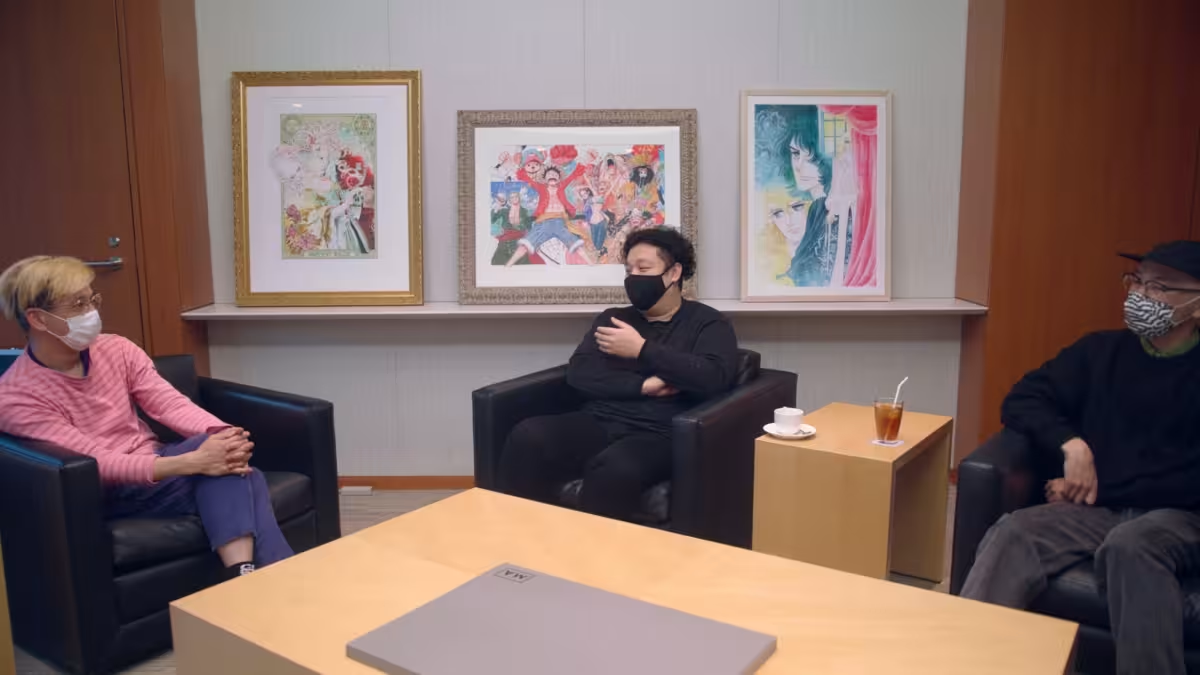
Taihei Shii (left side of the photo) is a contemporary artist as well as being CEO of Startbahn, Inc. He earned an advanced degree from the University of Tokyo Graduate School of Interdisciplinary Information Studies. After graduating from Tama Art University in 2001 with a major in oil painting, he has been working as an artist exploring themes of art in the age of the internet and continues to showcase his work at galleries and museums. He began conceiving the idea for Startbahn in 2006, and later patented it in Japan and in the US. Shii began his business while still in in graduate school. He regularly gives talks and lectures on his work and his company.
Startbahn Inc.
https://startbahn.jp/
Akira Shimooka(right side of the photo) is the vocalist and guitarist for the three-piece rock band Analogfish, formed in 1999. He is active in a wide range of projects, including the web media platform m-sha (currently on hiatus). It was Shimooka who brought Startbahn's Shii and Shueisha's Okamoto together.
Analogfish Official Website
[https://www.analogfish.com/]
Masashi Okamoto(center of the photo) is the head of Shueisha's Digital Business Division. Okamoto joined Shueisha after graduating from the Department of Fine Arts at Tokyo University of the Arts. He became involved in the digitization of manga through the compilation of women's magazines on a portal site. He planned and created the Comics Digital Archives, a database in which all major Shueisha comics are archived and managed. He is also involved in the digitization of the production environment of manga magazines like Shonen Jump. He is the project leader for Shueisha Manga-Art Heritage.
From art held in your hands to art hung up on the wall
Okamoto: First of all, let’s take a look at some "manga art".
Shii: The box looks well-made and stylish.
Okamoto: In the art world, artworks are often packed in cardboard.
Shii: Sometimes they are custom-made to fit the shape of the work, but I've never seen packaging made so well.
Shimooka: Were these works originally drawn to these sizes?
Okamoto: We made them quite large. This is how they compare to the original size.
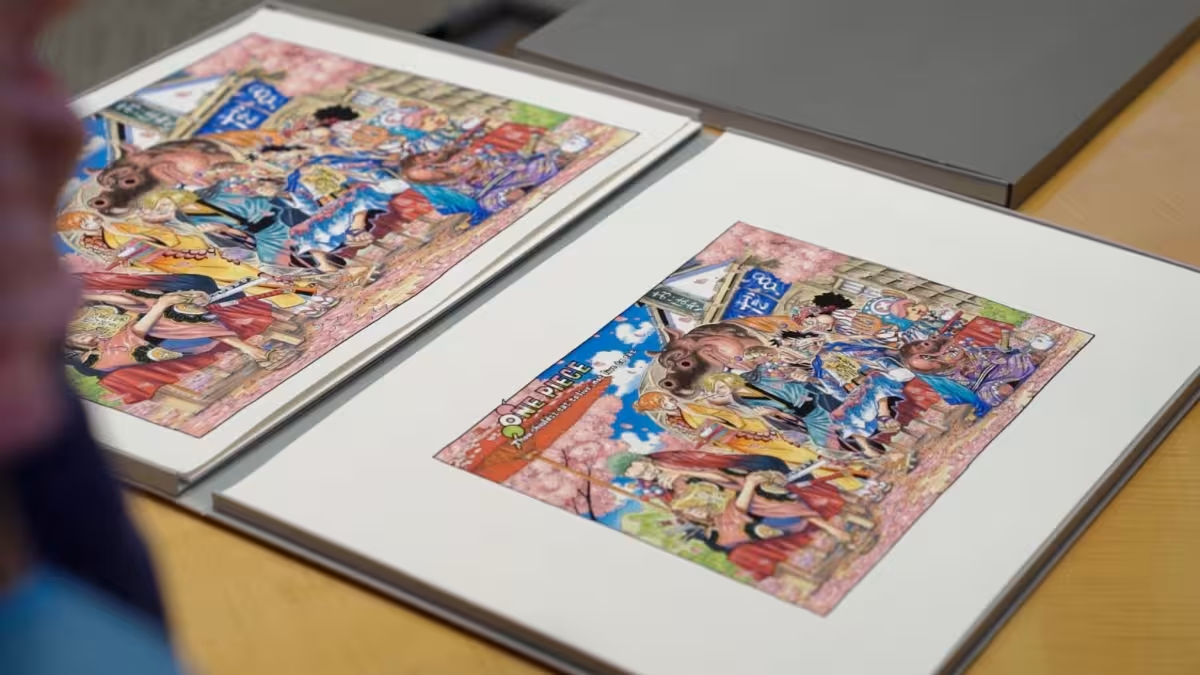
Okamoto: It's interesting how some details can only be seen in this large size. This is especially true for One Piece, because the artwork is so densely drawn.
Shimooka: There's a lot of information packaged in this art. Whenever I'm reading Jump and I get to One Piece, I always think, "this is so awesome" (Laughs). And Innocent too... Could you even illustrate that style of work on a manga serialization schedule?
Shii: I know what you mean. If he was only working on one illustration, it would be understandable.
Okamoto: Sakamoto draws fully digitally. He has quite a few hair and clothing patterns saved on his computer, and he illustrates by pasting together parts and making adjustments. The art is so detailed that I always wondered, "Why would they draw in such detail if they knew it would be only printed in Comics size?" There is a level of detail that you can't even see in Comics. Here are some other large works I would like you to see.
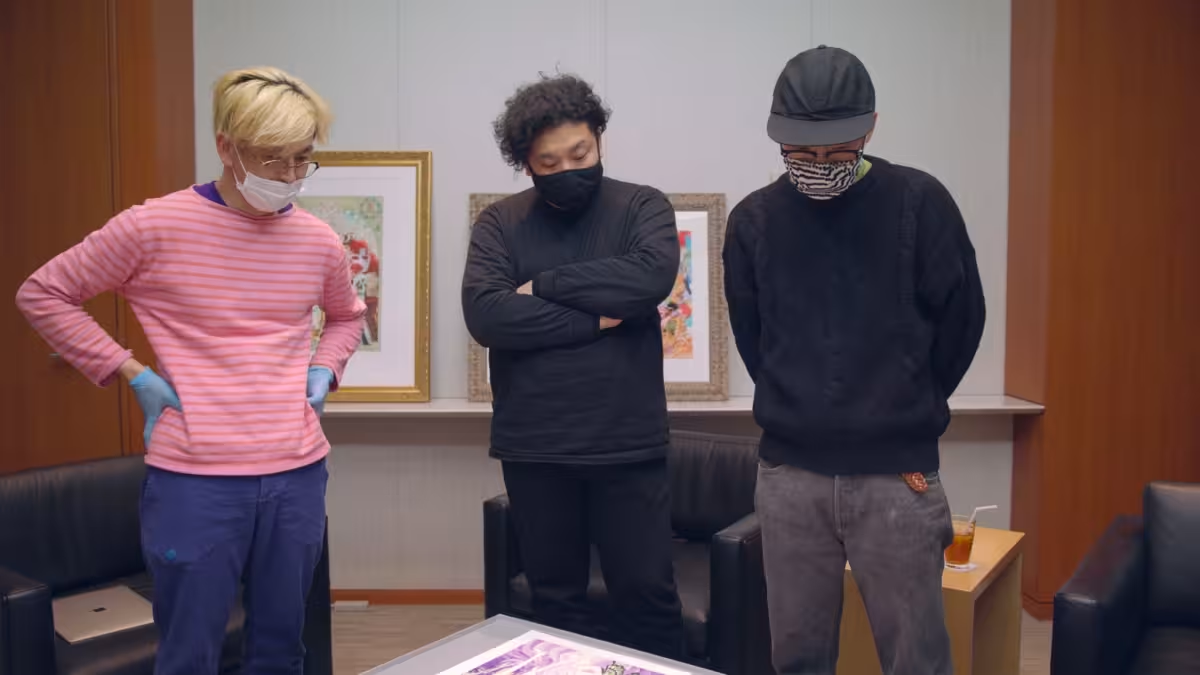
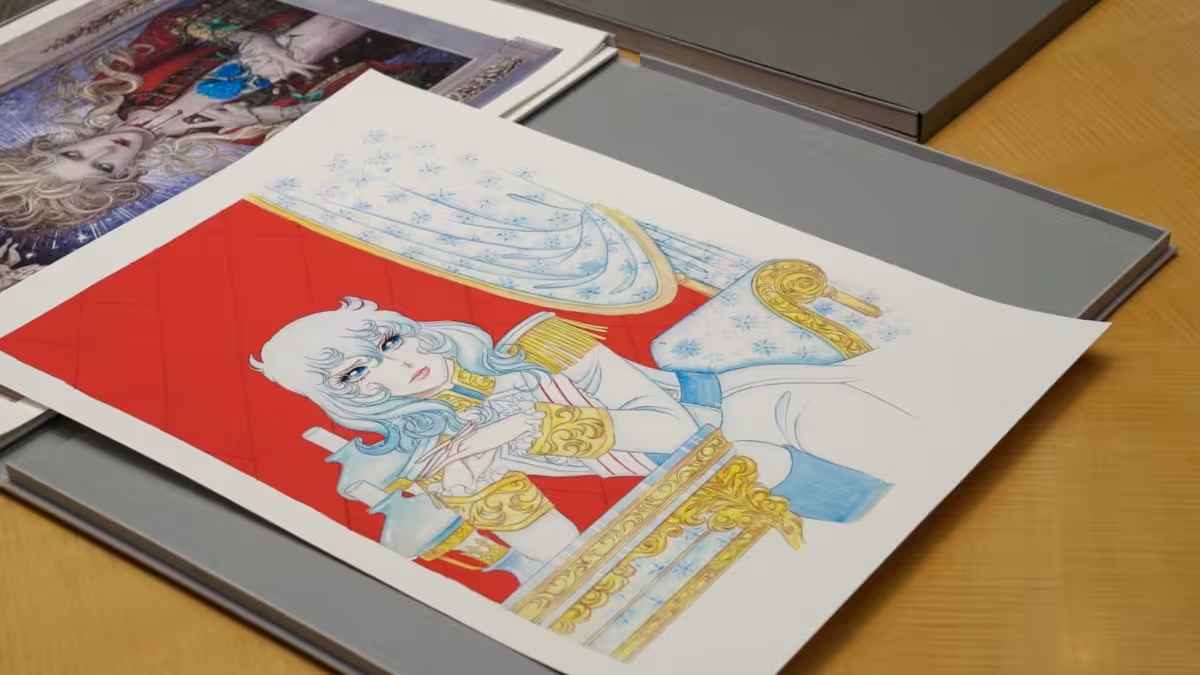
Shimooka: The Rose of Versailles looks gorgeous, too. It makes me realize that I'm someone from the period that birthed this manga. It's like I get the point of it.
Shii: Yeah. It looks quite complete, and at a glance, I know what you're trying to say.
Okamoto: This series ran from 1972 to 1973, but looking at it now, it's still impressive.
Shii: When you compare them together, it's fun to see the difference between the past and now.
Shimooka: The word "manga" means something different to each artist who has a different way of expressing him or herself.
Okamoto: Manga has always been art that you hold in your hand. It was art that was in your hand that you touched. So when you're able to hang the work on the wall and view it from a distance, it can change your perspective of it and allows you to notice so many new things. I'm hopeful that by expanding the project not just to Japan but also overseas, the artwork will be perceived in a completely different way.
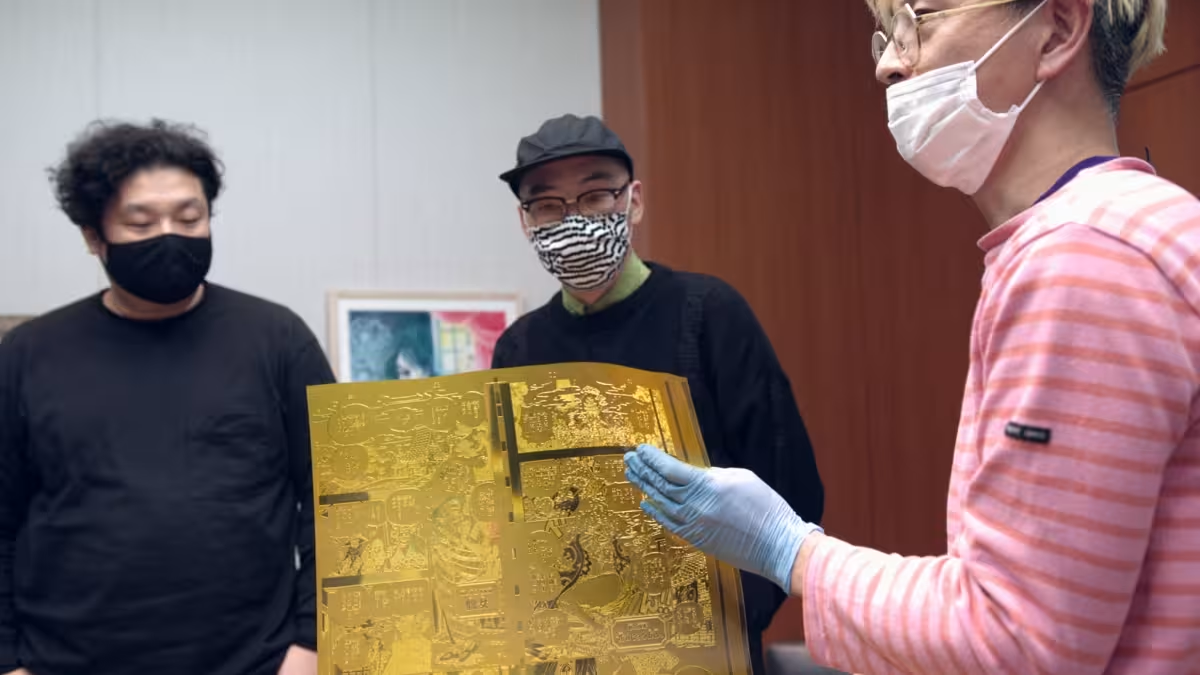
Okamoto: We are also working on a series called The Press, which is printed with a letterpress. This is something called a "resin plate" used to print manga magazines.
Shimooka: This is a really fascinating object. Do you put the ink on there to print?
Okamoto: That's right. In the manga printing process, the original image drawn by the artist is scanned once for plate-making and typesetting, and then converted into black and white binary data. A film is made using the data, and then the sticky yellow resin is hardened using UV light. That's how the resin plate is made. This is then installed in a rotary press and rotated at high speed to print. I have a video of the printing process. Let's take a look.
Shimooka: What an amazing technique. Is this machine still used today?
Okamoto: This is footage of Shonen Jump being printed.
Shii: It's so fast! But I suppose they have to print at this speed to produce millions of copies a week.
Shimooka: Yeah, that's true.
Okamoto: After the resin plates are worn out from printing, they are melted down and used again the next week.
Shii: So they're recycled.
Okamoto: In order to withstand old-fashioned and high-speed printing methods and to ensure that it is legible even when printed on recycled paper, screen tone, "antique" typefaces, and methods to enhance the presentation of manga were created. Also, there's a distinct difference between Shueisha's manga text and text used by many of the other publishers. Do you know what I am referring to?
Shimooka: Huh?
Okamoto: The difference is that Shueisha's manga uses slanted exclamation marks.
Shimooka: Wow, you're right!
Okamoto: I think they started doing it because the slanted exclamation marks have more impact. In order to make it look good, they were particular about the typography. They enlarged it depending on the typeface and changed the spacing depending on how many marks were lined up side by side. Everything was set up quite meticulously.
Shii: I see.
Shimooka: I didn't know that.
Okamoto: Returning to the topic, manga has evolved in response to printing technologies. We thought it was important to include something that reflects this care and the response in the manga art collections. There are newer and quite different technologies now. Eventually, this machine and the resin plate will disappear entirely. The realization that some things will be lost was one of the main reasons I initiated this project.
The things that will be lost
Shii: What was this realization specifically?
Okamoto: I realized that there are certain elements in the creation of manga that will be lost forever if we don't do something about it. The inks and art materials used for weekly serialized manuscripts like Shonen Jump deteriorate very quickly. The colors start to change and fade before five years have passed. Other artwork like oil paintings are more resistant to deterioration because they are painted to be appreciated as art and put on displayed, but in the case of manga, the original artwork is not the final product.
Shii: That makes sense. It becomes the final product when it's printed.
Okamoto: That's right. The original manuscripts are never meant to be seen. Even with the use of art materials that deteriorate quickly, they have to meet their weekly deadlines. Since the typesetting is also pasted directly onto the originals, the original drawings are further damaged by glue. The only way to keep them fresh is to archive them as digital data, but it's not enough just to have the data of the originals. You also need the data about the plate-making process, such as which settings were used for scanning, etc... Otherwise, you lose the reproducibility that is the appeal of final printed work. And it's not enough just to have the data, you also need to be able to print it properly. If we don't leave physical copies, the art will truly be lost forever if something happens to the data.
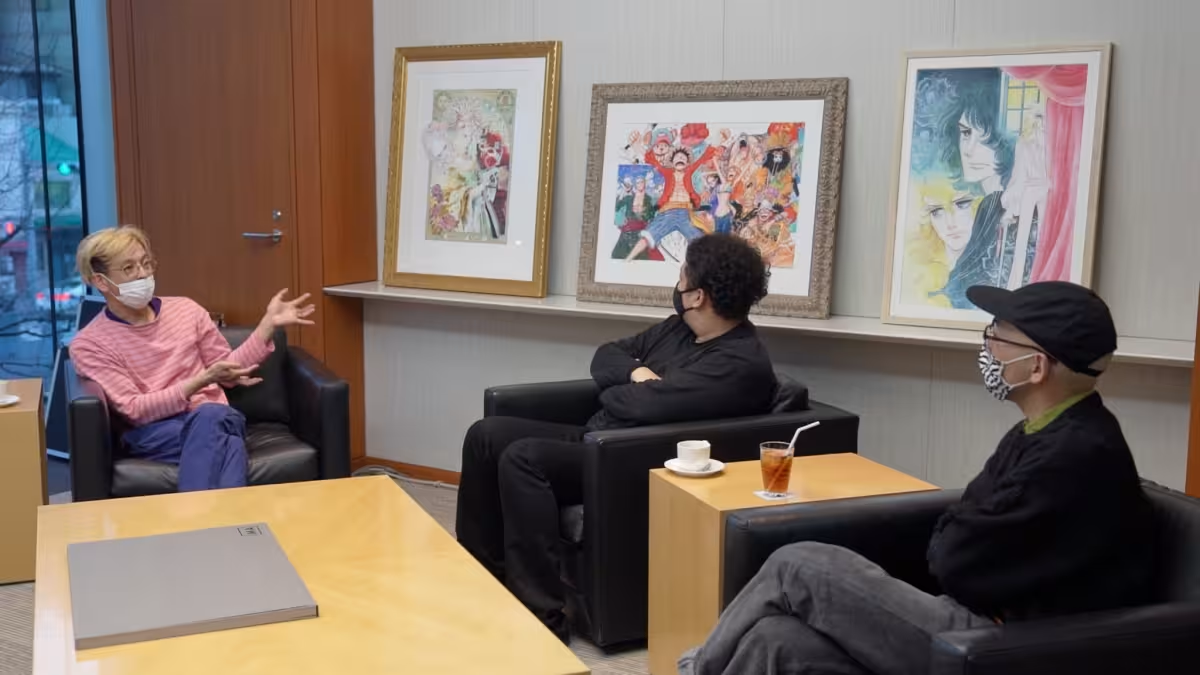
Shimooka: That makes a lot of sense.
Okamoto: For the manga art for The Rose of Versailles, we used high-precision scanned data taken from originals borrowed from Riyoko Ikeda in the early days of the Shueisha Comics Digital Archive Project that we launched in 2007 to 2008. We scanned the drawings 35 years after they were drawn, so they were already deteriorating. This time we borrowed the original drawings again and took pictures with a high-resolution camera, while retouching them based on the data from 2008 and the magazines in which they were published at the time to restore the work to its original coloration as much as possible. If the artwork has already deteriorated to a large extent, this is not possible. I think now it is our last chance to properly preserve these works.
Shimooka: If you consider all the past artworks, the number of originals you would have to preserve is overwhelming.
Okamoto: The original data for printing is being gathered quite rapidly. I want people to view this art. That's why we are producing manga art as printed works. Not only can we preserve the art, we can also have it seen by all kinds of people.
Art and Manga Art
Shimooka: We still have the data from my m-Sha project, but it's not in a state to been seen by anyone right now.
Okamoto: That's the web media project you started because we were "ignorant" compared to the "experts." You interviewed Shii in the series of "field recording" interviews for m-Sha, right?
Shii: That was before I got involved with blockchain. It was a time when people rarely asked me for interviews, so I remember the interview well.
Shimooka: I took a lot of pictures and saved them on my hard drive, along with the m-Sha articles from that time. But no matter how good the photo is, I find that I often save it only to never look at it again.
Okamoto: I see. I work for a publishing company, so I've noticed that magazines are only in the bookstores for a very short time. On the other hand, articles that are published digitally or online are read over a long period of time. But like Shimooka says, once there is no longer a place to put it, no one will be able to access it or see it.
Shii: That's true.
Okamoto: There is still a strong perception that analog works are more permanent and digital works are more temporary, but I think this debate is very spotty.
Shimooka: But manga is something that is shared amongst so many people, not only in Japan but also around the world. I'm sure somewhere, there is someone who remembers that specific page or that specific panel from a manga. If this project can reach those people, they will be able to say, "I remember this!" It's like no matter how deep the data is buried, it will never be forgotten.
Shii: Artists tend to be in their own world when they create, but manga artists, in a sense, are more directly engaged with their audience. Because it's made from this stance, I feel that there's a strong sense of involvement, including on the part of the reader.
Okamoto: It's true that the context in which works are created is different from that of painters and other artists. Looking at this Rose of Versailles illustration, the character placement and body lines are arranged along diagonal lines that radiate out from a central point. In terms of artistic layout, it was made in quite a standard way.
Shii: In that sense, I feel like the work is more clever than that of painters. On the other hand, you can't see the pictorial intention. Even today, artists have a more objective view of art, and I think their art is made possible by the sense of distance between them and the artwork. When you think of it like that, the value of manga art may be something that you'll realize in twenty years or so, when you are able to see it objectively. By then, you might regret not having bought certain works.
Okamoto: But by the time people realize its value, the artwork itself is likely to be lost.
Shii: Exactly.
Okamoto: An art collector once told me that in order to understand the true value of a work of art, you must think about it over a span of fifty to a hundred years. You can't judge a work solely at this point in time.
Shimooka: It's still too early in the history of manga to determine the artistic value of something that is commercial in a sense. It may be that we can't understand the value of something until we see its place in history.
Okamoto: Osamu Tezuka and Andy Warhol were born in the same year. When you look at it that way, manga is a very new art form.
Shii: Of course, it's possible to identify something as art after the work has existed for a while, but manga is a part of everyday life, so I don't think we have a frame of reference that allows us to say about a manga work, "this is a good art work." The fact that you package it in a nice box and tell people, "this is art," is truly amazing for a work by a manga artist that is active today.
Okamoto: The idea of "cutting the frame" is definitely something we've been thinking a lot about.
Shii: There are physical frames, and then there are conceptual frames. It's all about framing, the way you select an illustration and frame it as a work of its own.
Okamoto: Yeah. In contemporary art, it really is all about framing sometimes.
Shimooka: There's also the way art is "framed" by knowledge and expertise. Shii talked about the objective view that artists have, but that is something that comes from an understanding of the rules and the history. It's like the illustrations you select to be framed as manga art already have some universality to them.
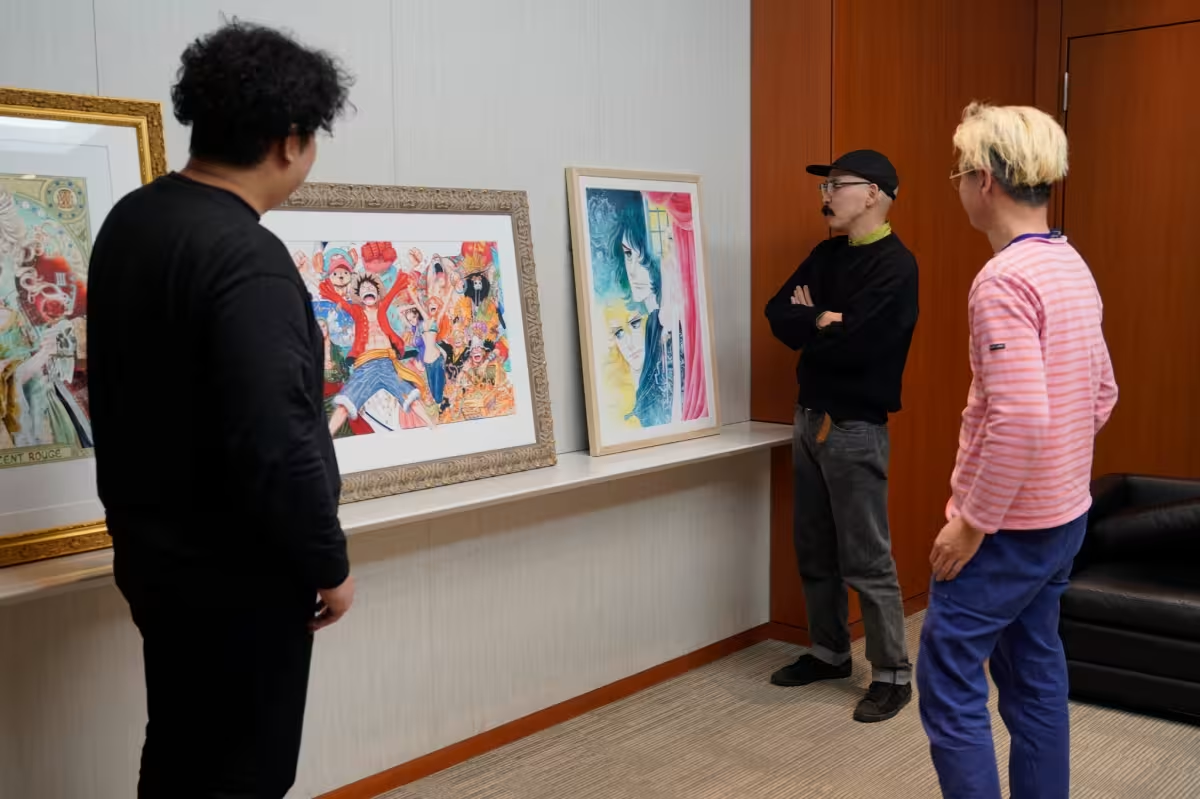
Okamoto: Because the artwork is so well known, it may be that we are looking at it, but not actually seeing it. This One Piece illustration references kabuki and uses Kano school techniques, but for people who don't understand the context of the art, it's just a Japanese-style One Piece illustration. There's also an Innocent illustration that references Mucha. If you can create a way for people to properly see the context of these works, they will be able to gain a deeper appreciation for the art.
Shii: It's true that I hadn't seen One Piece illustrations in that way before.
Okamoto: On the other hand, I also think would be boring if you only looked at the context of the art. There needs to be a balance.
Shii: I think balance is a good thing. If this project continues and you keep turning the works of various artists into "manga art," you will create a unique way to capture the context. A sense of comfort that the art was born on our own soil and the reality of that feeling will build quickly. I think that's the kind of balance we can expect. I think a reaction overseas would be especially good. If it's only in Japan, it's too ordinary and too familiar. It's darkest underneath the lamppost.
Okamoto: At first, people might just think, "Oh, I know this illustration."
Shii: The likely reaction would be, "Oh, look. It's just a bigger version of what we read all the time." But from a foreign perspective, I think this is exactly the kind of project people wanted to see come out of Japan. I think the value of the work can be assessed more accurately from the outside. Then, after a number of years, that perspective will spread to Japan.
Okamoto: It may take a while longer for it to be appreciated as art. For that to happen, we have to start by showing this work to all kinds of people.
Shimooka: I think there is a perception that people who buy art are buying status, and it makes me wonder how these illustrations that were taken out of manga would fit. It's fun when you think about it that way. Will it be hanging on the wall at someone's parents' house, an old coffee shop I wandered into, a high fashion boutique, or the room of an otaku friend? It's exciting to imagine what this project could become.
Okamoto: Yeah, the same work of art can have a completely different impact depending on where it's displayed. It would be interesting to see the world expand in this way.
[Continued in Volume 2]
(Composition: Shigeru Kusamizawa, Photography: Kanon Okamoto)
