


SHUEISHA Inc. All rights reserved.

ACK is a Kyoto-based art fair first held in 2021. As its name suggests, it focuses on the concept of collaboration. Japanese galleries welcomed overseas galleries as guest exhibitors for joint exhibits, while ACK’s organizers also collaborated with companies and other organizations to offer programs. Working with Kyoto Prefecture, the organizers continue to present an international art fair that takes an entirely new approach.
ACK 2025 was the first time SMAH participated in the event. The special ACK × SMAH program featured MANGA ART Kaboom!!, a booth centered on collaborative works by Keiichi Tanaami and Fujio Akatsuka, at the main venue, Kyoto International Conference Center. At the same time, we also exhibited works at Shiroshoin of Higashi Hongan-ji Temple, Benrido Collotype Gallery, Kyoto Amplitude, and Daimaru Kyoto. Countless visitors were captivated by a range of exhibits featuring works from Eiichiro Oda’s ONE PIECE, Hirohiko Araki’s JoJo’s Bizarre Adventure, Kyoko Okazaki × Ito Jakuchu, Tite Kubo’s BLEACH, Riyoko Ikeda’s The Rose of Versailles, and Go Nagai’s Mazinger Z. In 2026, we plan to hold an exhibition at Hachikuan, a tangible cultural property designated by Kyoto City, in conjunction with ACK 2026, which will take place from November 7 to 9.
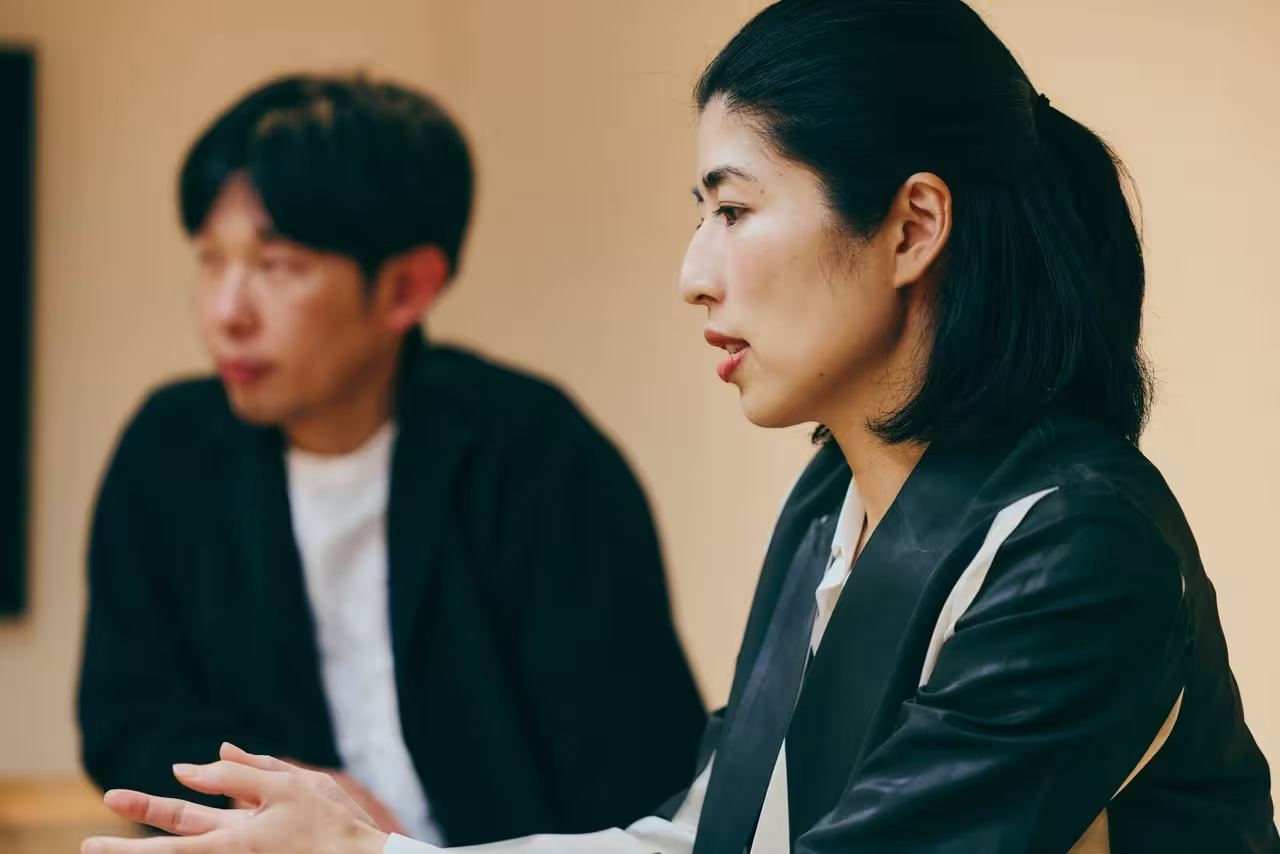
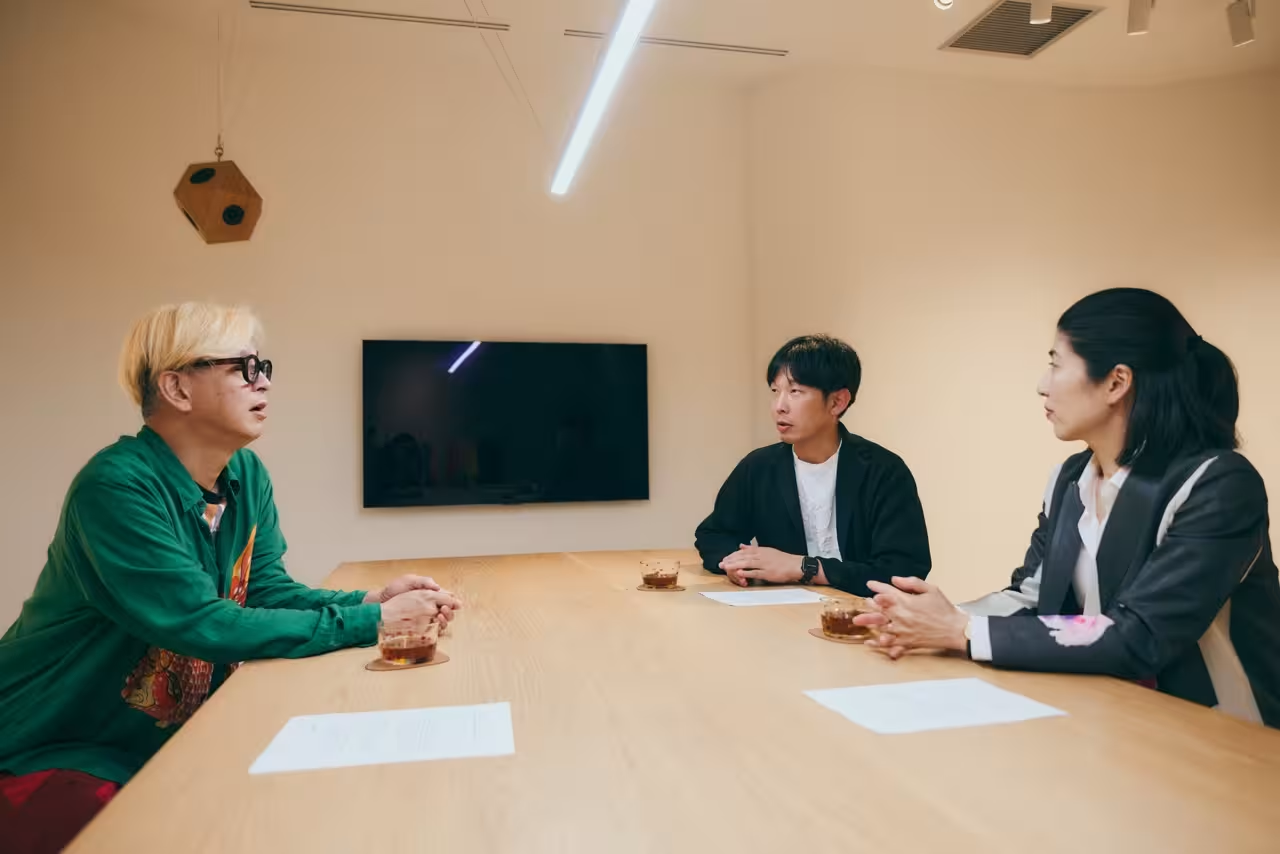
To explore this further, we brought together ACK’s partnership director Wakako Tezen, architect Takashi Suo, who is in charge of designing the venue’s spaces, and SMAH’s Masashi Okamoto for a conversation in the lounge space of Shueisha Manga-Art Heritage Tokyo Gallery. In this three-part series, we look back on the 2025 exhibits and explore what an art fair is all about, the distinctive features of ACK, and the qualities of manga art, before looking ahead to ACK 2026 in November.
Wakako Tezen (Left)
Tezen is the Representative Director and Art Project Director of TEZEN Inc. She worked at a gallery for contemporary art in Tokyo before founding the art management consulting company TEZEN in 2008. For over 15 years since, she has helped plan and manage projects focused on modern and contemporary Japanese art. She has overseen ACK’s VIP and corporate relations since its inception in 2020. Since becoming partnership director in April 2026, she has helped run the event as one of the seven members of its leadership committee.
Takashi Suo (Center)
Suo is an architect and the head of SUO. He worked for Kazuyo Sejima & Associates and SANAA before establishing SUO in 2015. Primarily working in architectural design, he has collaborated with artists and a range of other creators on numerous architectural projects and designed the layouts of many contemporary art exhibitions. He has been involved in ACK since its inception and has been responsible for its spatial design since the inaugural fair in 2021.
ACK’s Spaces Designed Around the Viewing Experience
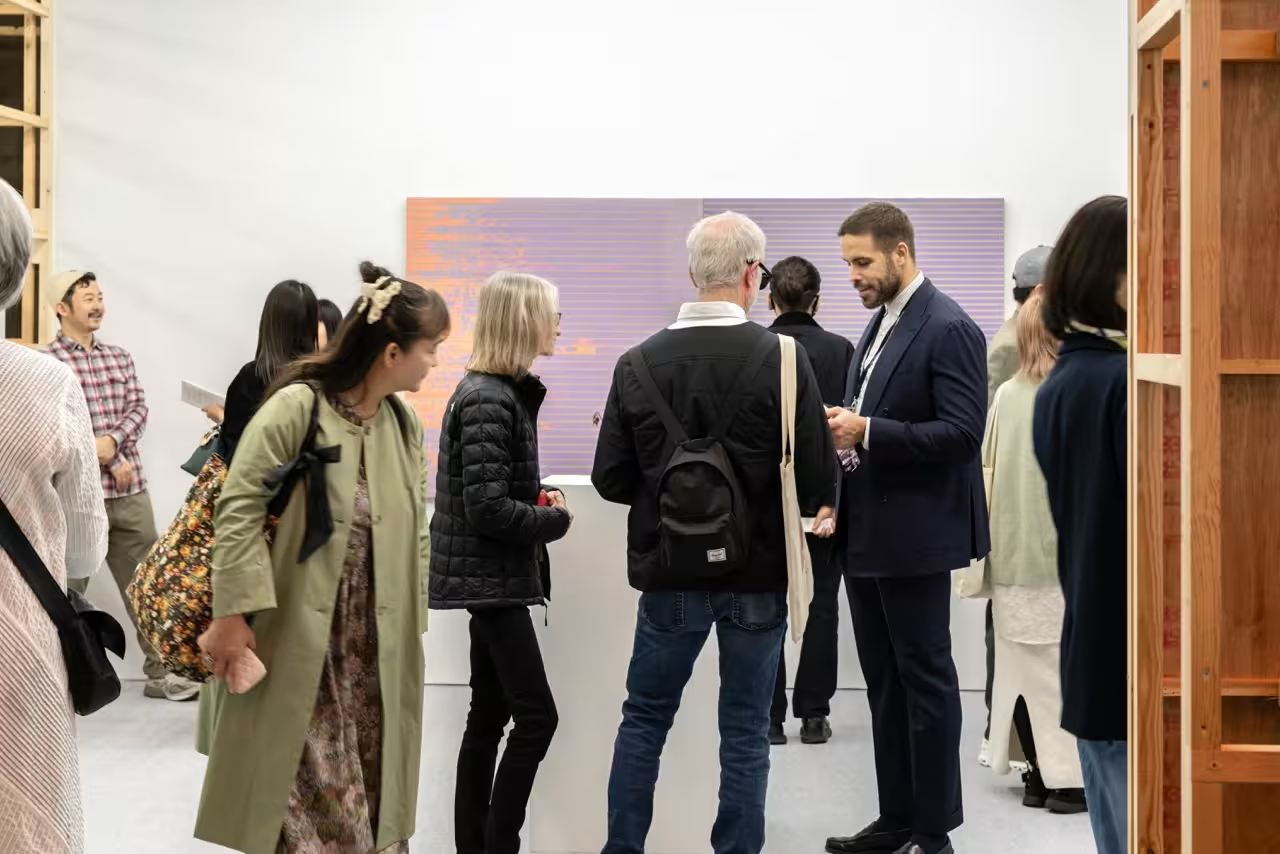
Scene from the 2025 ACK venue (courtesy of ACK, photo by Yuki Moriya)
Masashi Okamoto, Shueisha Manga-Art Heritage (SMAH below): So far, we’ve heard about the basics of art fairs and ACK’s distinctive features, which are closely tied to Kyoto’s local character, but its exhibition space itself is also distinctive. Mr. Suo, what is your approach to designing the space?
Suo: The first idea I considered was doing away with separate booths for each exhibitor. I envisioned placing walls of different sizes around the hall at the Kyoto International Conference Center each year and letting exhibitors arrange their displays around the provided spaces.
SMAH: That’s a bold departure from the typical art fair layout, with its rows of gallery booths (laughs).
Suo: In the end, we settled on the booth format because otherwise, it would have been difficult to tell which gallery each work belonged to, and we felt galleries would struggle to adapt their displays. The focus, however, is on creating spaces to experience art, rather than just walls for viewing it. We change the layout of the booths, the way each booth is assembled, and the way people enter the space so that visitors can engage with the exhibits with a fresh perspective each time.
Tezen: Every year, he goes through a lot of trial and error. Redesigning the visitor route can be challenging, but it’s another feature that helps give ACK its own character.
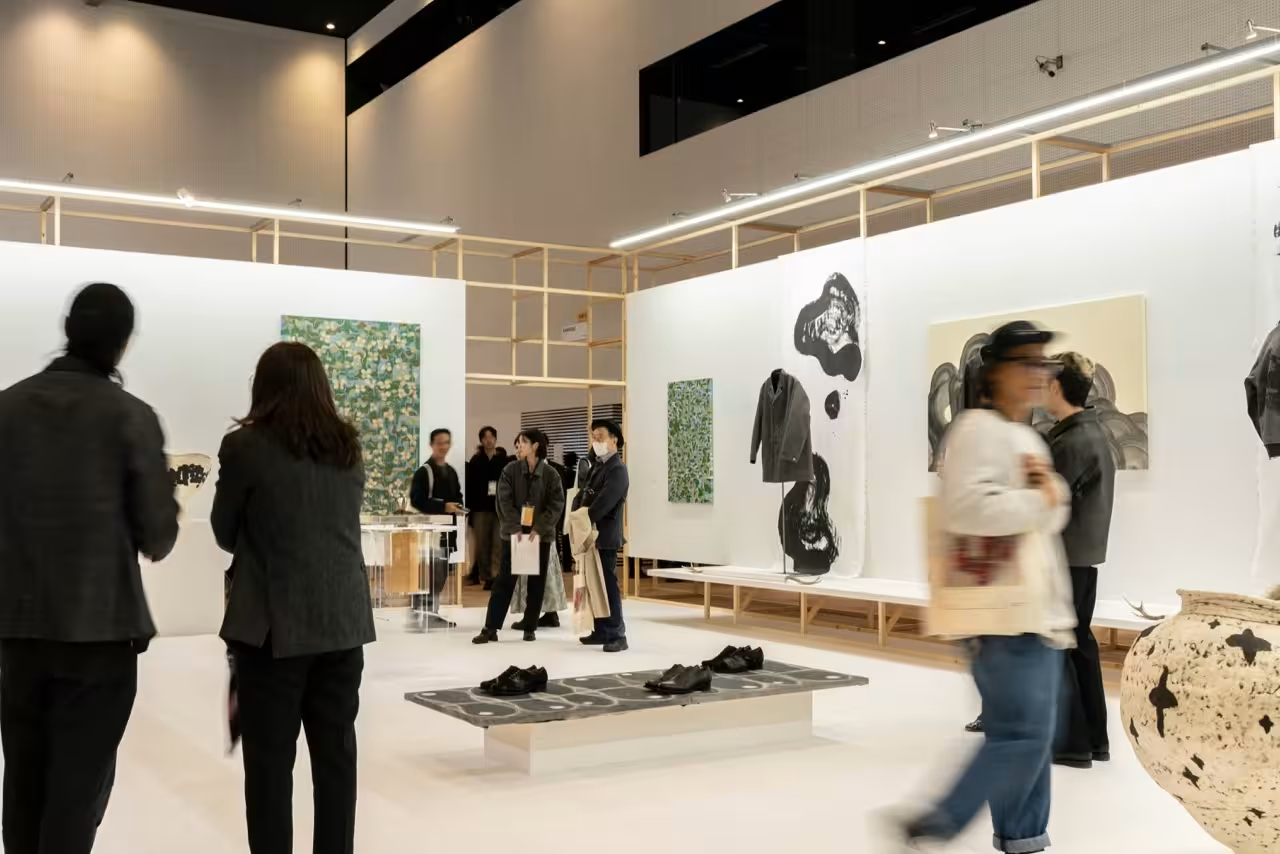
Scene from the 2025 ACK venue (courtesy of ACK, photo by Yuki Moriya)
SMAH: I felt the layout lets you take your time with the art in each booth, with enough open views to encourage you to walk around and explore.
Suo: I try to design the route so that the works don’t come into view all at once. If the space is completely open, then you’ll see dozens to over a hundred works all at the same time. This inevitably forces you to do some filtering as you view the works.
SMAH: When you say filtering, do you mean looking around the room in one sweep and deciding which works interest you and which don't?
Suo: That’s right. When that happens, works that catch your eye due to features like size or color tend to stand out the most. But with modern art in particular, the value of a work tends to be informed by the history, culture, and context in which the artist worked. For this reason, we are mindful of creating spaces where you can concentrate on viewing each work individually.
The Striking Presence of Manga Art at ACK
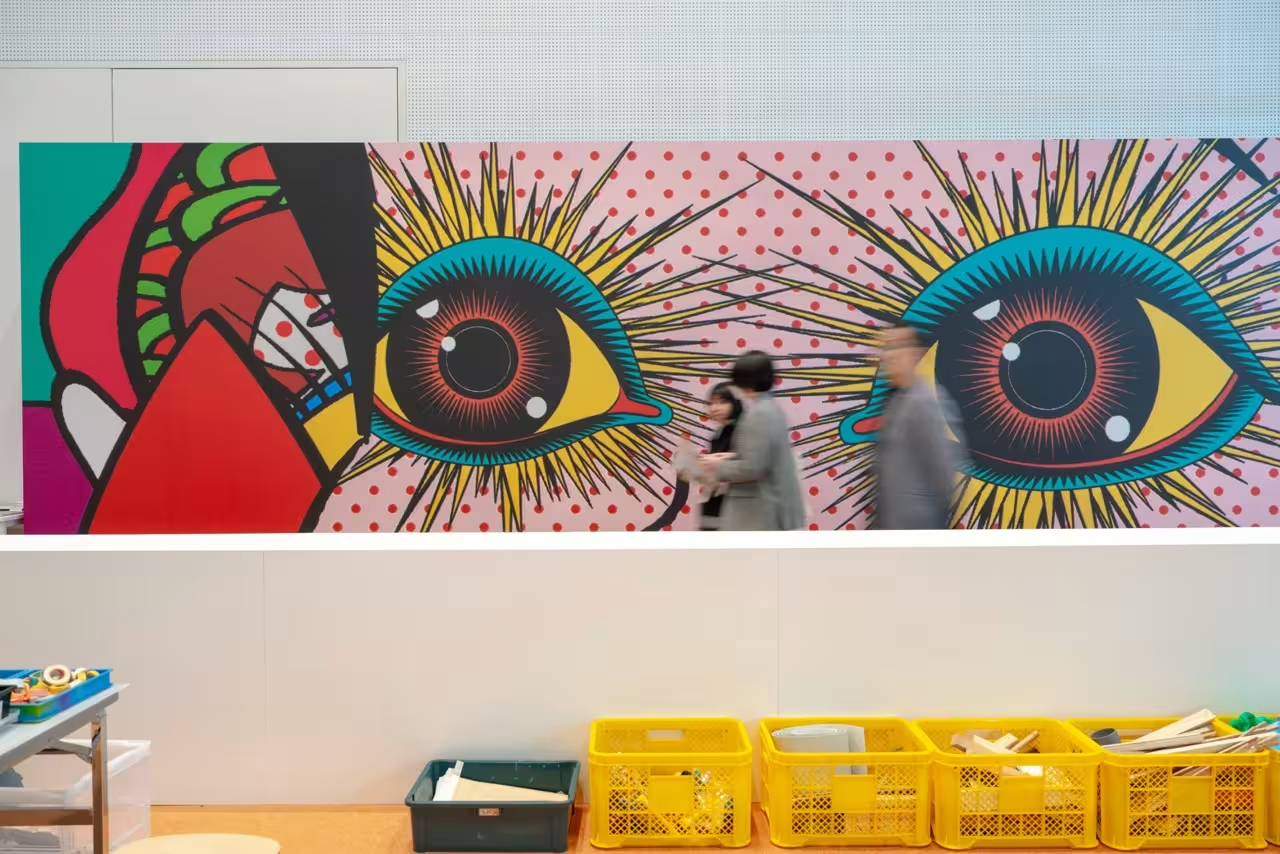
Tezen: Among these spaces, SMAH’s booth was included as a collaboration with ACK in an area where children’s programs were also held. As I mentioned last time, Keiichi Tanaami’s graphics had a striking presence.
SMAH: Due to its massive size, we had no idea what it would look like until it was finished, so we were just as surprised when we saw it for the first time at the venue (laughs).
Suo: Many of the works were more focused on concepts, but SMAH’s work had a powerful visual impact without losing sight of the conceptual side.
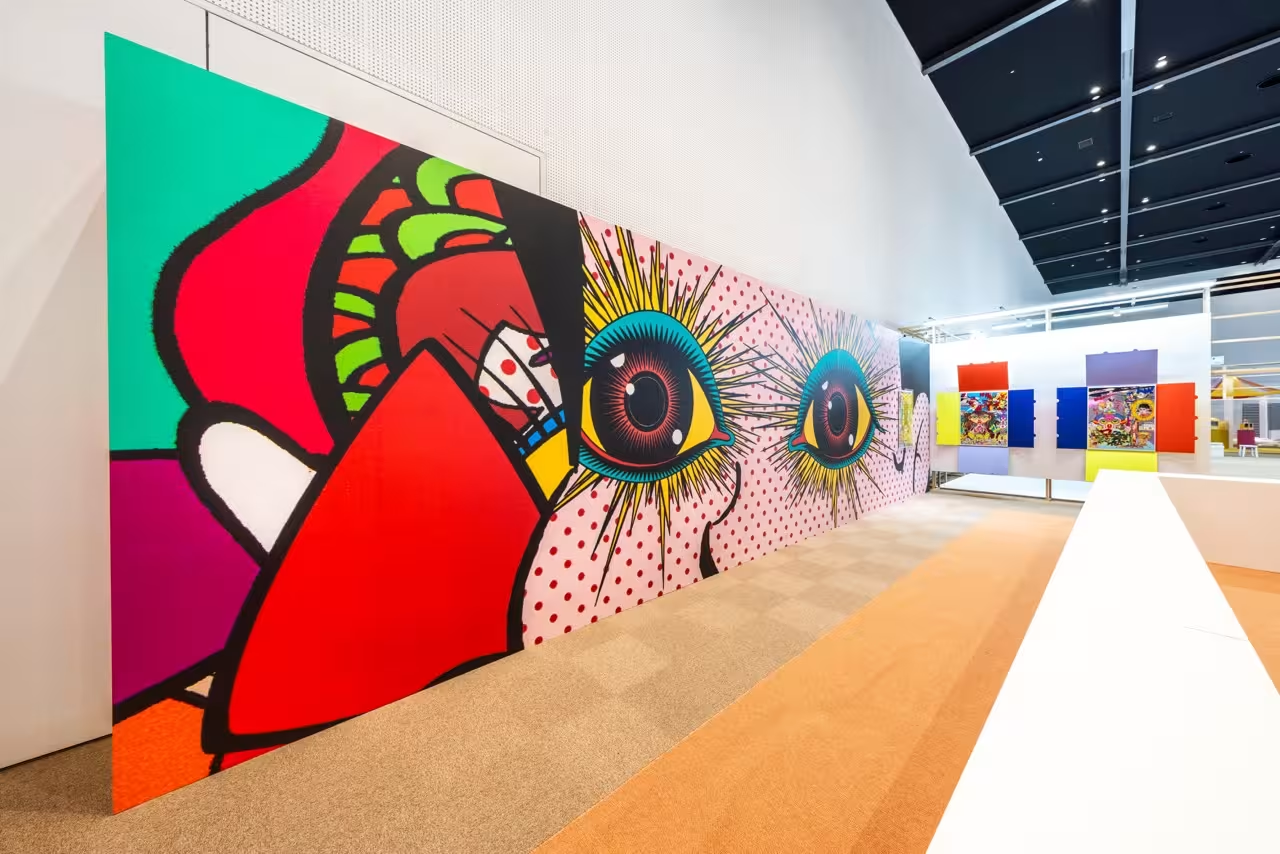
From MANGA ART Kaboom!!, a special program presented by SMAH featuring a booth completely covered with graphics by Keiichi Tanaami and Fujio Akatsuka. In conjunction with this exhibit, SMAH displayed new works at different venues in the city, such as Higashi Hongan-ji Temple and Benrido Gallery.©Keiichi Tanaami Courtesy of NANZUKA ©Fujio Productions Ltd. / Shueisha Inc. Courtesy of ACK, photo by Yoshimi Ryo
Tezen: Keiichi Tanaami’s work itself incorporates Fujio Akatsuka’s manga, and the printing technique also takes the manga context into account. Everything draws on aspects of visual art, so there was a natural connection with the contemporary art on display at ACK. For SMAH, I think the key is also how it approaches manga as a shared heritage and presents it to audiences. I felt the program could be appreciated from a range of perspectives, from the manga’s context and the story behind the collaboration to the choice of the scenes and techniques used.
ACK is a venue for various collaborations, including joint exhibitions by galleries in Japan and those from abroad, as well as team efforts between companies and contemporary artists. Different partnerships give rise to different experiences, but with SMAH, I felt the approach itself created a new viewing experience.
©Keiichi Tanaami Courtesy of NANZUKA ©Fujio Productions Ltd. / Shueisha Inc. Courtesy of ACK, photo by Yoshimi Ryo
Differences in Viewing Experiences of Manga Art vs. Contemporary Art
SMAH: Manga art is drawn from widely known works, but its context sets it apart from other art, which I feel makes for a different viewing experience.
One major difference is that the artists themselves are often discussed in the appreciation of contemporary art. Take Andy Warhol, for example. His diaries are available in paperback, which you can easily pick up and read, and there are biographies about him. Of course, the content of the art is also discussed, but it presents many opportunities to talk about the artist’s life and the techniques they used. This is often not the case with manga, as the discussions are almost always centered on the plot of the work itself and the featured characters.
Tezen: It’s certainly true that there’s less of an emphasis on the artist.
When it comes to well-known manga, you have millions of people around the world who have shared the experience of following the same story. Perhaps this goes without saying, but those who know the story will likely have a different viewing experience compared to those who don’t.
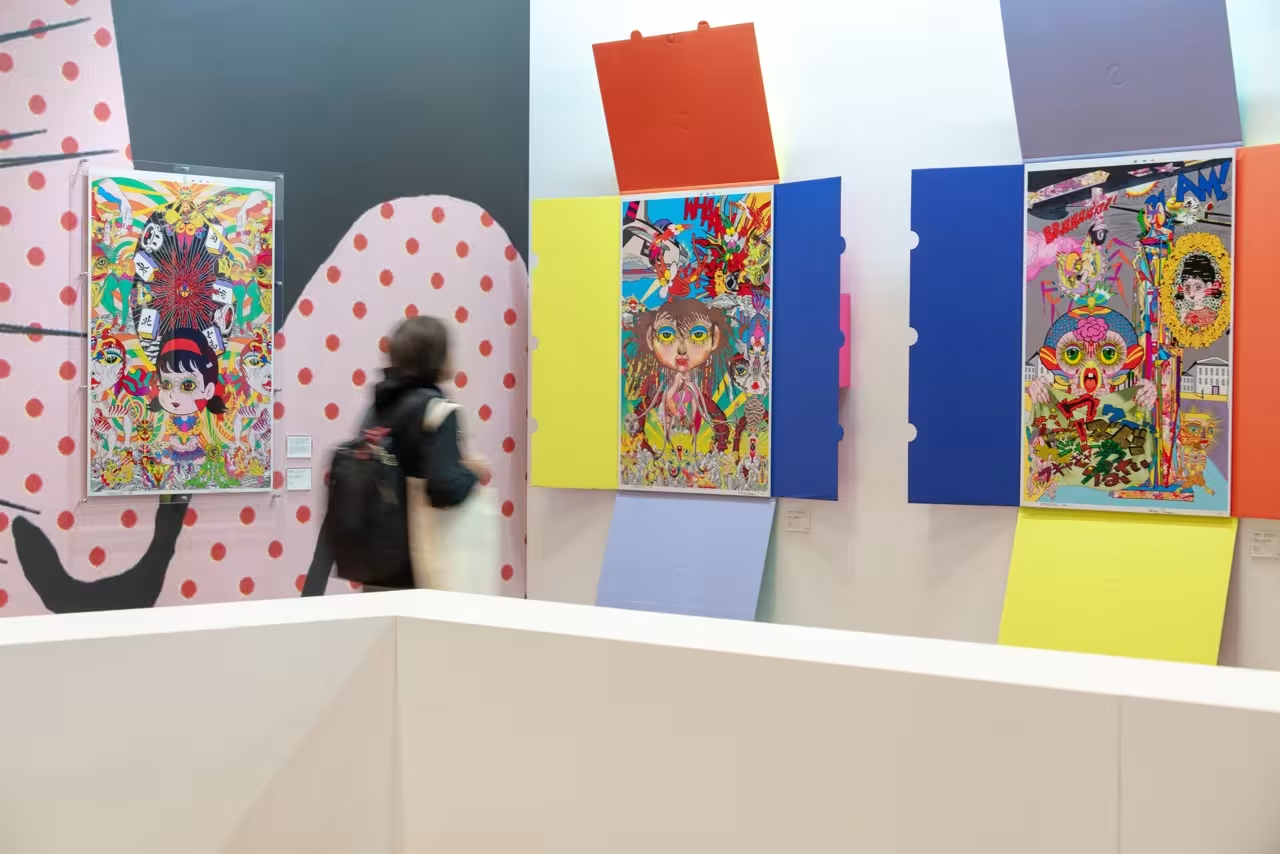
From MANGA ART Kaboom!! ©Keiichi Tanaami Courtesy of NANZUKA ©Fujio Productions Ltd. / Shueisha Inc. Courtesy of ACK, Photo by Yoshimi Ryo
SMAH: When we were exhibiting at an art fair in New York, I once noticed a woman who was crying as she viewed the manga art. When I spoke to her, she told me that it brought back memories of herself when she was reading the work. It’s rare to see anyone cry while looking at a picture, no matter how much they love art. I love the works of Vermeer and Monet, but I never tear up when I take my time to appreciate them.
Perhaps manga art allows the story and our memories of reading it to reconnect, creating a new sensation. At ACK and the satellite exhibitions held around Kyoto, some visitors spent a long time lingering over the works.
Tezen: Looking at the role of characters can also help illustrate the difference. Portraits sometimes depict famous people, but most of the time, the subjects are unknown to the viewer. But characters are still alive within the manga, and if you’ve ever been absorbed in a story like the woman you spoke to once was, a single illustration can cause memories to come flooding back. Maybe it’s the sheer force of the imagery, or its ability to stretch our imagination.
SMAH: Manga is generally something you pick up and flip through at your own speed. When you look at a work hanging on the wall at an art exhibition, you’re looking at something from a distance. With manga, on the other hand, it feels like it’s becoming part of you. I think seeing that manga enlarged and displayed in a different form may set off a kind of chemistry. The chemistry is even more apparent abroad, where many visitors express their joy with their whole bodies.
Suo: The experience may be different, but there’s a shared context, so you can appreciate it without distinguishing it from other art. Perhaps it’s because of the generation I was born into, but the works that SMAH is turning into manga art are also drilled into my brain, so I can somewhat relate (laughs). It’s easier to connect with the story, which may also help viewers appreciate its value.
Edited by: Kei Osawa; Discussion Photos: Tomohiro Takeshita
