


SHUEISHA Inc. All rights reserved.

ACK is a Kyoto-based art fair first held in 2021. As its name suggests, it focuses on the concept of collaboration. Japanese galleries welcomed overseas galleries as guest exhibitors for joint exhibits, while ACK’s organizers also collaborated with companies and other organizations to offer programs. Working with Kyoto Prefecture, the organizers continue to present an international art fair that takes an entirely new approach.
ACK 2025 was the first time SMAH participated in the event. The special ACK × SMAH program featured MANGA ART Kaboom!!, a booth centered on collaborative works by Keiichi Tanaami and Fujio Akatsuka, at the main venue, Kyoto International Conference Center. At the same time, we also exhibited works at Shiroshoin of Higashi Hongan-ji Temple, Benrido Collotype Gallery, Kyoto Amplitude, and Daimaru Kyoto. Countless visitors were captivated by a range of exhibits featuring works from Eiichiro Oda’s ONE PIECE, Hirohiko Araki’s JoJo’s Bizarre Adventure, Kyoko Okazaki × Ito Jakuchu, Tite Kubo’s BLEACH, Riyoko Ikeda’s The Rose of Versailles, and Go Nagai’s Mazinger Z. In 2026, we plan to hold an exhibition at Hachikuan, a tangible cultural property designated by Kyoto City, in conjunction with ACK 2026, which will take place from November 7 to 9.
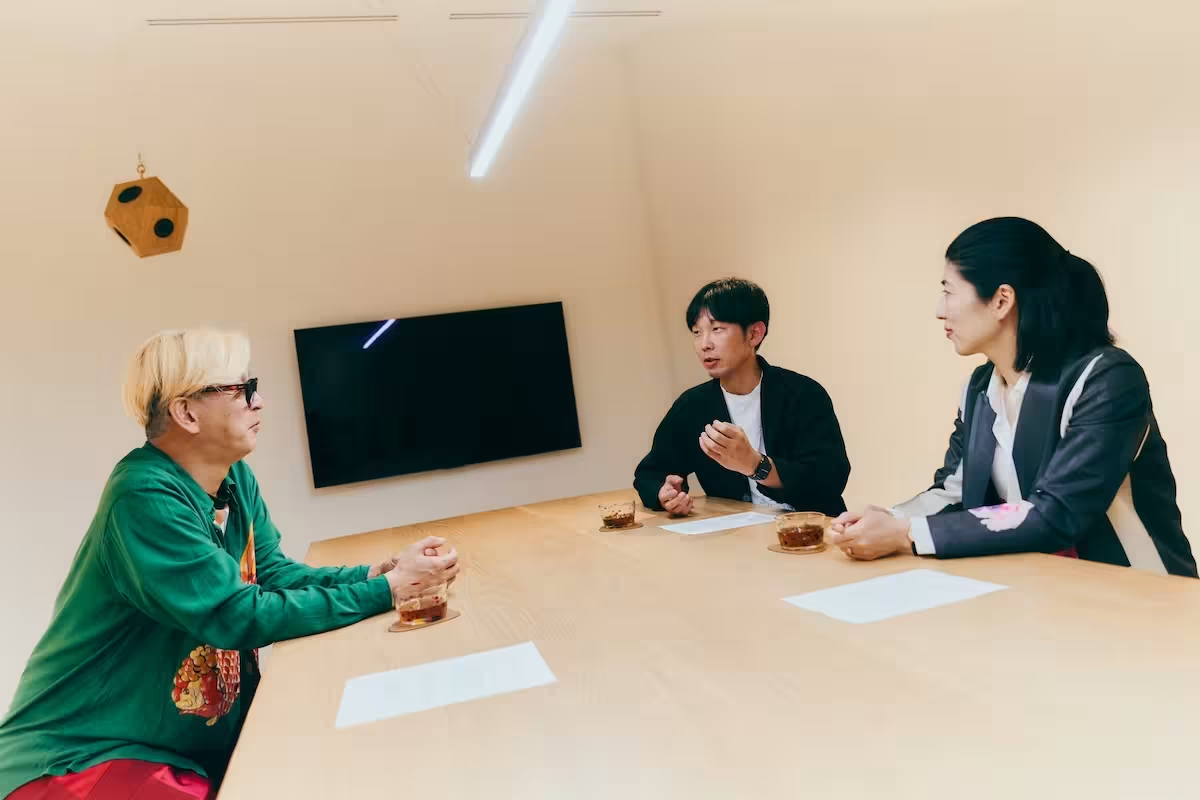
To explore this further, we brought together ACK’s partnership director Wakako Tezen, architect Takashi Suo, who is in charge of designing the venue’s spaces, and SMAH’s Masashi Okamoto for a conversation in the lounge space of Shueisha Manga-Art Heritage Tokyo Gallery. In this three-part series, we look back on the 2025 exhibits and explore what an art fair is all about, the distinctive features of ACK, and the qualities of manga art, before looking ahead to ACK 2026 in November.
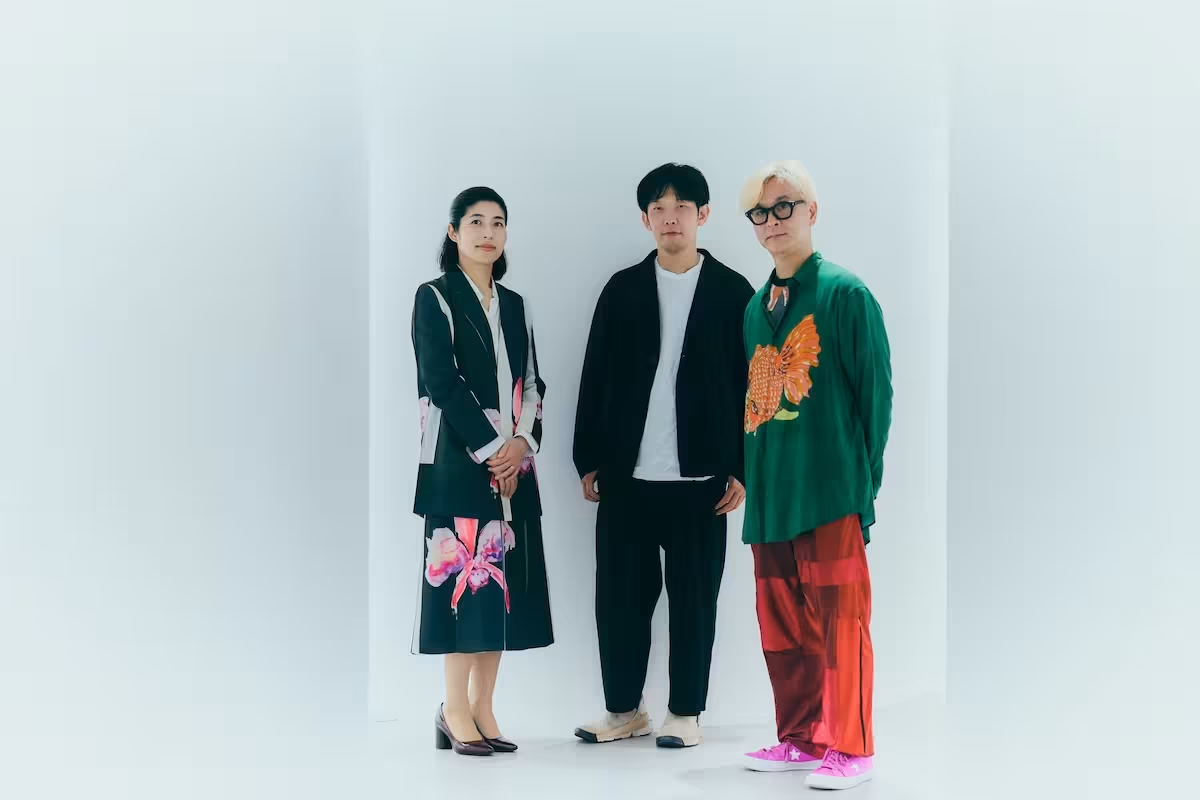
Wakako Tezen (Left)
Tezen is the Representative Director and Art Project Director of TEZEN Inc. She worked at a gallery for contemporary art in Tokyo before founding the art management consulting company TEZEN in 2008. For over 15 years since, she has helped plan and manage projects focused on modern and contemporary Japanese art. She has overseen ACK’s VIP and corporate relations since its inception in 2020. Since becoming partnership director in April 2026, she has helped run the event as one of the seven members of its leadership committee.
Takashi Suo (Center)
Suo is an architect and the head of SUO. He worked for Kazuyo Sejima & Associates and SANAA before establishing SUO in 2015. Primarily working in architectural design, he has collaborated with artists and a range of other creators on numerous architectural projects and designed the layouts of many contemporary art exhibitions. He has been involved in ACK since its inception and has been responsible for its spatial design since the inaugural fair in 2021.
About MANGA ART Kaboom!! Featured at ACK 2025
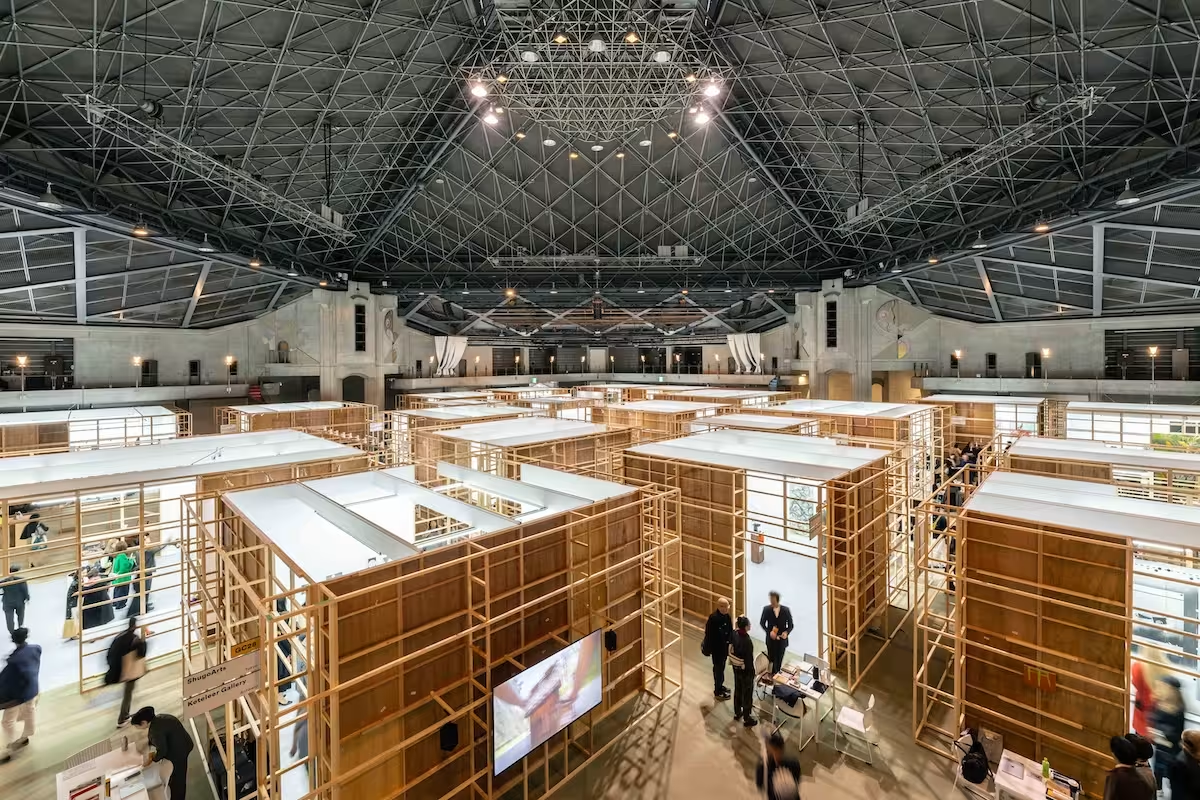
Scene from the 2025 ACK venue (courtesy of ACK, photo by Yuki Moriya)
Masashi Okamoto, Shueisha Manga-Art Heritage (SMAH below): We participated in ACK for the first time in 2025. For the event, we created an exhibition booth that was completely covered with graphics by Keiichi Tanaami and Fujio Akatsuka. We used an ultra-high-resolution camera to take macro photographs of gravure prints before combining them into a single image. We had the artwork printed at a huge size. Viewed from a distance, it’s a close-up of Akko-chan’s eye, but if you come closer, you start to see the halftone dots. Our manga art projects bring together manga and a variety of printing techniques, so we wanted to create something that ties into that.
Tezen: It had a striking presence. It must have spanned at least ten meters. I think that’s something that only a manga art project can make possible.
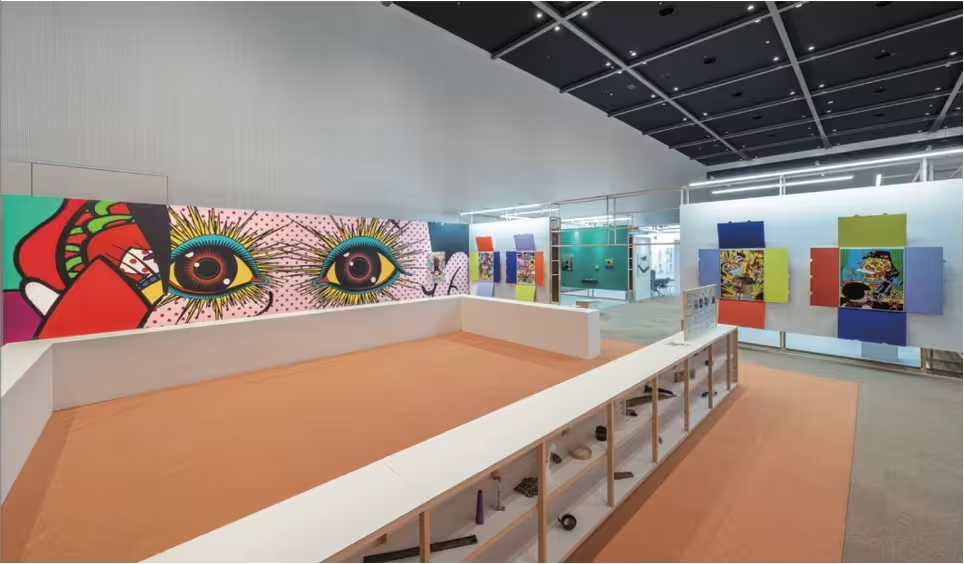
Manga Art Kaboom!! was a special program presented by SMAH. In conjunction with this exhibit, SMAH displayed new works at different venues in the city, such as Higashi Hongan-ji Temple and Benrido Gallery.©Keiichi Tanaami Courtesy of NANZUKA ©Fujio Productions Ltd. / Shueisha Inc.
Suo: ACK's exhibition spaces are designed to allow visitors to enjoy each exhibit in detail, and SMAH's booth also served as a space for kids’ programs. To me, the work’s powerful presence also helped make the space meaningful as a place for children to come together.
SMAH: I’m glad to hear that. This was our first time participating in an art fair in Japan. When we visited ACK in 2024, we felt it offered a richness of space that few other fairs had, and that inspired us to take part.
SMAH’s Question — What Exactly Is an Art Fair?
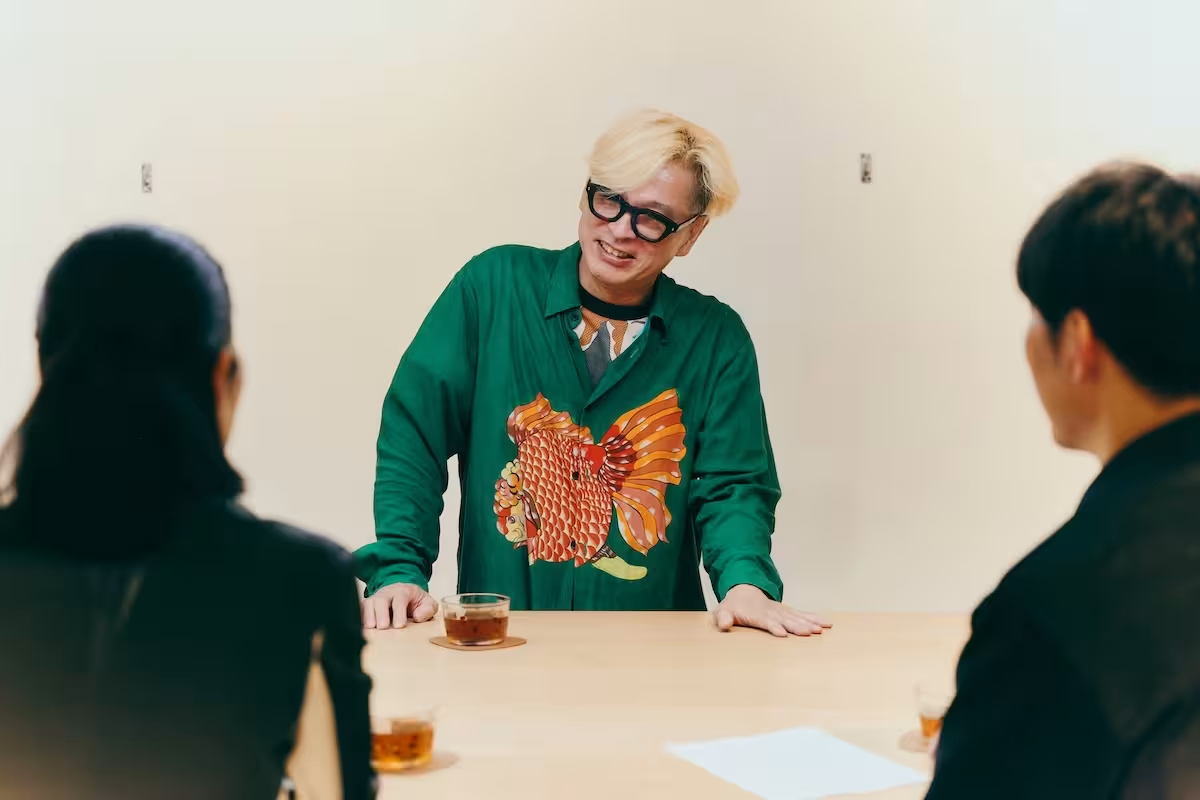
SMAH: For this discussion, I wanted to start by asking you, “What exactly is an art fair?” As an example, there were some people who visited ACK for the JoJo exhibition at Higashi Hongan-ji Temple, but I think many of them were manga fans who usually don’t go to art fairs.
When you stop to think about it, even the distinction between paid museum exhibitions and free gallery exhibitions isn’t all that clear, is it? It also occurred to me that an art fair, where you pay for admission and high-priced artworks are on sale, must seem mysterious to people unfamiliar with the concept. Ms. Tezen, as someone who is involved in art fairs for work, what are your thoughts on this?
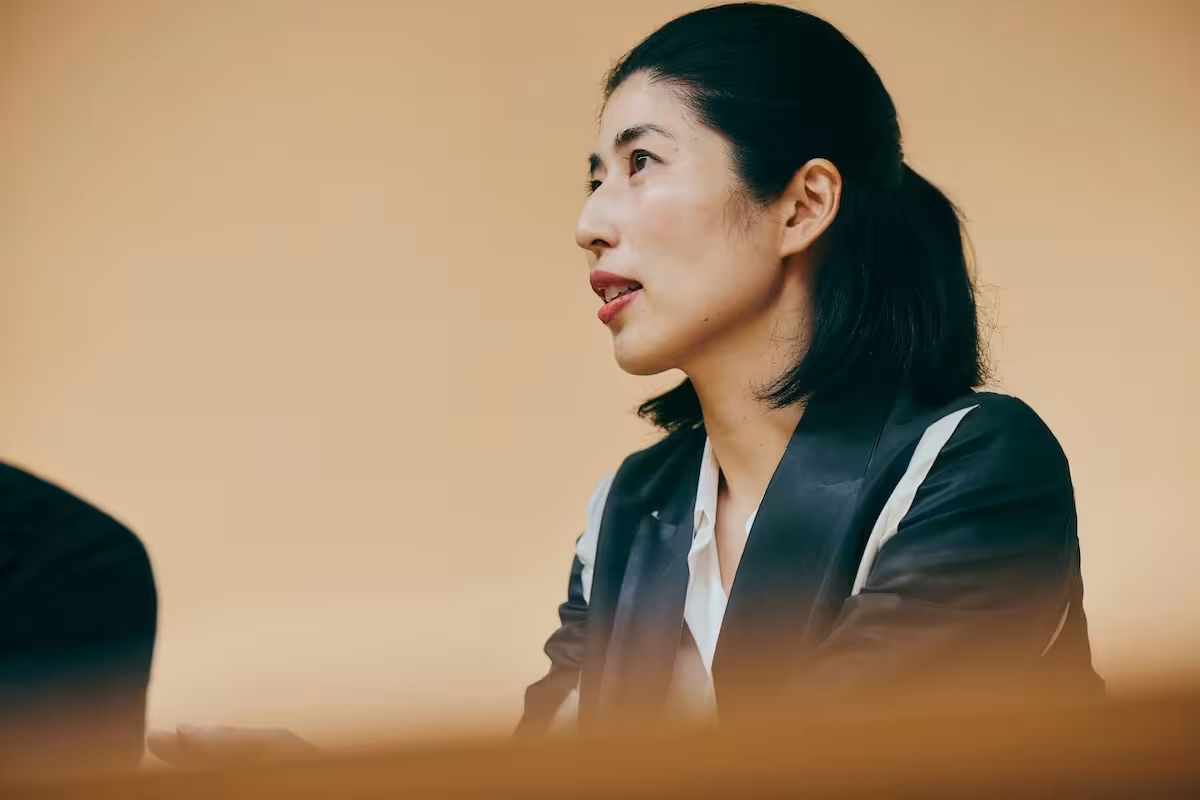
Tezen: Well, I could go on forever about the details, but let’s look at the big picture. First of all, we have places called “galleries.” There are many different types of galleries, so it's difficult to generalize, but one of their key roles is to support the artists they represent. They hold exhibitions and promote the artists, helping their work find its way into private and museum collections. You could say their role is to help artists leave a lasting impression on viewers and a lasting mark on history.
Some artists sell their work directly without going through a gallery, but that involves an enormous amount of work. In that sense, galleries also provide a system that allows artists to focus on their work. Customers also need someone to consult when buying a work and to turn to afterwards for advice on its care or for repairs. Galleries provide all kinds of support related to the artwork.
An art fair is a place where these galleries come together to exhibit and sell works by artists they want to show customers. Art Basel, for example, began in Switzerland in 1970 and was one of the earliest art fairs. Around then, the contemporary art market began to flourish, mainly in Europe and the United States. Over time, international art fairs have grown in number and are now held in cities around the world.
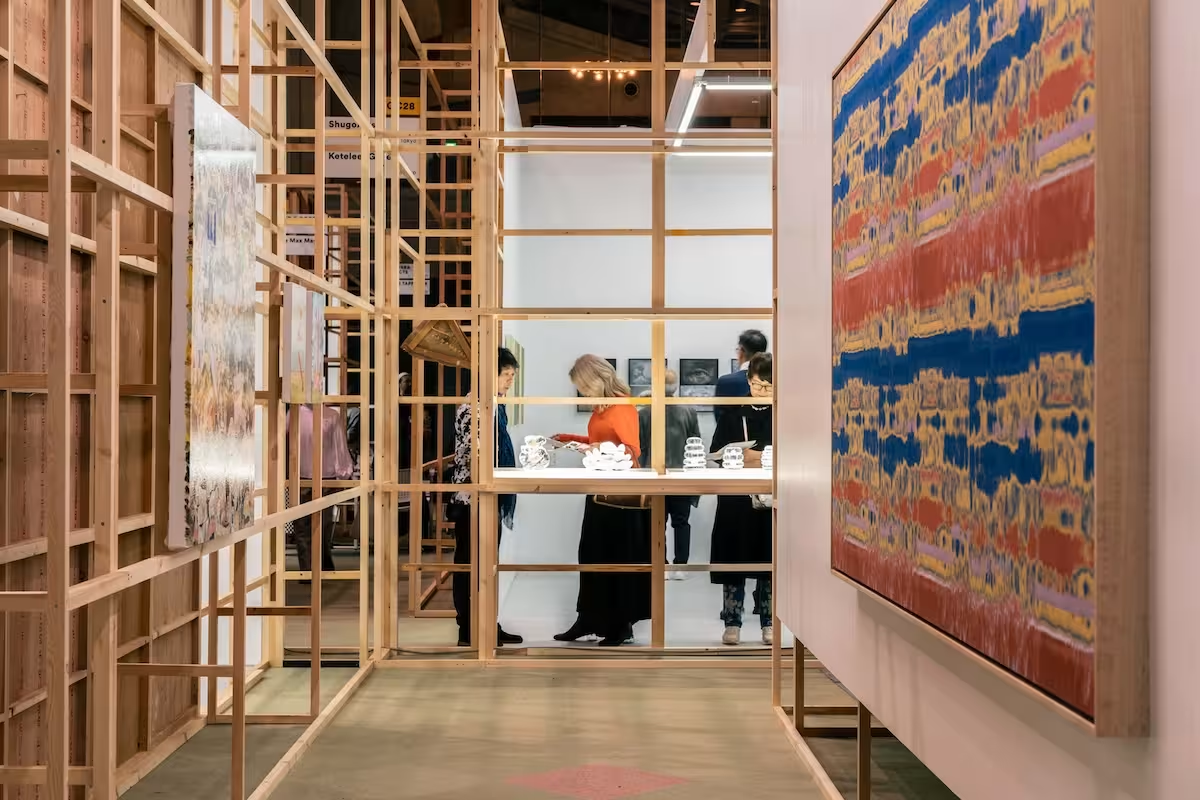
Scene from the 2025 ACK venue (courtesy of ACK, photo by Yuki Moriya)
SMAH: I see. You are now a member of ACK’s leadership committee, but before that, you worked at a gallery, correct?
Tezen: That’s right. Right after graduating from university, I began working at a contemporary art gallery. So when it comes to art fairs, I started out on the exhibitor’s side.
Some art fairs, like ACK, deal with contemporary art, while others specialize in other areas, such as impressionism and antiques. Along with this range of genres, fairs also vary in size, from those that feature over 200 galleries to those like ACK, which features around 60 to 70, as well as even smaller fairs. Each fair has its own character, and exhibiting at one that fits your gallery can help you meet new customers and build connections with other galleries. In other countries, museum staff sometimes visit with their supporters and buy works for the museum’s collection. They play a part in ensuring that artworks are preserved for the future.
Differences Between International Exhibitions, Art Festivals, and Art Fairs
*In addition to art fairs, art festivals are another type of large-scale art event. The definitions and terminology are not clear-cut, but the key differences are as follows. (Shueisha Manga-Art Heritage editorial team)
• International Art Exhibitions, International Art Festivals, and Biennales: Well-known examples include the Venice Biennale (Italy), which has been held every two years since 1895, and documenta (Germany), which was launched in 1966 and takes place every five years. Often organized by national and municipal governments, these events showcase works by artists from around the world around a particular theme or curatorial concept. Some events, such as the Venice Biennale, include separate exhibitions for individual countries. These major events provide an overview of global art trends, helping establish standards for assessing their historical and social significance.
International art exhibitions (festivals) held in Japan include the Yokohama Triennale and the Aichi Triennale. There are also art festivals that are more closely tied to their local communities, such as the Echigo-Tsumari Art Triennale in Niigata and the Setouchi Triennale. Prefectures and local governments play a central role in these events, which often focus on local art experiences that are exclusive to the area, as well as regional revitalization.
• Art Fairs: These events are primarily organized by galleries with the main purpose of presenting art in a commercial fair format. Major art fairs include Art Basel, which was first launched in Basel, Switzerland and has been held in several countries since; Frieze Art Fair, held in London, New York, Seoul, and other locations; and TEFAF, held in Maastricht and New York. Well-known art fairs in Japan include Art Fair Tokyo, which was launched in 2005, and Tokyo Gendai, which was first held in 2023.
ACK — Reexamining the Art Fair Format and Building a Platform in Kyoto
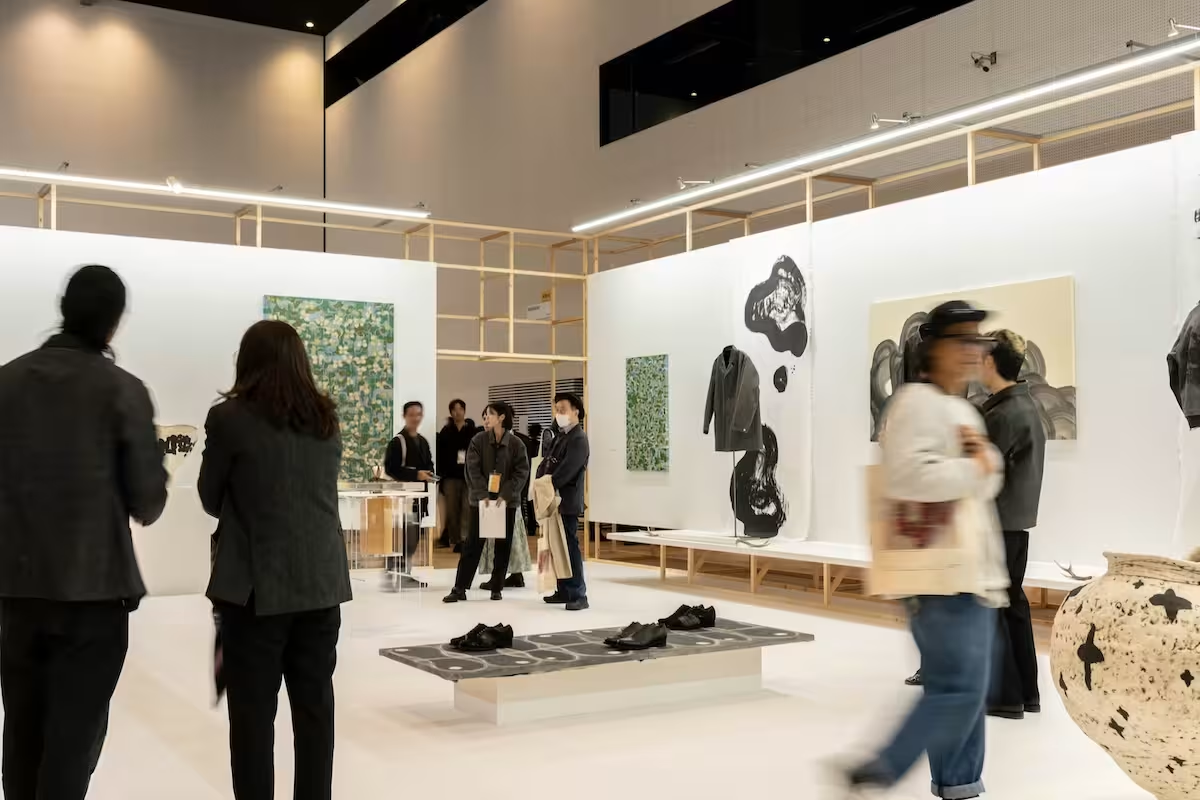
Scene from the 2025 ACK venue (courtesy of ACK, photo by Yuki Moriya)
SMAH: In recent years, the number of art fairs held worldwide has grown enormously, and I hear galleries are busy exhibiting all year round. Just how many art fairs are there?
Tezen: According to an international market report published by Art Basel, there are more than 300 art fairs held worldwide per year. The number dropped temporarily during the COVID-19 pandemic, but now, there are about 330. However, because of the various expenses involved, it’s said that galleries can only manage to exhibit at about five or six fairs a year at best. That means galleries have to choose carefully which fairs to take part in. Against this backdrop, ACK began in 2021 as an international fair focused on contemporary art.
SMAH: Mr. Suo, were you in charge of spatial design for ACK from its inception?
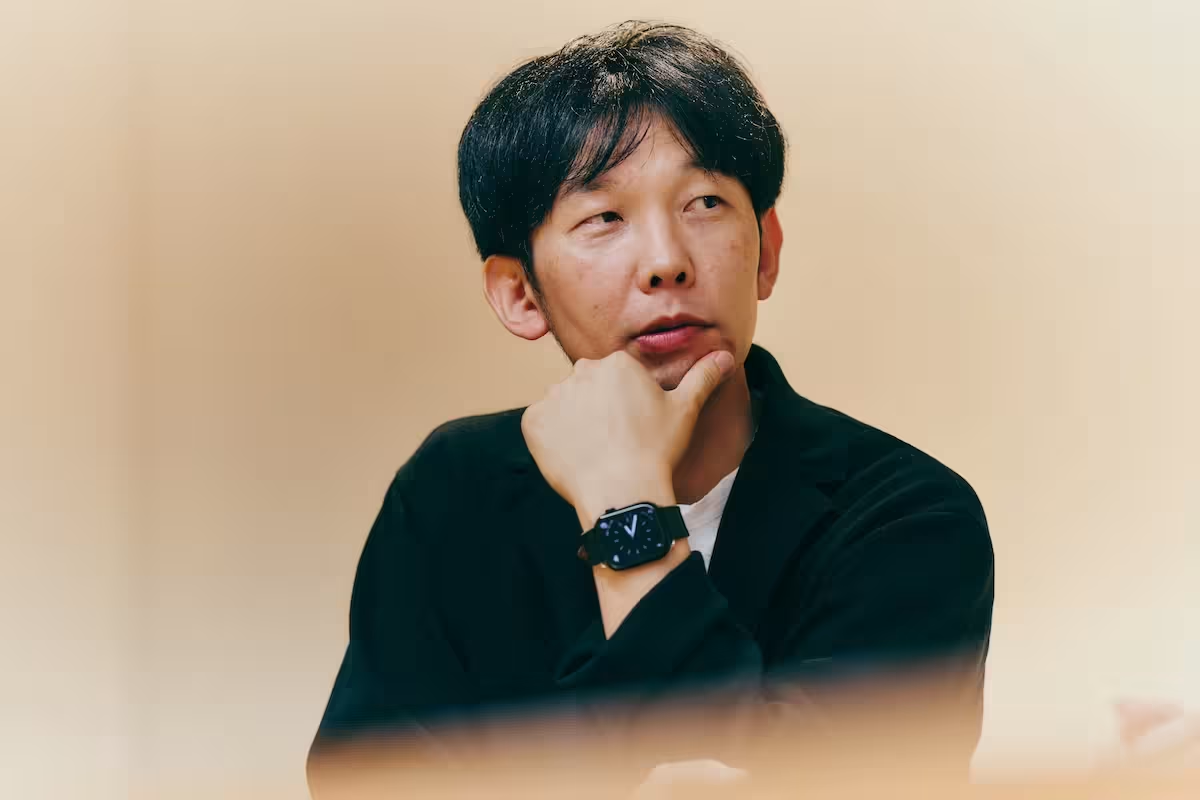
Suo: Together with Ms. Tezen, I've been involved in the fair since it was first launched. We started out with the idea of creating something that was different from an ordinary art fair. The number of art fairs in Japan had grown so much that the market had become kind of saturated. Works were often displayed in long, straight rows of booths along walls, allowing visitors to see all the art at once. I felt that this layout was what people pictured when they thought of an art fair. We wanted to focus on offering a different way to view art. For this reason, there was some debate about whether to even call it an “art fair.”
Tezen: That’s where we were in the beginning. The fact that Kyoto Prefecture is part of the organizing committee is a major factor, but our commitment to creating an event that goes beyond ease of buying and selling and commercial efficiency has remained the same. However, this kind of event is not sustainable unless a large number of galleries participate and generate sales, so we ultimately decided to adopt the art fair label.
SMAH: It’s true that if you look up the definition of an art fair on Google, they’re described as a place where art dealers sell paintings. I can see that generating sales is one of the key aims. That said, there are also tons of customers who come just to view the works rather than to buy. ACK seems to be particularly conscious of that, but how do you define the role of an art fair beyond buying and selling?
Tezen: I suppose it’s a place that provides an overview of the latest developments in the host city’s art scene and its art ecosystem. We curate what we want people to see the most in a way that reflects the country or region’s unique character. We work with local museums to offer tours, team up with restaurants that make the most of the region’s distinctive ingredients, and so on. As the number of art fairs has increased, I think there have been more programs involving collaborations that go beyond the art world, and the fairs are becoming more diverse.
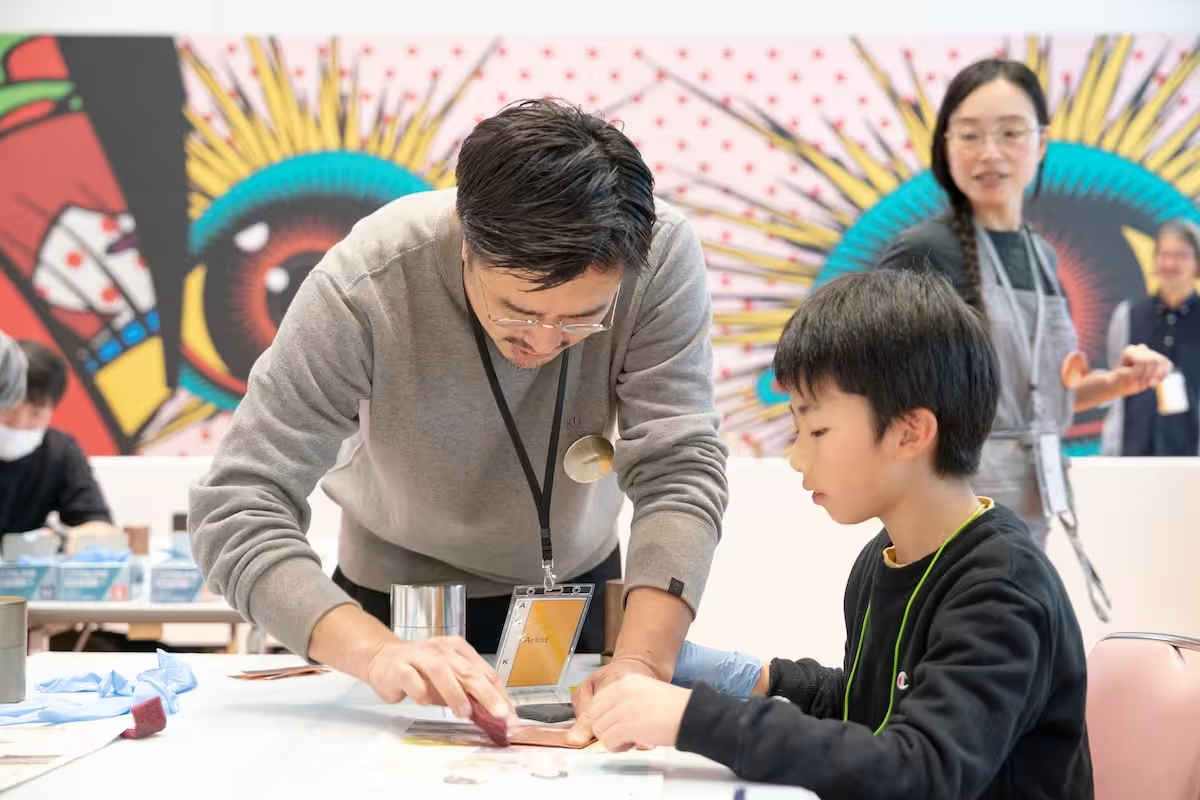
2025 Kids’ Program: “Experience Copper Hammering, a Craft with Over 100 Years of History” (courtesy of ACK, photo by Ryo Yoshimi)
SMAH: That’s true. At Art on Paper in New York, where we exhibited in 2023, and SCOPE in Miami, where we exhibited in 2024, there were lovely places to eat and drink, and the locals seemed to be having fun coming and going. ACK has a similar atmosphere. The collaborations with galleries from overseas are fascinating. Plus, with the tasteful cafes and everything else, there’s a sense of active collaboration with the local community.
Japan also has unique art events rooted in local communities, such as Benesse Art Site Naoshima and the art fairs in Echigo-Tsumari and Setouchi. Does ACK have a similar regional focus?
Suo: The question of why we hold the fair in Kyoto is a major theme. In addition to the collaborations between galleries in Japan and overseas, Kyoto Prefecture’s sponsorship is one of the key features of ACK. From the beginning, we intended to spread the event throughout the city like an art festival and make it a space open to the public.
Tezen: Kyoto is home to many art schools and young artists, but the infrastructure for showcasing and selling their work is still insufficient. This creates a problem where many of these artists go elsewhere after graduating. This is why we want ACK to function as a platform where all kinds of people involved in art can come and go. Kyoto also has a lot of cultural assets, so if we can better leverage the regional appeal, we should be able to expand its potential.
SMAH: There was a dedicated shuttle bus to the satellite exhibitions around the city, which made me feel that everything had been thoughtfully arranged, especially when you consider that some of the exhibits were in places that might be hard to reach if you're unfamiliar with the area (laughs).
Tezen: Some of the venues were difficult to get to using public transportation alone. That’s one of the interesting aspects of Kyoto, and we want to do everything we can to assist visitors while leveraging this unique characteristic of the city.
Edited by: Kei Osawa; Discussion Photos: Tomohiro Takeshita
