



SHUEISHA Inc. All rights reserved.

On the first day of the exhibition, people lined up in front of the palace for more than an hour before the venue opened. Even after guests began to enter, the line kept growing until it circled the entire palace. People have said that this was a sight rarely seen even at the Venice Biennale. First of all, what would you like to say to the fans who traveled to Venice from Italy and around the world for the exhibition, and spent hours waiting in line?
The Palazzo Bembo itself is a place that seems to embody the history of Venice. The design here is traditional and classic, but it’s not old. On display there, we have Japanese manga, a young, new form of culture that we’re still not even sure can be called “fine art.” Personally, it felt like the work paired nicely with the location, and I was very moved by that.
I’ve heard that part of Venice’s history is that it was built by people who had been driven there by other people. From West to East, many cultures came together here. It’s a melting pot. I think it’s a place where it’s particularly meaningful to hold an art festival featuring a wide range of art forms, from painting to sculpture, and more.
You make your way here by coming through the canal from the Doge’s Palace. That is also deeply moving. The fifth part of JoJo’s Bizarre Adventure, set in Venice, is titled Golden Wind. The weather is fantastic today, and as I went for a stroll, it really felt like there was a golden wind blowing.
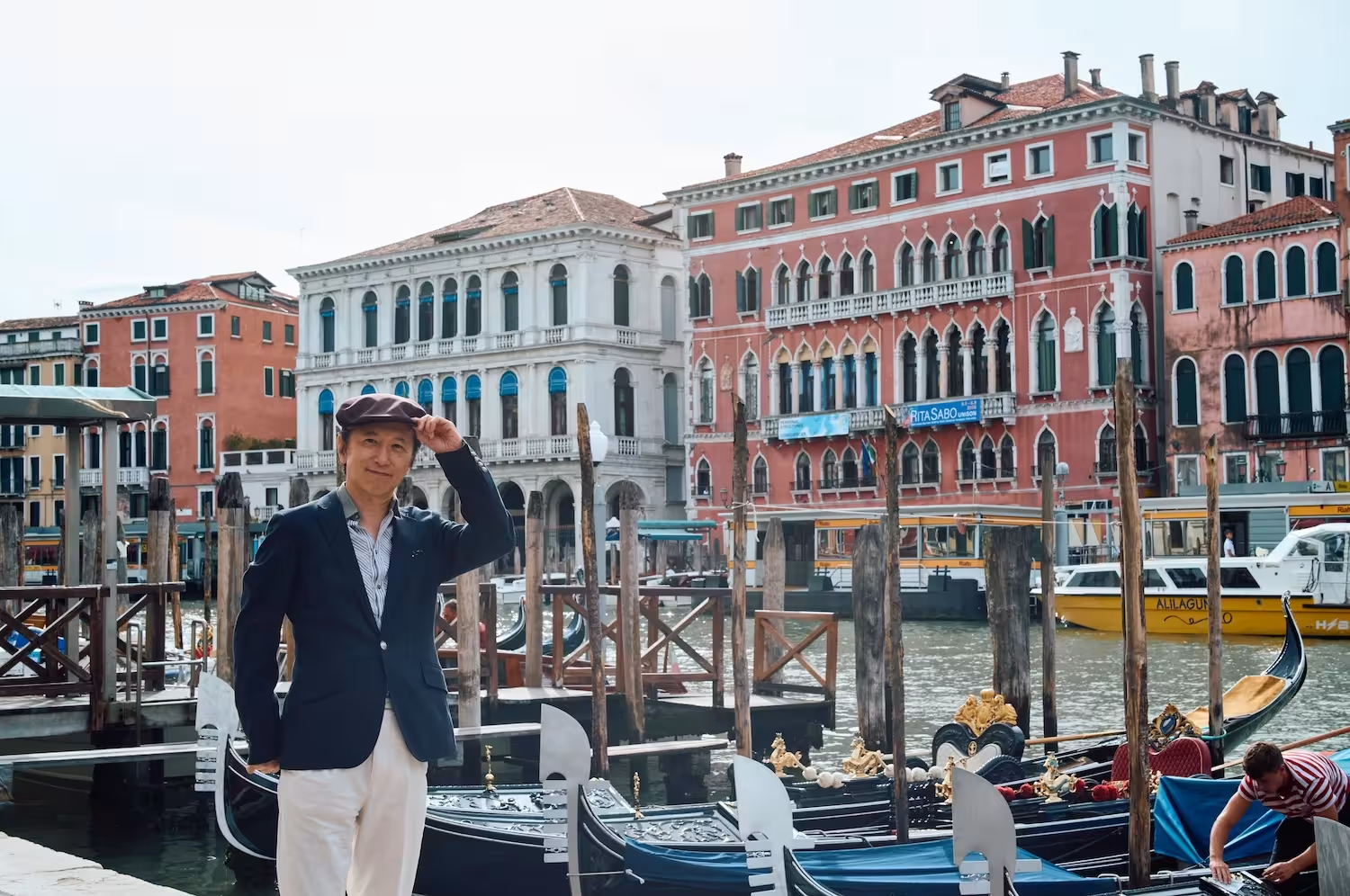
You came to Venice not as a guest for a limited-time pop-up exhibition, but as an artist at the Venice Biennale, the world’s foremost venue for contemporary art. Manga has finally transcended the pages of comic books and earned a place in this space for fine art. What does that mean to you?
Manga is originally meant to be printed on paper and read like a book. From there, it gets adapted into anime, films or games. So I think of what I do as creating the basic form. The art prints have been on display at a gallery in San Francisco, at a temple in Kyoto, and at the Venice Biennale. It feels like we are charting a path toward new possibilities. It’s an honor for me to be involved. It’s been nearly 40 years since JoJo’s Bizarre Adventure began, and I feel that over those 40 years, it’s made its way across the oceans.
Venice, as it appears in your manga, is not just a simple backdrop. It’s like a city that exists somewhere between theater, decadence, mystery, and spirituality. When was the first time you came to Venice? What were your impressions then?
The first time I came to Venice was probably in 1987. Everything felt new to me then. Everywhere I looked, I was in awe. It has an allure that makes me want to visit again and again. It’s enduring, it’s new, and it’s closely tied to human life. It made me want to incorporate this feeling into manga.
Squid ink pasta is actually completely black. I was so surprised. I found myself trying foods with colors that, from a Japanese perspective, looked unusual. But when you take a bite, it turns out to be delicious. I feel that sums it up. Whoever invented squid ink pasta, and those who continue to make it, are all incredible. Across Venice’s many different cultural traditions, I think inventions like this, and the continuation of them, have built up over time.
It’s amazing that this town — this city — is built on the sea. It’s like a futuristic fantasy, but it’s also real, and it feels like the economy and political structures came into being naturally. It feels like human life on Earth.
In the morning, people eat breakfast while looking out at the sea and the canals, basking in the sunlight reflecting off the water in the canals. It paints an amazing picture. The squid ink is black, and the morning sun comes through the canals. It’s a real place with a strange, fantastical atmosphere.
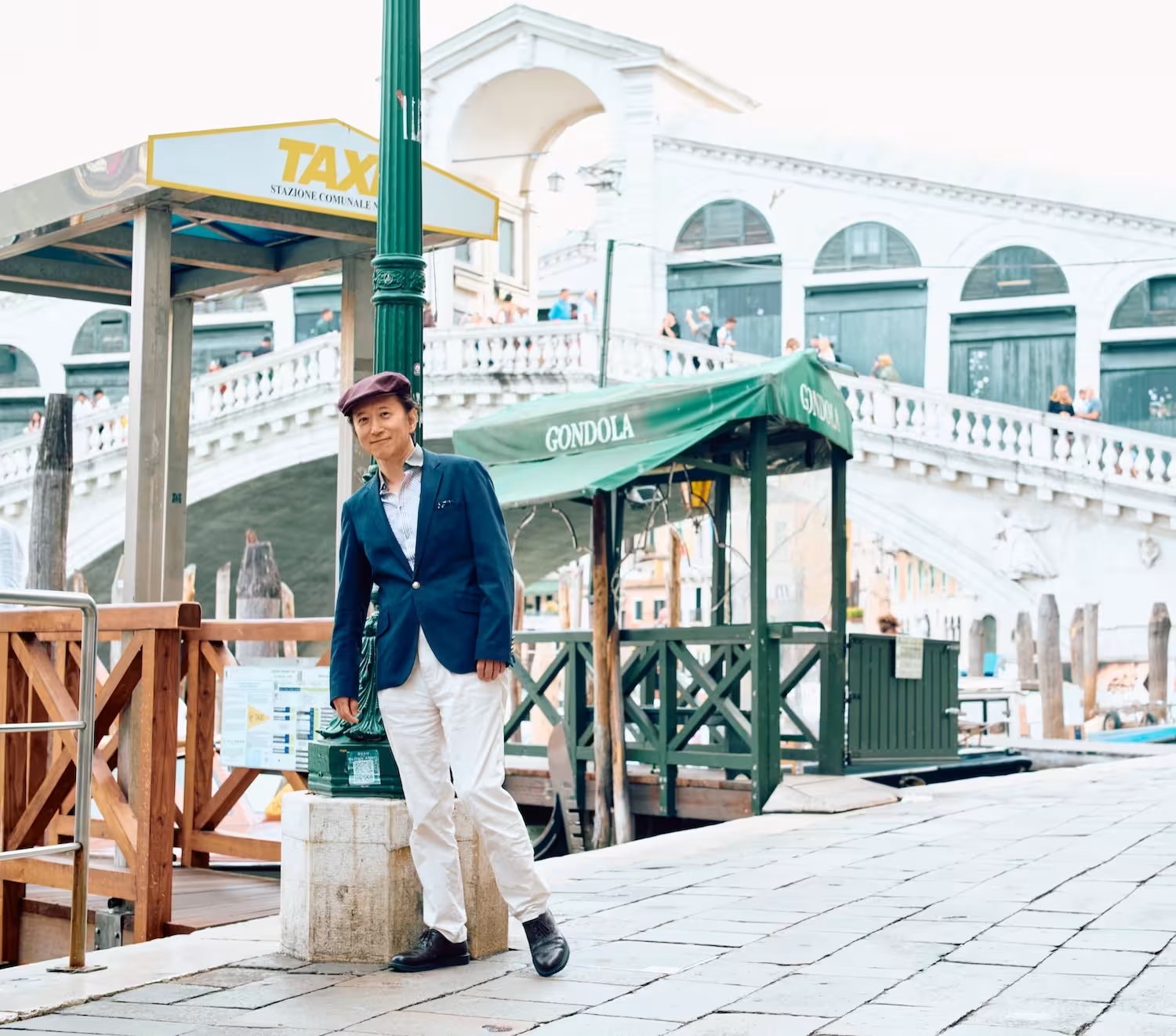
In Golden Wind, Venice is depicted as a very different city from the one you often see on postcards. As you made your way from the station to the canals, to the Church of San Giorgio Maggiore, and to those isolated places on the water, what was it you were truly looking for in this city?
What I was looking for was human beings existing within civilization. Humanity began by painting cave walls and carving bones, and as civilization progressed, it eventually reached the point of building cities like this in the sea. But even here, human life continues to play out. JoJo could be called a suspense or mystery story, but part of the mystery genre involves exploring the mysteries of human nature. I wanted to capture that in the form of entertainment.
Are there any places in Venice that are particularly memorable for you?
There are many, but what really stands out are the canals. It’s the scenery you see when looking out over them. Venice is man-made, but it feels like it was always destined to exist. I feel that even the various buildings were built not so much out of a desire to project prestige, but for reasons such as defense or commerce. People tend to want to show things off and take pride in them, right? But this is not like that. The city feels like it’s been shaped by considerations like defense when groups come into conflict, the logistics and infrastructure needed for economic development, and protection from disease. The streets are like a maze, but once you get used to it, you can find shortcuts and reach all kinds of places by walking in almost a straight line. I think it’s very well thought out.
In your mind, is there any place in the city that perfectly captures the essence of Venice?
I’d have to say the area around Doge’s Palace. The area you can see from Piazza San Marco really leaves an impression on you. Across the canal, at Punta della Dogana, there’s an art museum that was renovated by Tadao Ando. I heard it used to be a customs house. I like the scenery around there.
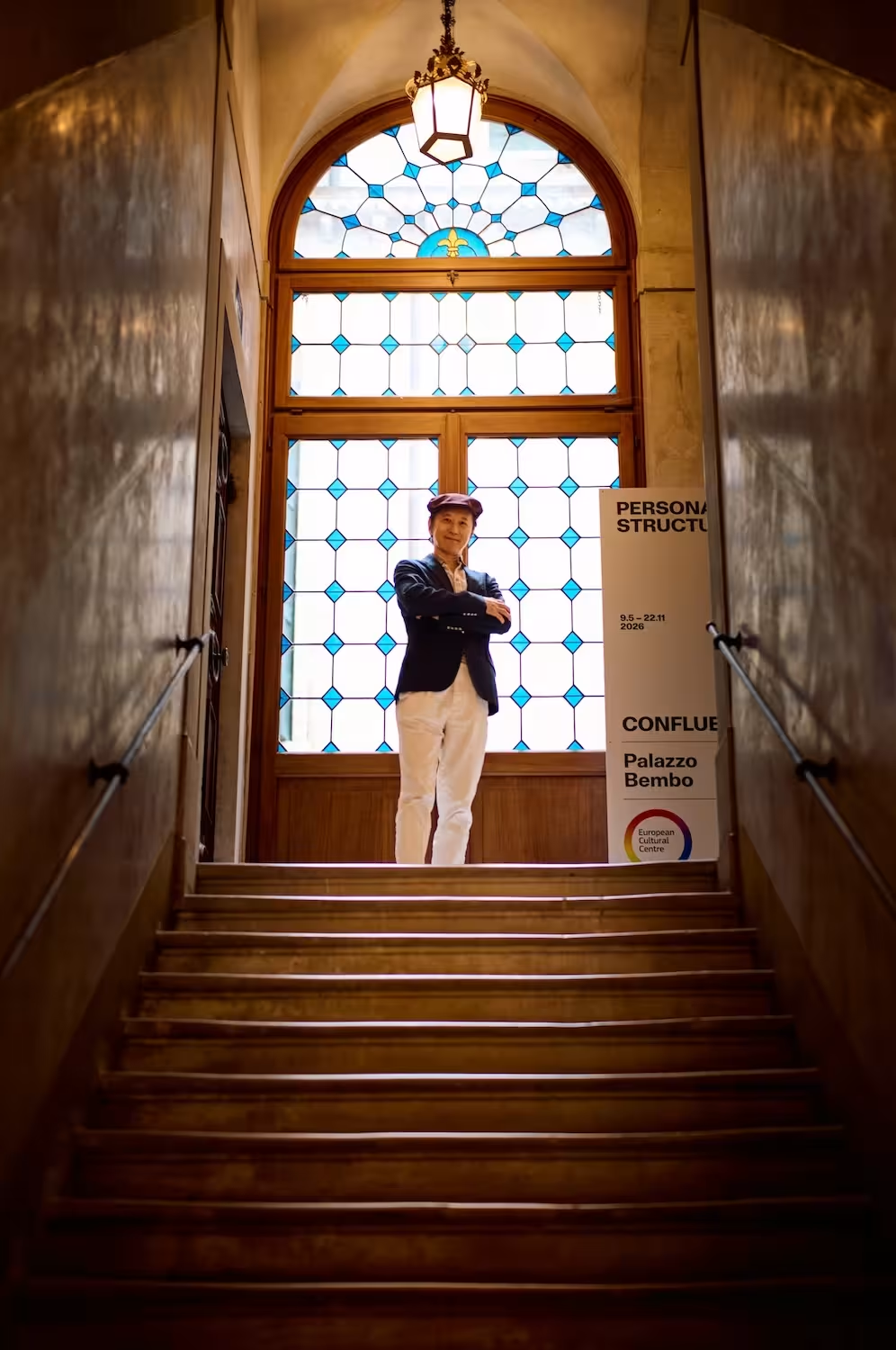
You often talk a lot about your love of Italian art, especially the work of Michelangelo. The well-known JoJo pose also seems to stem from this fascination. How has Italy influenced the way you depict the human body?
The human body twists, or rather, rotates. In terms of posing, it’s not just standing upright. The body is twisted. In photographs, this twisted figure doesn’t look the same. When I saw the real works, I was amazed. The more you look at them, the more you begin to notice different aspects that make them remarkable. Michelangelo was all about body weight. It’s hard to explain, but the joints seem to sink just slightly. Many other artists also created figures with twisted poses, but in the works of Michelangelo and Rodin, you can really get a sense of the body’s weight. That’s why I believe Rodin was influenced by Michelangelo as a sculptor.
Michelangelo’s last sculpture, the Rondanini Pietà at the Sforza Castle Museum, Milan, is unfinished, but its sense of body weight is incredible. Around Christ’s knees, you can see that he is collapsing. It looks like it’s only partially finished, but it’s possible that Michelangelo looked at it and thought, “Enough, it’s done.”
In any case, you can feel the impact of the body weight. It’s the weight of the earth, or perhaps, the weight of life. Or, the weight of fate. The fact that humans cannot escape the pull of gravity is also a factor. Things like time and gravity really seem to come together in the artistic expression. I think it’s incredible.
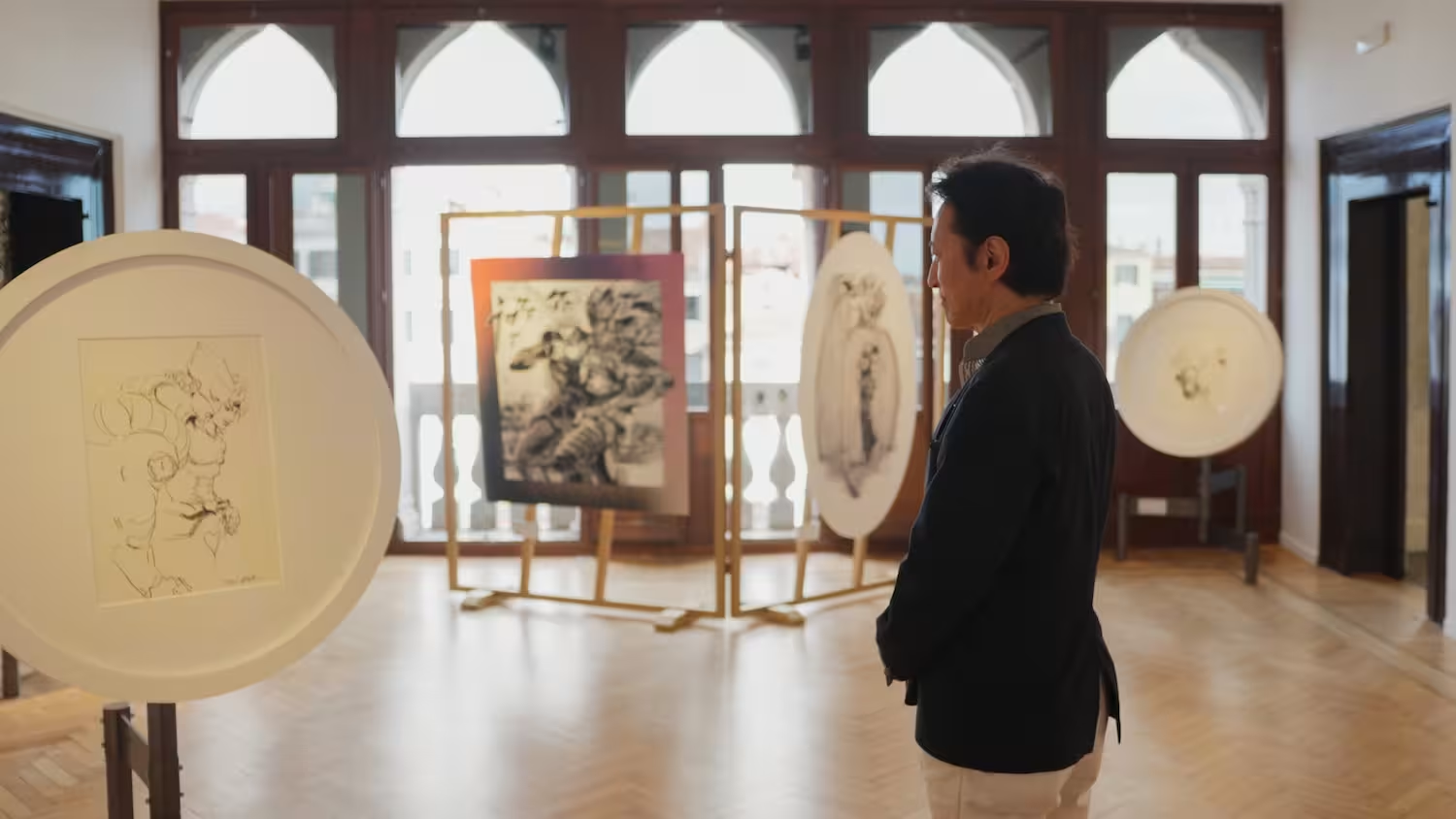
Who are the artists that you admire the most? You can name artists in history or contemporary artists. It’s up to you.
I’m a fan of Velázquez. His brushwork feels almost effortless, but it looks incredible. It’s indescribably good. And of course, I love Michelangelo and da Vinci. I have great respect for all the artists around the world who are recognized as the best of the best.
As for contemporary artists in Japan, Akira Yamaguchi comes to mind. I’d love for him to paint an aerial view of Venice.
At a talk event in Lucca, you mentioned that your favorite Italian works were from the Roman era and the Renaissance. In terms of modern artists, you named Giorgio Morandi, which was a little surprising. He is known for his calm still lifes, and he too was from Italy. What do you like about Morandi’s work?
I like the calmness of Morandi’s work. He uses a brick-red palette, and the compositions appear effortless but are actually carefully calculated. I like that it’s quiet and without sound. His palette consists entirely of subtle, in-between tones, like a shade between brown and white. It’s very graceful. I would love to paint like that, but when it comes to JoJo, I need to keep the readers in mind. If I were to draw that freely, I’d worry about how people might react, which keeps me from doing it. But someday, I’d like to illustrate a scene from JoJo using that kind of color scheme.
These were the first lithographic works you created. It must have been your first time drawing without being able to use an eraser, while having to create the mirror image of the finished illustration. How did you feel about the experience? Did you use a mirror or devise some other methods?
You have to think about drawing everything in reverse, like a mirror image, but you still need to draw with momentum. You have to complete the illustration in one go. If you start to doubt yourself, the lines will get messed up. So I didn’t use a mirror or anything like that. I drew it by picturing the reversed image in my head. JoJo’s accessories are complex. There are parts where the horizontal positioning is wrong because my mind couldn’t keep up, but I think that’s okay. I was more decisive than when I normally draw with a pen.
The works on display are not simple commercial reproductions. These prints were produced by combining the refined craftsmanship of Japanese artisans with cutting-edge technology. How important is the materiality of a work? Can paper, ink, and their textures enhance the meaning of the art they are used to create?
I think it’s better to have proper art supplies, paper, and ink. When you look at the work in a decade or two, I think you’ll see a difference. Perhaps a hundred or two hundred years after a work is created, some of the artist’s original intentions and feelings at the time of creating the work will have been lost.
That’s why, ideally, we would use fresco. I’ve heard that it’s the most enduring medium, allowing paintings to last. But interestingly, the way color is applied in manga is quite close to the way it’s done in frescoes. You have to get it down in one go. The more you layer it, the more uneven it becomes, and the more the color starts to look off. In particular, when painting skin tones or other curved forms, you have to apply the color in one go. Otherwise, the smooth texture of the skin won’t come out. I draw on paper, but while I work, I think about how it’s like painting a fresco. When I see frescoes in Italy, I always notice parts where it looks like the painter did it all in one go, and things like that.
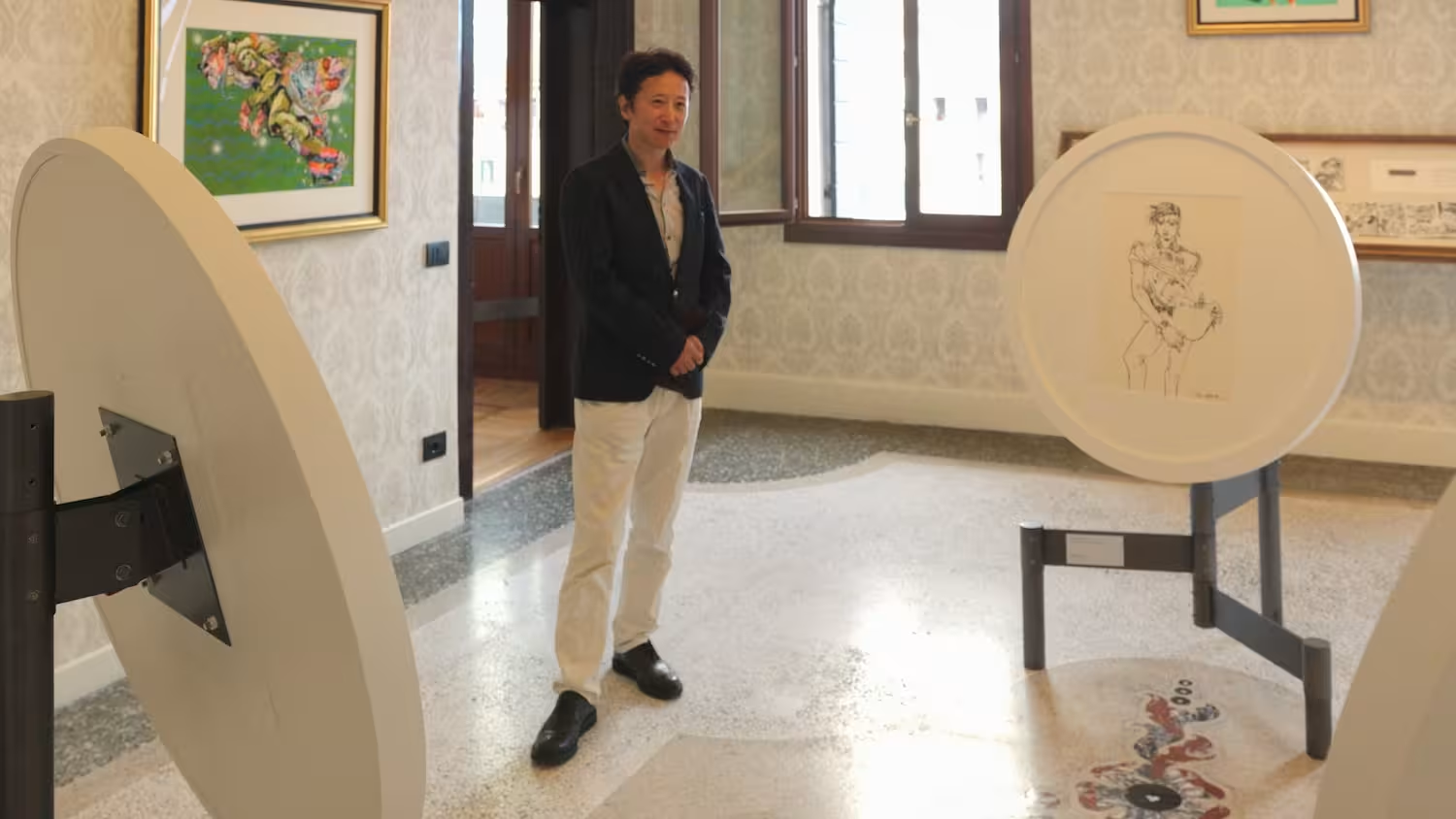
You are one of the first comic artists whose work has been exhibited in places like the Louvre Museum and the National Art Center, Tokyo. Did manga undergo a change that allowed it to be displayed in museums like these? Or has the art world changed the way it views manga?
I think manga is something keeps developing. Starting from manga as the medium, it evolves into games, digital formats, and other new creations. I think museum exhibitions offer a different appeal and novelty from printed books in that you can see the artwork displayed on the walls with the naked eye.
One turning point was around the year 2000. Japanese manga comes in the form of right-bound books, where the text is printed vertically and read from right to left. In the 1980s, when I published JoJo’s Bizarre Adventure in Europe, I was told that the illustrations had to be flipped so that the books could be left-bound. They told me that in Europe, people read from left to right, so no one would want to read right-bound Japanese manga books. But if you flip them, the illustrations are no longer in their true form. As the artist who made the illustrations, it felt wrong. The lettering of the sound effects was also redrawn in the local language, and the manga artists themselves were rather put off by it. That started to change around the year 2000. As the medium developed, there was a period when people thought it was fine to flip the artwork. But ultimately, people wanted to see the illustrations in their true form. Perhaps it was a similar desire that inspired people to go see manga in its true form in museums. It’s not that manga was brought into a pre-existing world of art. Rather, this is the result of people from the manga world breaking new ground.
It’s not just the general public. Even young contemporary artists today have grown up more immersed in anime and manga than in the Western art tradition. Do you think manga has become one of the principal artistic languages in the 21st century?
I think it’s on its way there. That’s what I’m thinking when I create nowadays.
In the past, there were many manga artists who believed that the condition of the original artwork didn’t matter, since the final product was printed. They would color things in with permanent marker, draw on copy paper, or scribble things on the edges. But if we think of the original artwork as something to be kept, it makes us want to draw properly, even if it takes more effort.
The Venice Biennale always sparks controversy on topics ranging from the art market and diversity to geopolitics. Are you interested in such points of controversy? Or do they feel distant to you?
Since presenting new ideas or exhibiting art naturally leads to controversy, I think controversy is a good thing. That doesn’t mean I accept everything that’s presented, but I do find it interesting. It’s good to have a range of viewpoints, and it’s better when there’s controversy.
Manga has always had a direct relationship with the masses. On the other hand, institutions of contemporary art are often perceived as elitist. Do you think manga can help contemporary art rebuild a more direct relationship with the masses?
I find myself imagining that the contemporary art world is run by powerful figures behind the scenes, or even that there is some kind of conspiracy at work. But manga is decided by the readers, or rather, not so influenced by any particular person. You don’t often have situations where an artist is able to display their work at a good location because some rich patron liked it, for example. It may be influenced by trends, but I think it has a greater potential to evolve than something that is decided by a small number of art connoisseurs.
The city of Venice is in fact depicted in Hugo Pratt’s seafaring adventure comic series Corto Maltese. Hugo was an artist who sought a rediscovery of love and a thirst for adventure. Do you agree with the idea that comics are drawn literature?
That may be the case, but in novels, creating an image using words is essential. Illustrations show things more directly. In that sense, I think they are two different art forms. With Sherlock Holmes, for instance, you can picture the world of that era just by reading the text. You can picture the decay of England and the feeling of running through a brick town. So, I think it’s a little bit different.
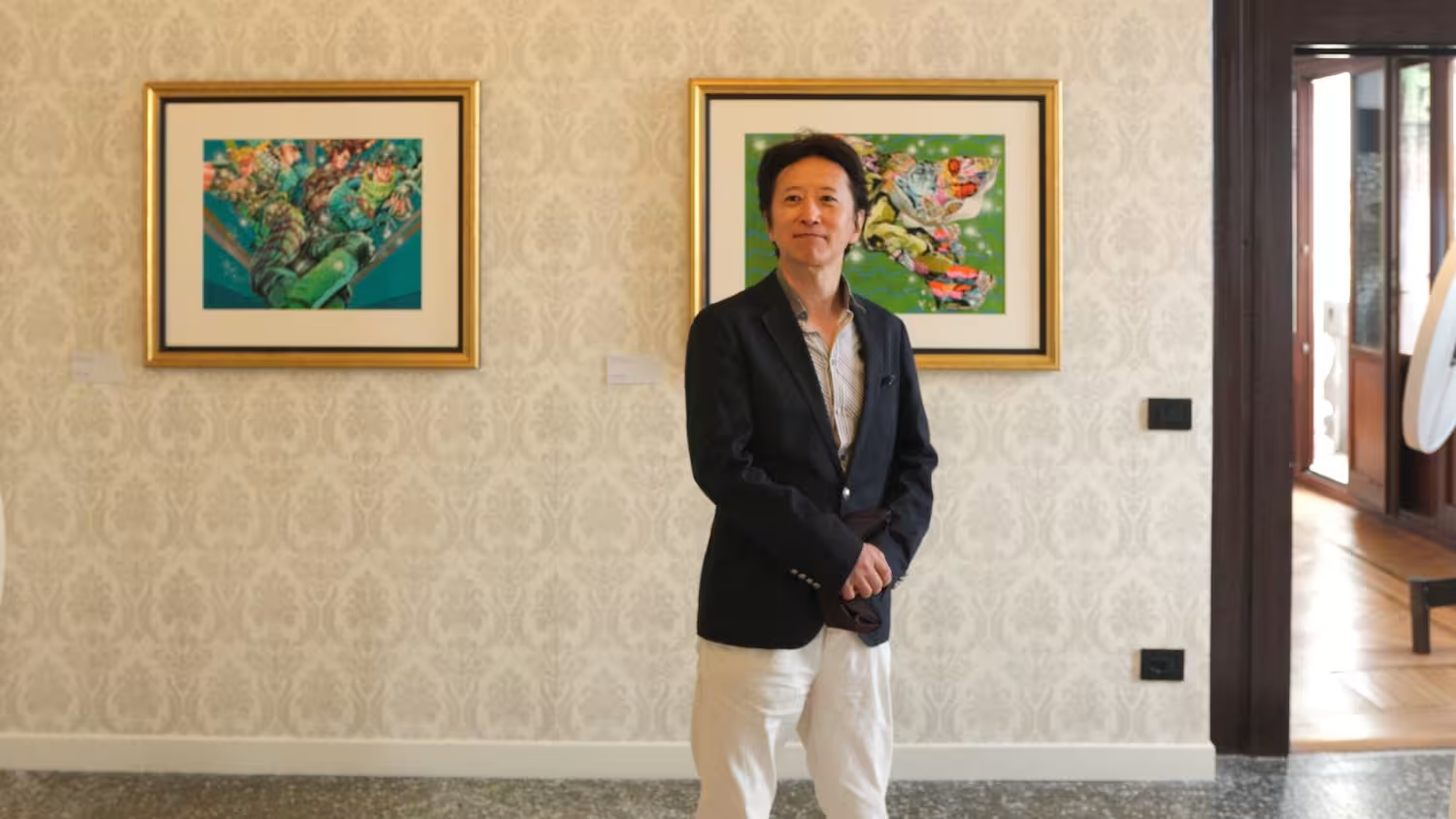
From Versace to Armani and Gucci, Italian fashion is featured in many of your works. What role does fashion play in your life and work?
In JoJo, I draw the characters so that the fashion they wear reflects the kind of people they are. Each character has specific clothing that they wear. It’s part of the design, while also being symbolic. That’s also why they don’t take off their clothes when they dive into the sea, for example. They wear the same outfit, no matter whether it’s hot or cold out. There are some special occasions where they change their clothing, but their hairstyles are essentially kept the same. Instead of coming up with the character and then deciding on their outfit, I sometimes design the character based on an outfit that I came up with first. In other cases, I design the character based on a Stand that I came up with. All these aspects are linked together when I think of the design.
There’s something unique about Italian fashion. Fashion from other countries can be elegant, but sometimes, that’s all there is to it. On the other hand, Italian fashion often has something unusual mixed in. That’s what I like about it. I suppose it’s art.
The characters in your work are always in pursuit of something, whether it’s power, the truth, identity, or salvation. What do you personally continue to pursue through your art and drawing?
What I always draw is people, and their characters. Some live with a purpose, while others seem to live without one. It’s about the clash between people like these. When one person encounters another, a battle ensues. Love is also a battle, and romantic comedy is also about battles. Given their situations, they keep trying to move forward. But sometimes, I just like to draw first, before trying to pursue anything deep. Sometimes, the manga ends up teaching me that things I drew casually turned out nicely. Rather than thinking of something and drawing, you can try drawing first and learn from it. There are a lot of ways to go about it.

