



SHUEISHA Inc. All rights reserved.

Kyoko Okazaki, Jakuchu Ito
Under the title and flowers, Shueisha Manga-Art Heritage will feature and sell collotype prints of Kyoko Okazaki’s works together with woodblock prints by Ito Jakuchu.
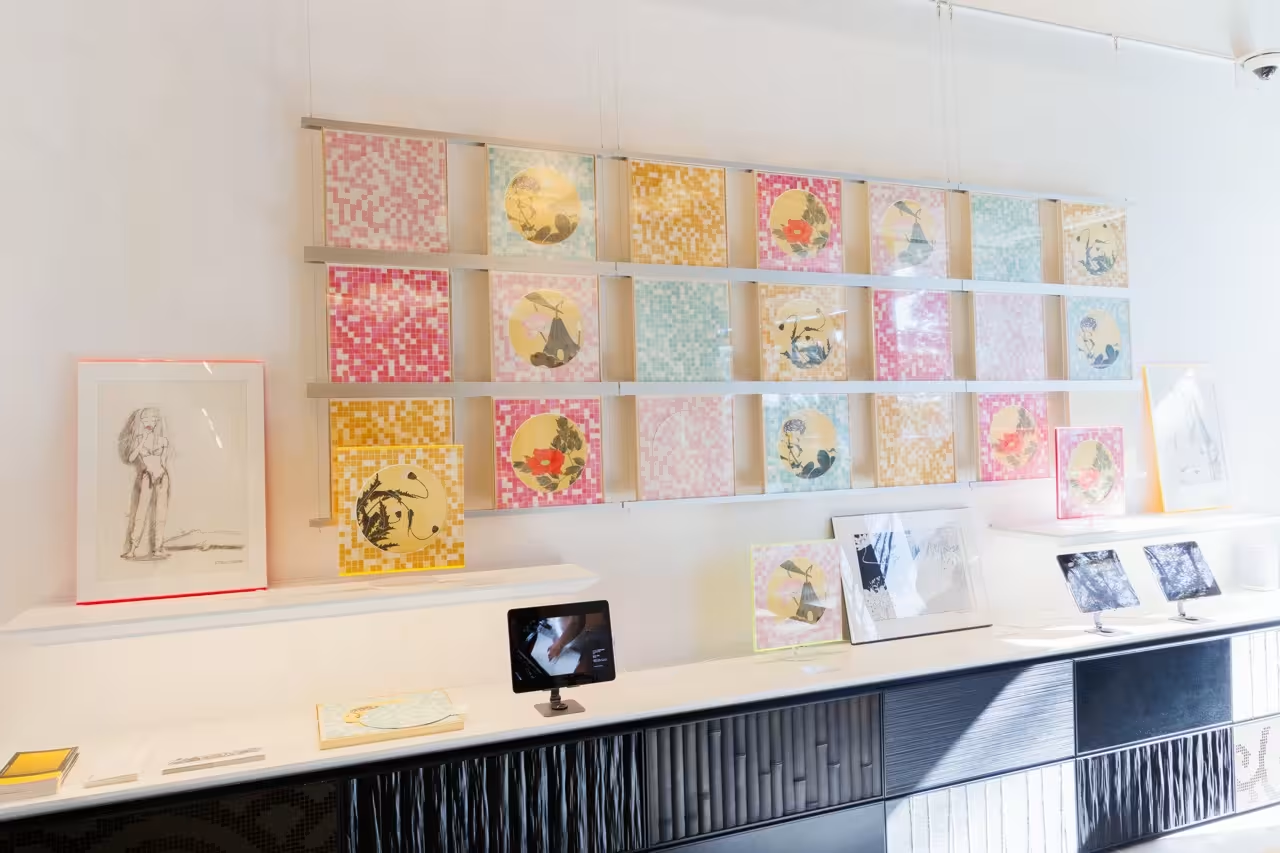
©Kyoko Okazaki /MAGAZINE HOUSE Co., Ltd. / TAKARAJIMASHA, Inc. /Shueisha Inc.
Kyoko Okazaki (b. 1963) is an artist who helped significantly expand the world of manga.
For example, in the afterword to Pink, which was written in 1989, Okazaki wrote, “This story follows the adventures and daily realities of love and capitalism as experienced by a girl who grew up in the dull city of Tokyo and fell apart in the most ordinary way (like Zelda Fitzgerald?).”
Tokyo, Zelda Fitzgerald, love, and capitalism — like going to the cinema to see a Jean-Luc Godard film or a live music club to listen to a new rock band, we went out to buy Kyoko Okazaki’s manga to gain new experiences through reading.
After a car accident in 1996, Okazaki found it difficult to create manga. The prints that will be on display were produced by Shueisha Manga-Art Heritage with permission from Okazaki.
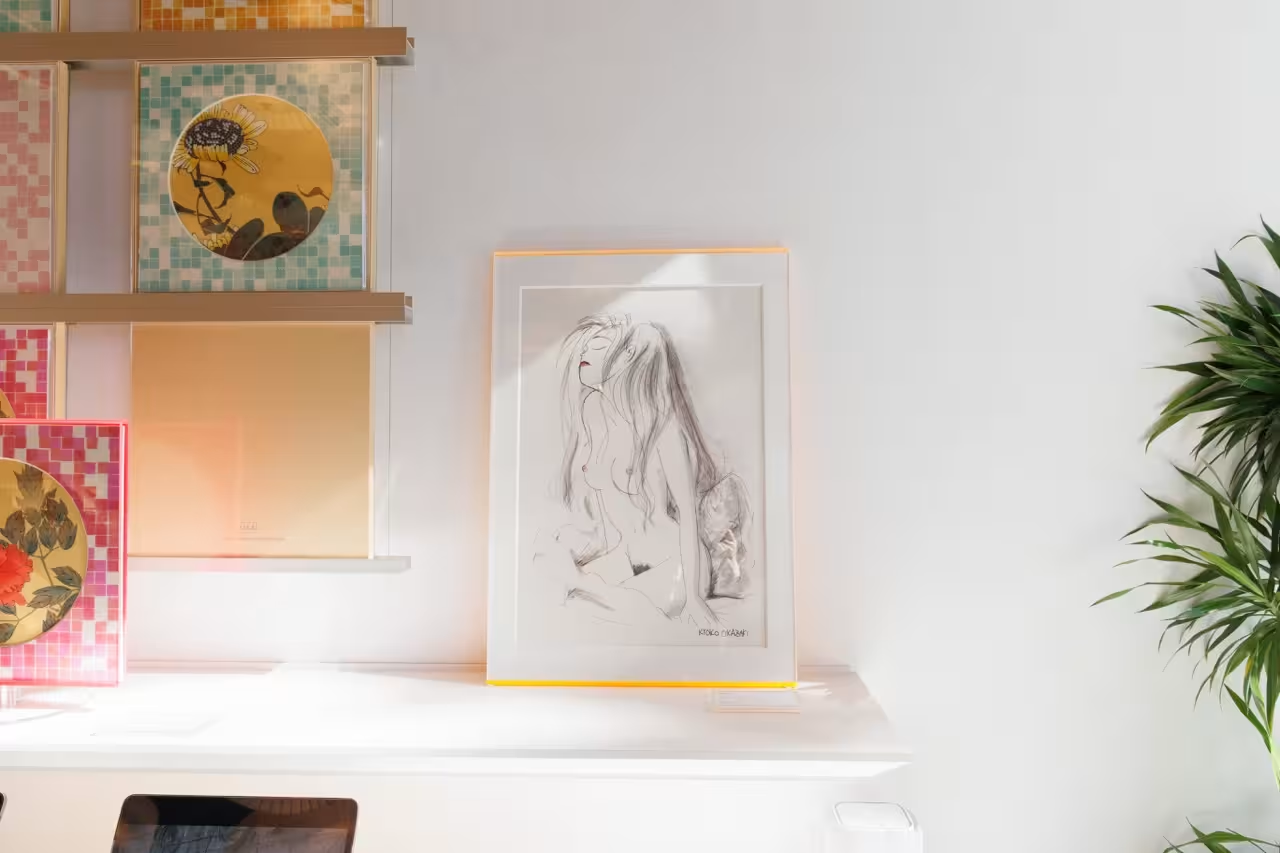
©Kyoko Okazaki/MAGAZINE HOUSE Co., Ltd./Shueisha Inc.
We selected four illustrations from Pink (Magazine House, 1989), Am I Your Toy? (Shodensha, 1995) and Utakata no Hibi (Takarajimasha, 2003) and turned them into manga-art pieces. They were printed at Benrido Collotype Atelier (Kyoto) using handmade Echizen Japanese paper produced at Iwano Heizaburo Paper Mill (Fukui). Collotype printing is a unique printing method in which glass plates are used to produce color shades through gradations rather than by using dots. The reproduction captures and preserves every aspect of the original artwork, from rough pencil strokes to fine pen lines.
These works will be on display alongside Jakuchu’s Kaki Tenjo-zu (Flower Ceiling).
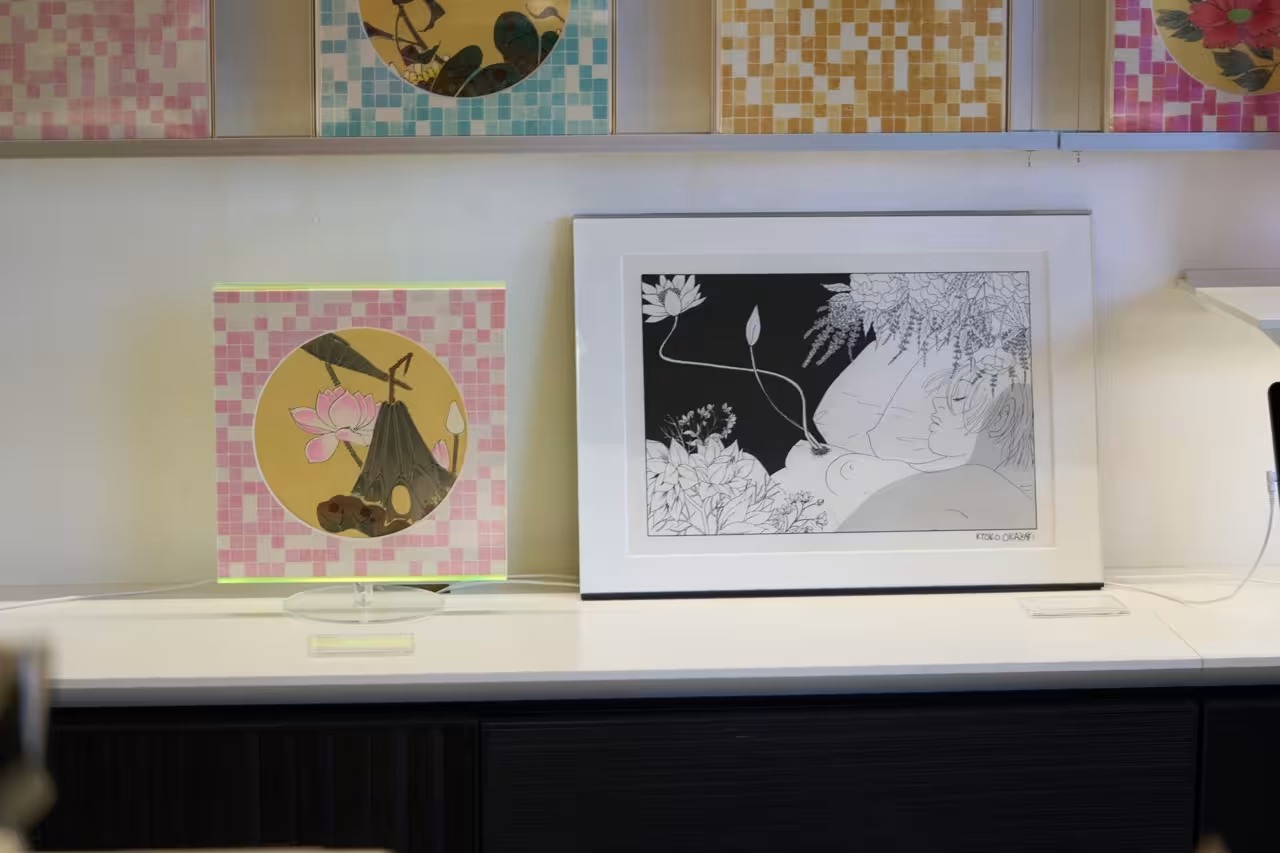
©Kyoko Okazaki /TAKARAJIMASHA, Inc./Shueisha Inc.
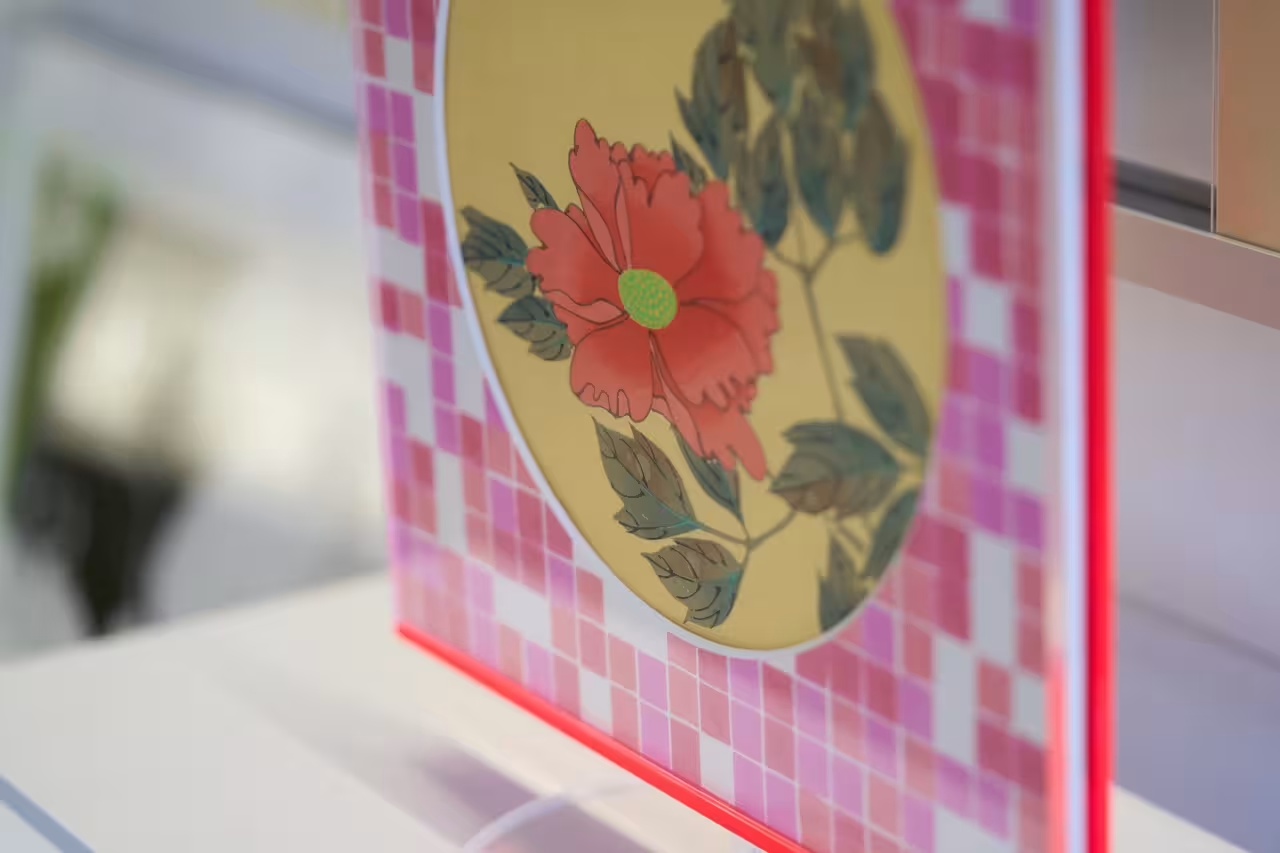
Jakuchu Ito(1716–1800) was an eccentric painter who was active during the Edo period. He is known for works like Juka Choju-zu Byobu (Birds and Animals in the Flower Garden), which was created using the masume-gaki (grid painting) technique, and the very intricate Gunkei-zu (Fowls). The Kaki Tenjo-zu works were created as ceiling paintings for the Kannondo Hall at Sekiho-ji Temple in Fukakusa, Kyoto, where Jakuchu lived in his later years. The paintings now decorate Shingyo-ji Temple. Various flowers are depicted inside circles of about 33 centimeters. Kaki is a general term for plants grown for ornamental purposes.
Created by Jakuchu when he was over 80 years old, these paintings were compiled in the Meiji era to create a collection of colored woodblock prints titled Jakuchu Gafu. They were created on these wood blocks using traditional ukiyo-e techniques. At the request of Shueisha Manga-Art Heritage, the background was printed in bright gold. Drawing on the fact that the circles are nearly the same size as LP records, the works were placed in specially made jackets of original kyo-karakami paper by Unsodo, inspired by the masume-gaki style.
Kyoko Okazaki was born and raised in a hairdresser’s household in Shimokitazawa, Tokyo, during Japan’s postwar economic boom.
Jakuchu Ito was born and raised in a vegetable wholesaler’s household in Nishikikoji, Kyoto in the mid-Edo period.
Within square frames, girls breathe in monochrome. Within round frames, colorful flowers twist and sway. Works created 200 years apart, vastly different in both subject matter and style, are displayed side by side. We invite you to experience what gradually emerges from the space in between.


In 1983, she made her debut in the June issue of Manga Burikko. She went on to publish works such as Virgin (1985, Byakuya Shobo), Boyfriend is Better (1986, Hakusensha), pink (1989, Magazine House), Tokyo Girls Bravo (1993, JICC Publishing Bureau), River’s Edge (1994, Takarajimasha), I Am Your Toy (1995, Shodensha), Helter Skelter (2003, Shodensha), and Foam of the Daze (2003, Takarajimasha).
With Helter Skelter, she received the Excellence Award in the Manga Division at the 7th Japan Media Arts Festival, and the Grand Prize in the Manga category at the 8th Tezuka Osamu Cultural Prize. In 1996, her creative activities were interrupted due to a traffic accident. In 2012, the film adaptation of Helter Skelter, directed by Mika Ninagawa, was released. In 2015, her solo exhibition “Girls’ Life on the Battlefield” was held at the Setagaya Literary Museum in Tokyo.
1716–1800 Birthplace: Present-day Kyoto Prefecture
Born in 1716, Jakuchu was the eldest son of a vegetable wholesaler’s household in Nishikikoji,
Kyoto. While working in the family business, he studied painting, creating works distinguished
by meticulous detail, masterful technique, and unique compositions. Gunkei-zu is lifelike, and
yet hyperreal at the same time. He is known for works like Juka Choju-zu Byobu (Birds and
Animals in the Flower Garden), which was created using the masume-gaki technique and
resembles a digital pixel-art piece.
The Kaki Tenjo-zu are ceiling paintings that Jakuchu painted when he was over 80 years old. In
the Meiji era, these paintings were compiled by Unsodo into a collection of colored woodblock
prints titled Jakuchu Gafu.